Animation
2D
Painting
Illustration

Isabel Lauren Loewe
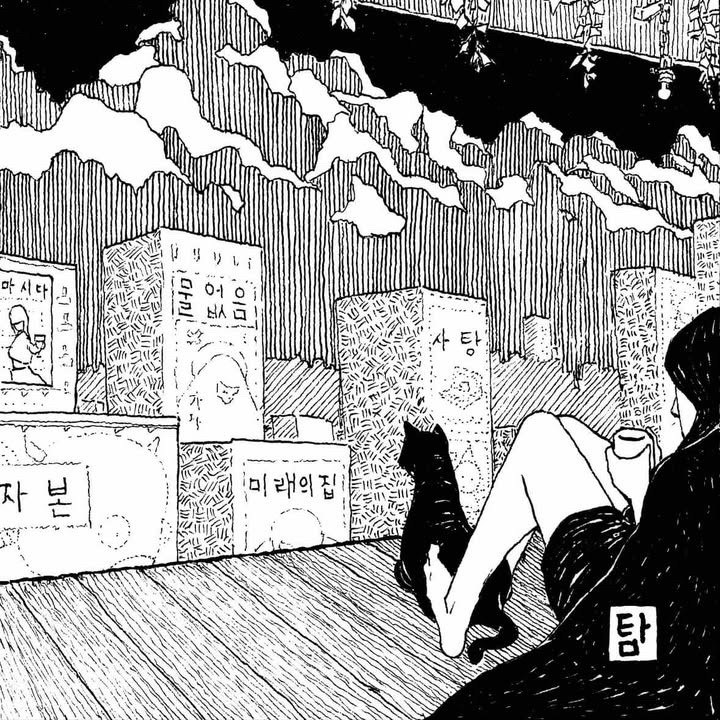
'Watchers' by Death by Narwals
Your bio says your mom, your sister, and the television raised you. Can you expand on that?
My dad passed away young, and my mom worked a lot. So I spent a lot of time alone with the TV. It taught me stories, role models, morality, everything.
Do you think cartoons got you into art as a kid?
Definitely. I was always drawing. Cartoons and comics were the first step into storytelling, and art became a way to do that.
Where does your style come from? What are your influences?
Cartoons, comic books, turn-of-the-century painting, and abstract work. Cartoons, in particular, I think they're culturally important and underappreciated. They’re visually rich, and I try to elevate them in my paintings.
Favorite cartoons or animation cells you’d collect?
Over the Garden Wall. It’s beautiful, haunting, and the painted backgrounds are perfect.
Can you tell us about your family seal and the meaning behind it?
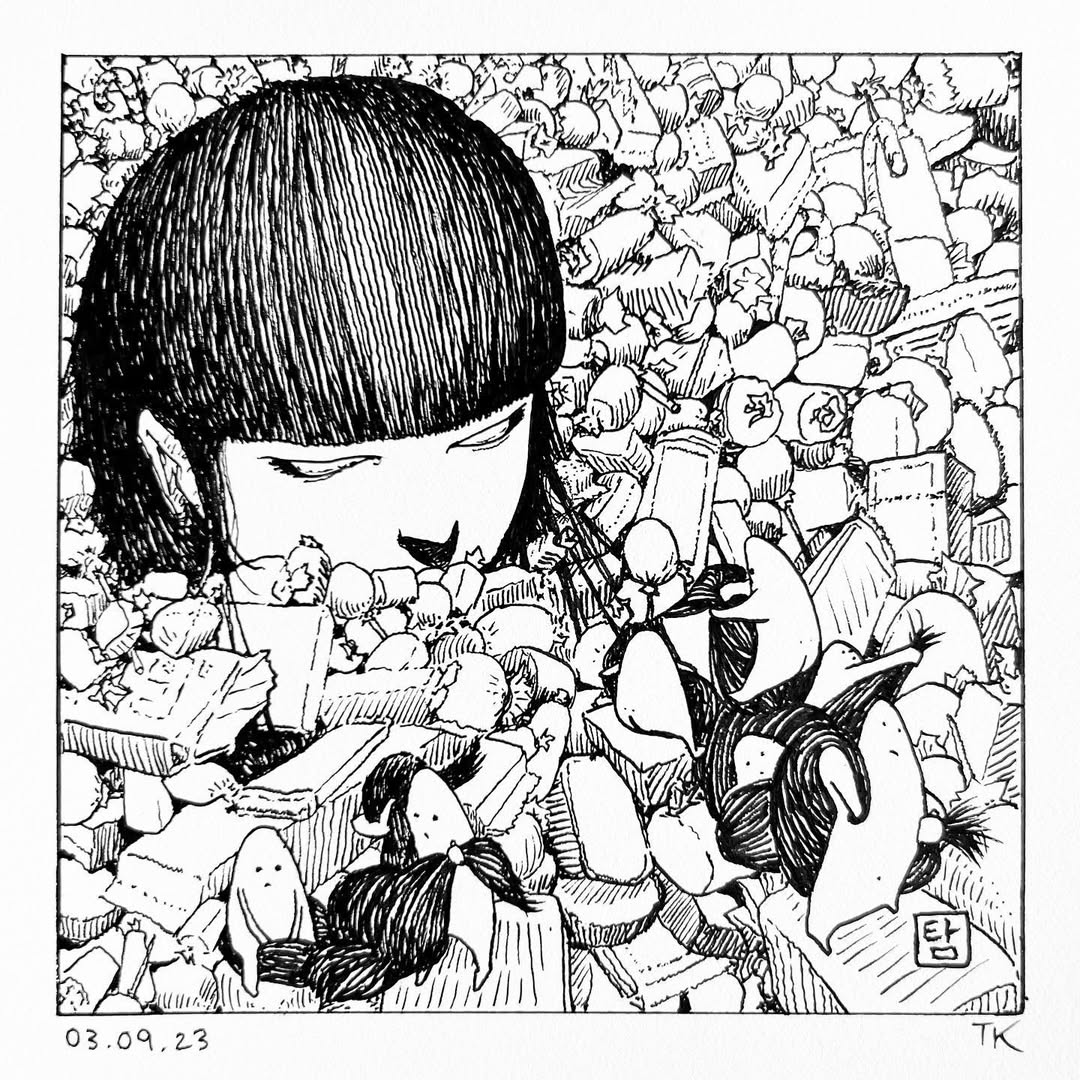
The stamp I use is called a dojang, a Korean family seal with your family name and your given name, specific to you. My Korean name is Tom Jin, and I simplified the signature to just say “Tom” in Korean. My mom brought it back from Korea, and she's been really supportive, so it feels meaningful. It’s a symbol of pride, heritage, and a cool design element too.
As a Korean American artist, how do you see that duality shaping your work?
I didn't grow up seeing Korean artists in media. Now I realize a lot of classic American cartoons were actually animated in Korean studios. I want to celebrate that hidden contribution and elevate it with my work.
Can you speak on the artistic influences from both Korean and American culture in your life?
Korean culture wasn’t super visible when I was growing up. But when I’d visit Korea, I’d see beautiful design and art my family took for granted. That duality shaped my visual language.
Do you hope your art promotes Korean culture?
It’s not the central message, but I do want to show pride in who I am and let other Korean or Asian kids see people who look like them making cool stuff.
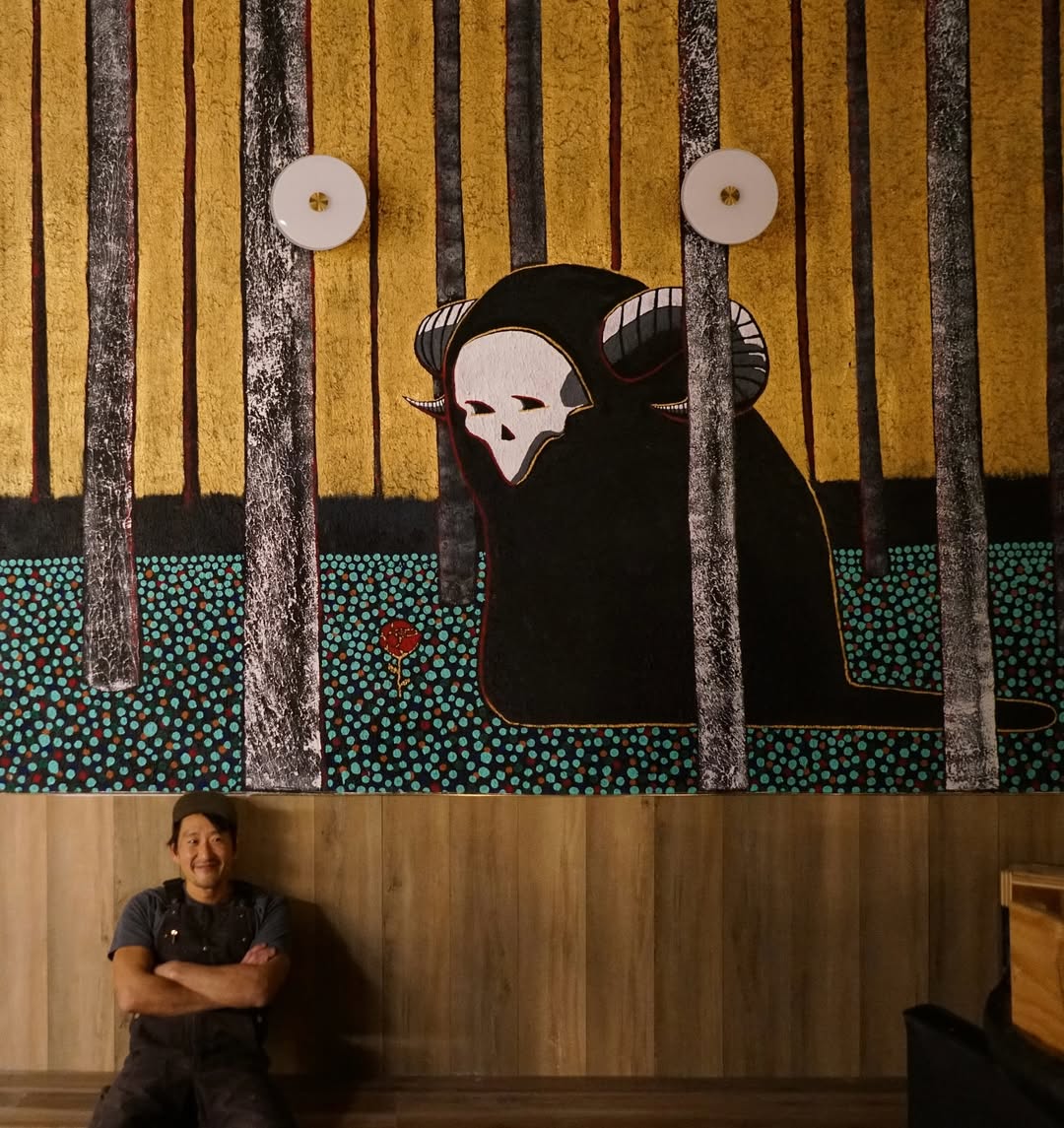
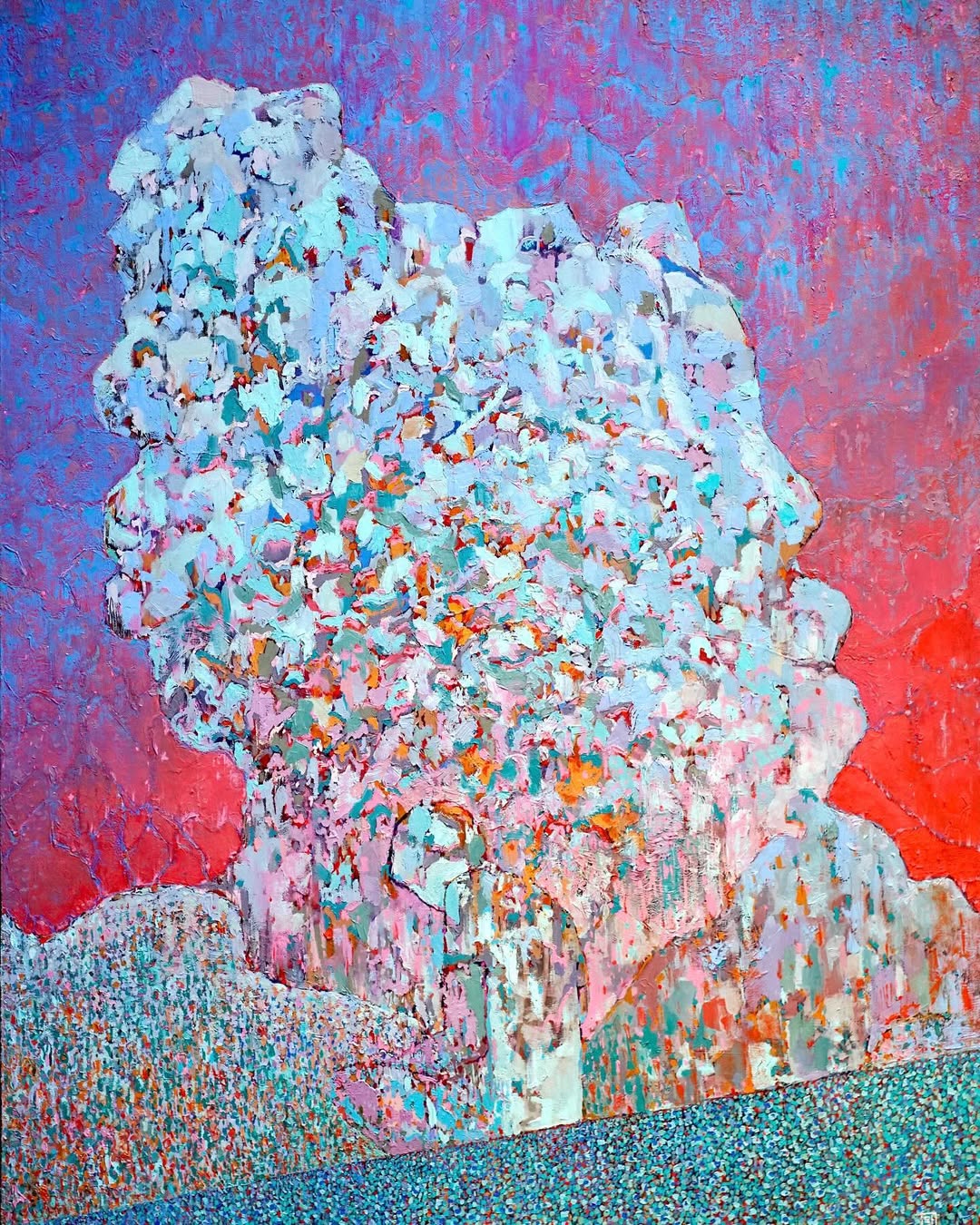
'A Forest for the Trees' by Death by Narwals
How does it feel to see Korean artists finally getting global recognition?
It’s incredible. Korean people are proud. It’s inspiring to see our stories and art getting global respect, after years of only being seen as labor, not creatives.
Do you feel that Korean films and their darker tones influence your work?
Definitely. I consume a lot of film, especially Korean cinema. The mood, the cinematography, the emotional depth, it all feeds into what I try to do in my paintings.
Have you experienced racism, and has that influenced your work?
Yes. I’ve had people yell slurs at me on subways. But I also think things have improved. When people see great Korean films or music, they begin to see us differently, not just “other,” but as creators of things they respect and enjoy.
How did you find your way into the DC art scene?
Group houses and DIY shows were key. I started by hosting events at home, meeting other artists, and slowly working my way up over 15 years. That community aspect really mattered.
What was your experience like selling art to the city of D.C.?
I got an Art Bank grant. They added one of my pieces to their permanent collection. It was validating. I love public art because it’s not about sales, it’s about creating something for everyone to enjoy.
What happens with the art once it’s acquired?
It’ll go up in a DC public building or space, wherever they place it.
How are you feeling coming off a big month of art shows and sold-out paintings?
It’s been amazing. A lot of shows I’d been preparing for happened all at once. It was overwhelming in a good way, seeing old friends, new faces, and everyone’s work after a long break. I had pieces I’d saved for this, and now I’m in the afterglow, feeling inspired and ready to make more.
What events were you part of?
One was called Umbrella, a huge group show with over 100 DC artists. They said 20,000 people came through. There was live painting, mural duels, and more. One of the biggest shows I’ve been part of in DC.
Do you remember the first painting you sold at the event?
Yes, it was called The Giving Tree, an oil painting I’d painted over multiple times for about three years. It had several final versions before I felt it was truly finished.
What print was that?
It was Good Night Moon. It features a Korean child wearing a hanbok. That and The Giving Tree both incorporate Korean identity, which is something my mom always wanted me to be proud of.
"Korean culture wasn’t super visible when I was growing up. But when I’d visit Korea, I’d see beautiful design and art that my family took for granted. That duality shaped my visual language."
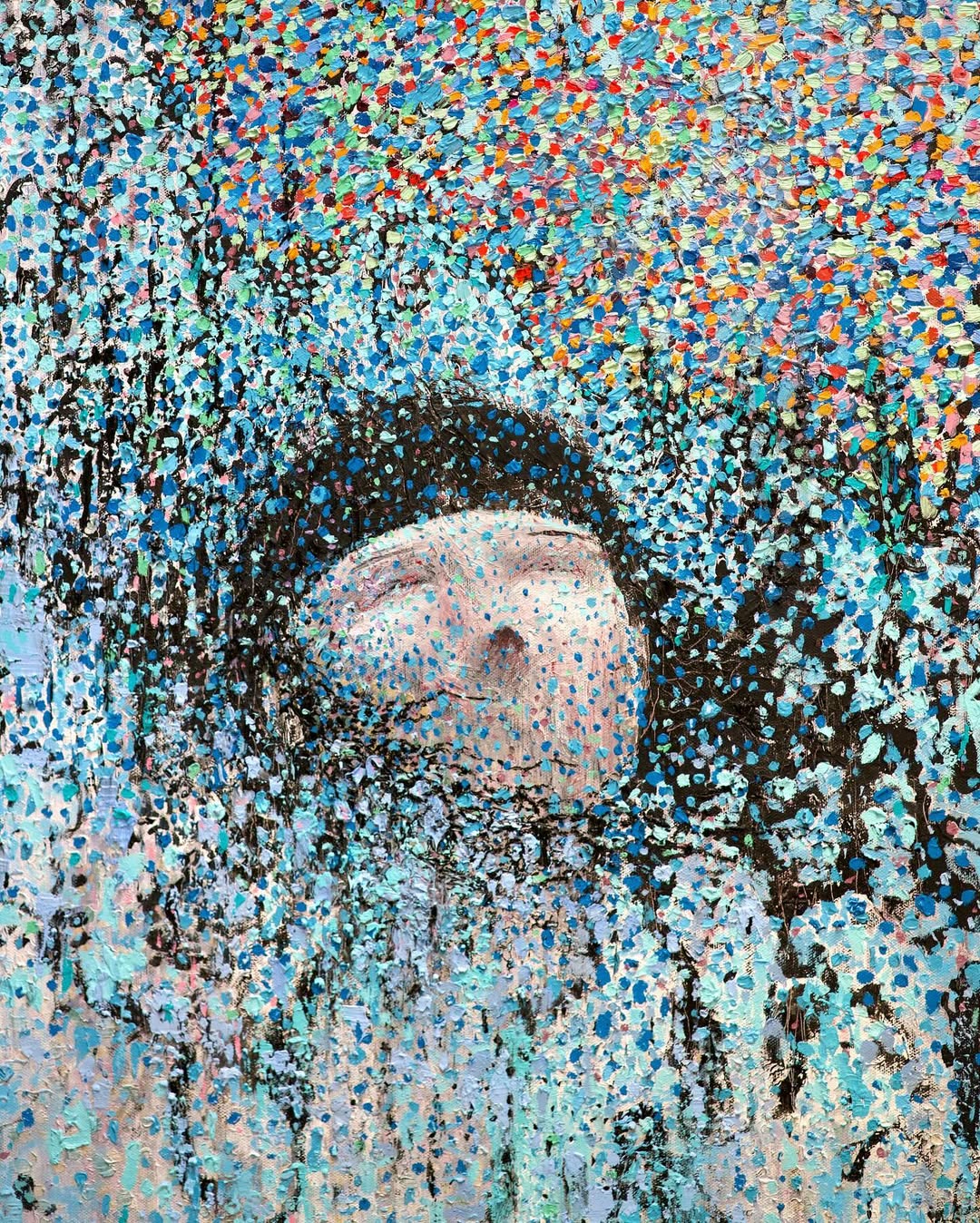
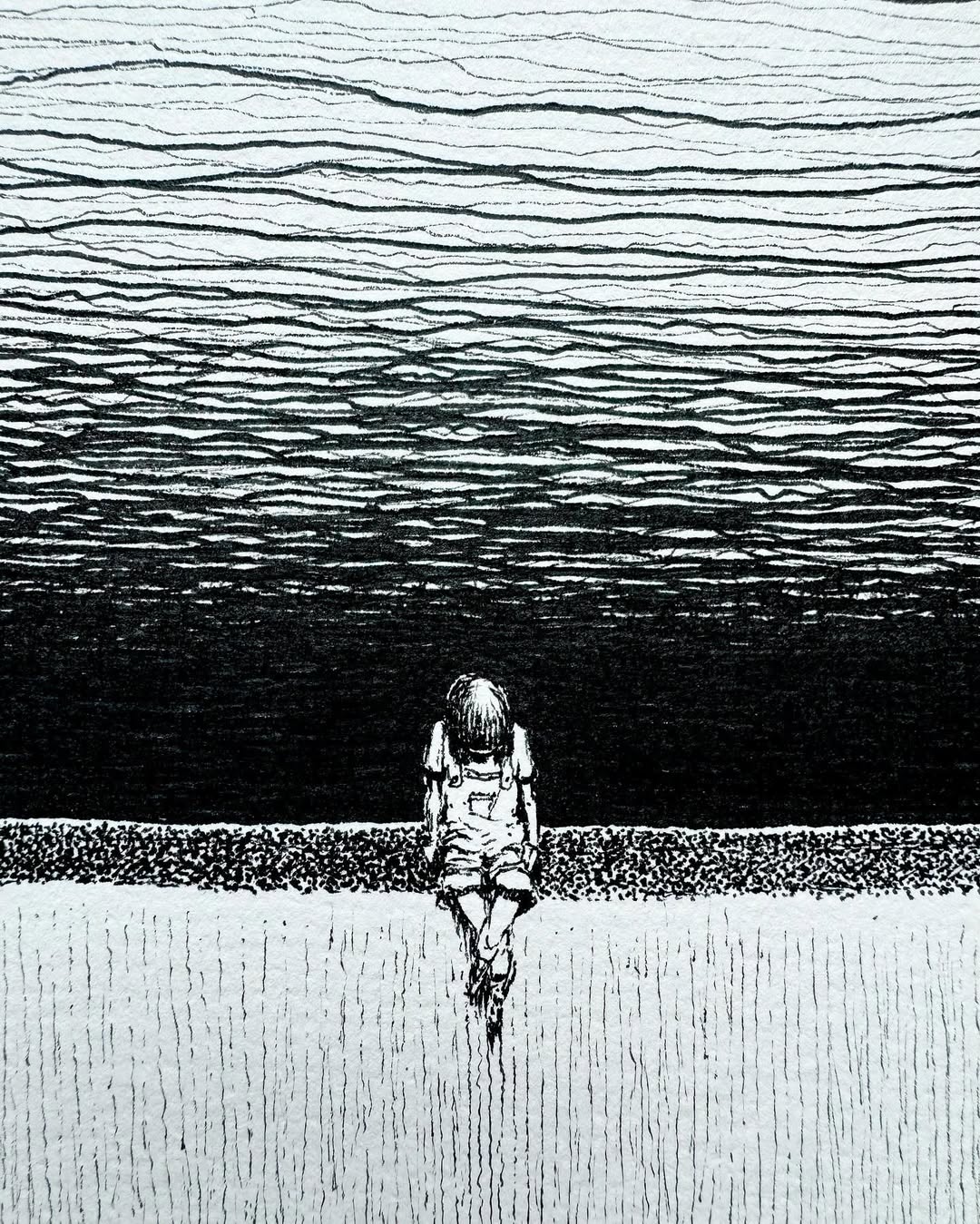
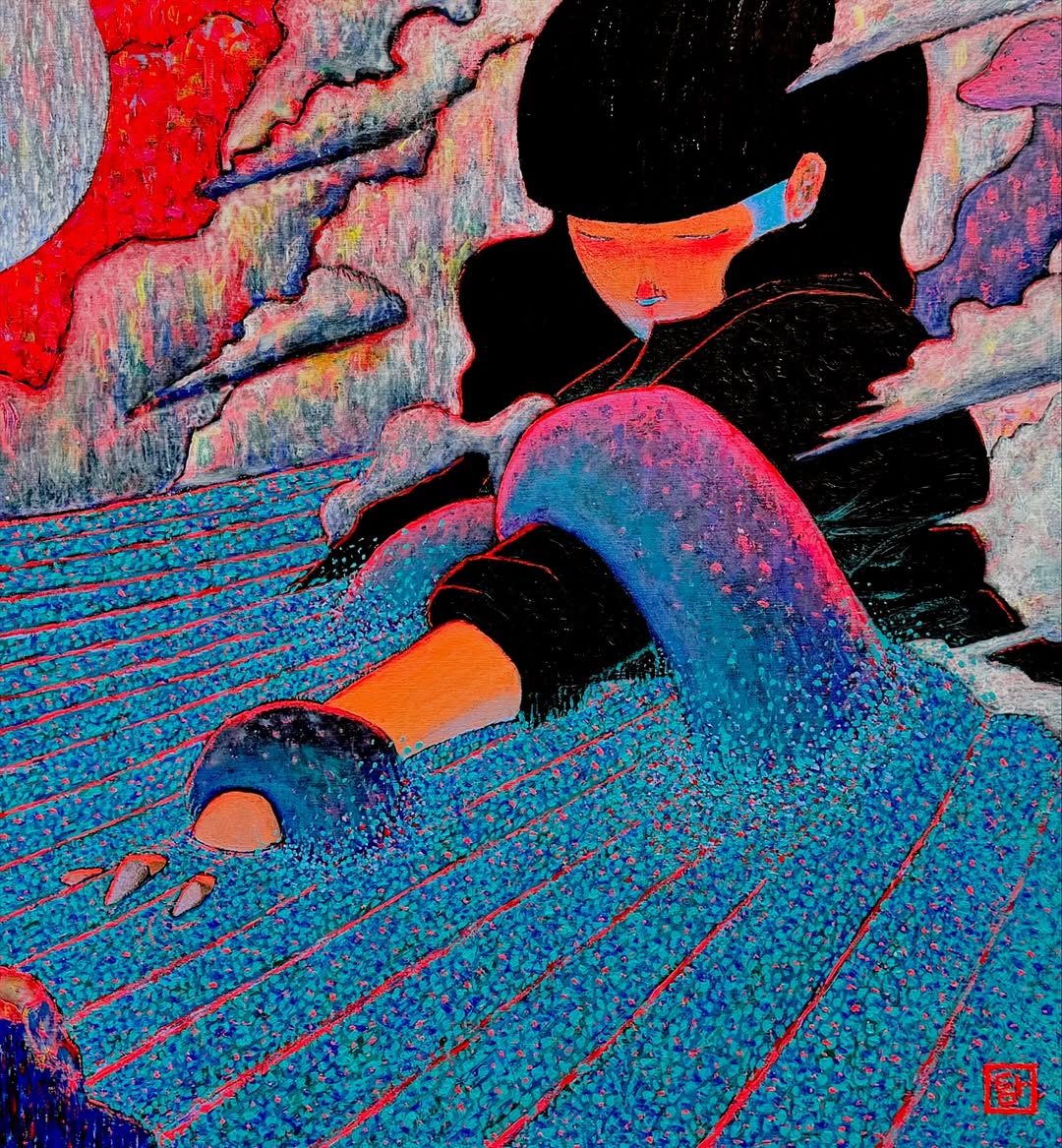
'The Weight of Water' by Death by Narwals
You mentioned a DM from someone who bought your print and shared a personal story. Can you talk about that?
A stranger messaged me after the show saying one of my prints reminded her of her brother, who overdosed on fentanyl. She shared a personal, emotional interpretation of the piece. It reminded me why this work matters, how art can touch someone deeply, even in unexpected ways.
You’ve shifted styles recently, moving from ink drawing to something more Impressionist. Do you think that contributed to your recent success?
I think so. The change felt natural, unplanned. I started working more instinctively, painting over older works, chasing light and movement.
How do you choose your colors?
It’s about capturing light, like in photography or film. I think a lot about “magic hour” and the glow of clouds at dawn or dusk. I want my paintings to reflect that kind of awe.
What inspired your painting Poolside?
DC has amazing public pools. I wanted to capture that sense of joy and light. The clouds in the painting are partially based on war photography, balancing beauty and horror. It's about how we find joy even in a broken world.
"Success would be great, mostly to fund bigger projects. But I’ve let go of chasing it. I’m happy. I get to do what I love, and I’m surrounded by people I care about. That’s enough."
The piece you're working on now. What’s the process like?
It’s a work in progress that I’ve painted over for two years. No clear direction yet, just chasing reflected light and building from there.
Do you feel pride in your work right now?
Yeah. I’ve been doing this for a long time. It doesn’t really have a “purpose,” which is the great part, but I’ve definitely improved.
What’s the main message you hope to get across with your work?
Honestly? I want to make cool stuff. Every artist does. The style may shift and evolve, but the goal is to get better, try different things, and not feel boxed in by categories like “high art” or “lowbrow.”
Do you have any short-term goals right now?
I’ve got a lot of ideas. I’m doing more murals and prepping for a group show in February with Asian American artists for the Year of the Dragon.
What is your truth as an artist?
My Korean name, Tom Jin, actually means “searching for truth.” That’s a big responsibility. For me, storytelling is the core, figuring out how to say something meaningful through a single image. I’m still learning, but that search is the journey
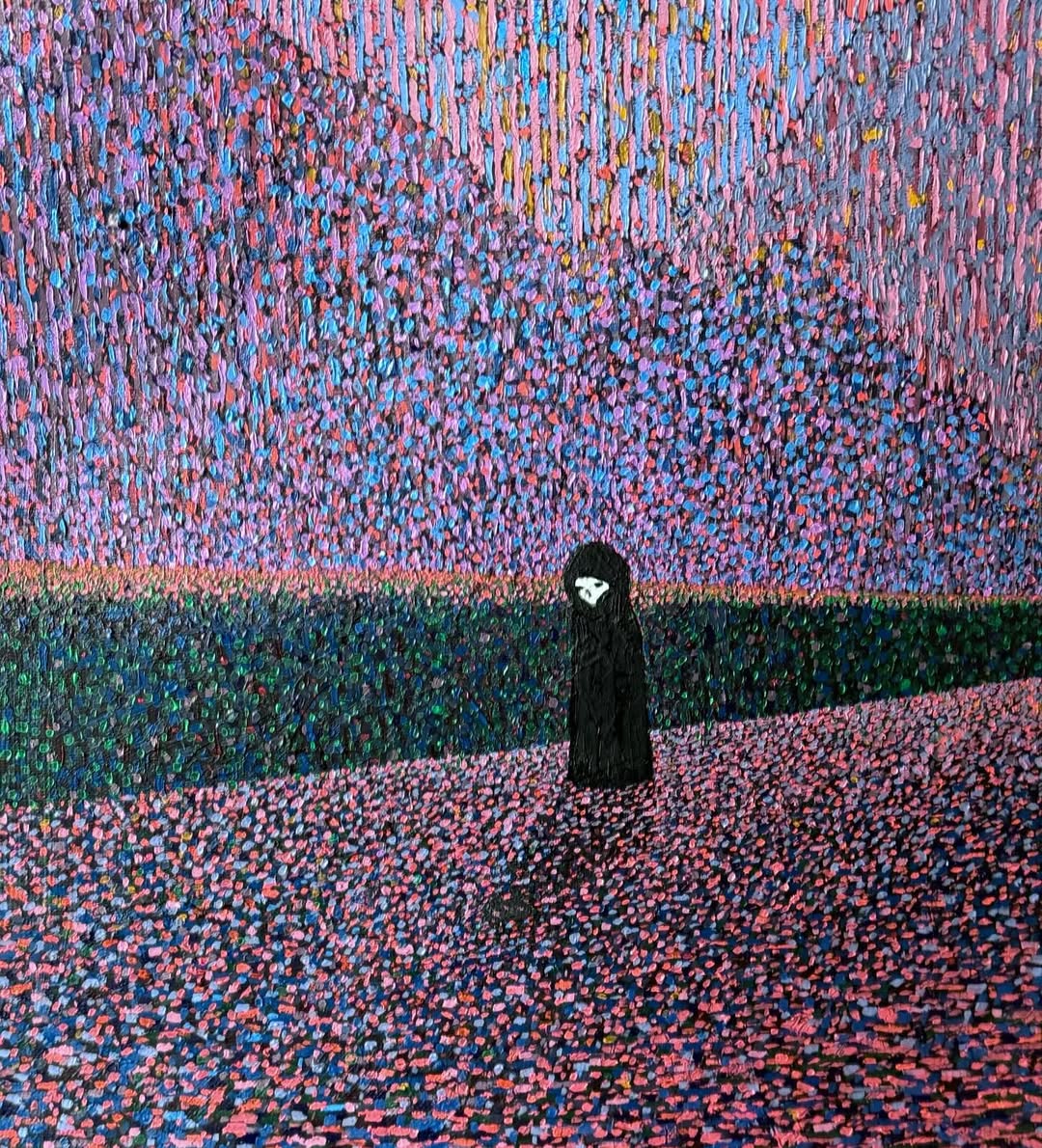
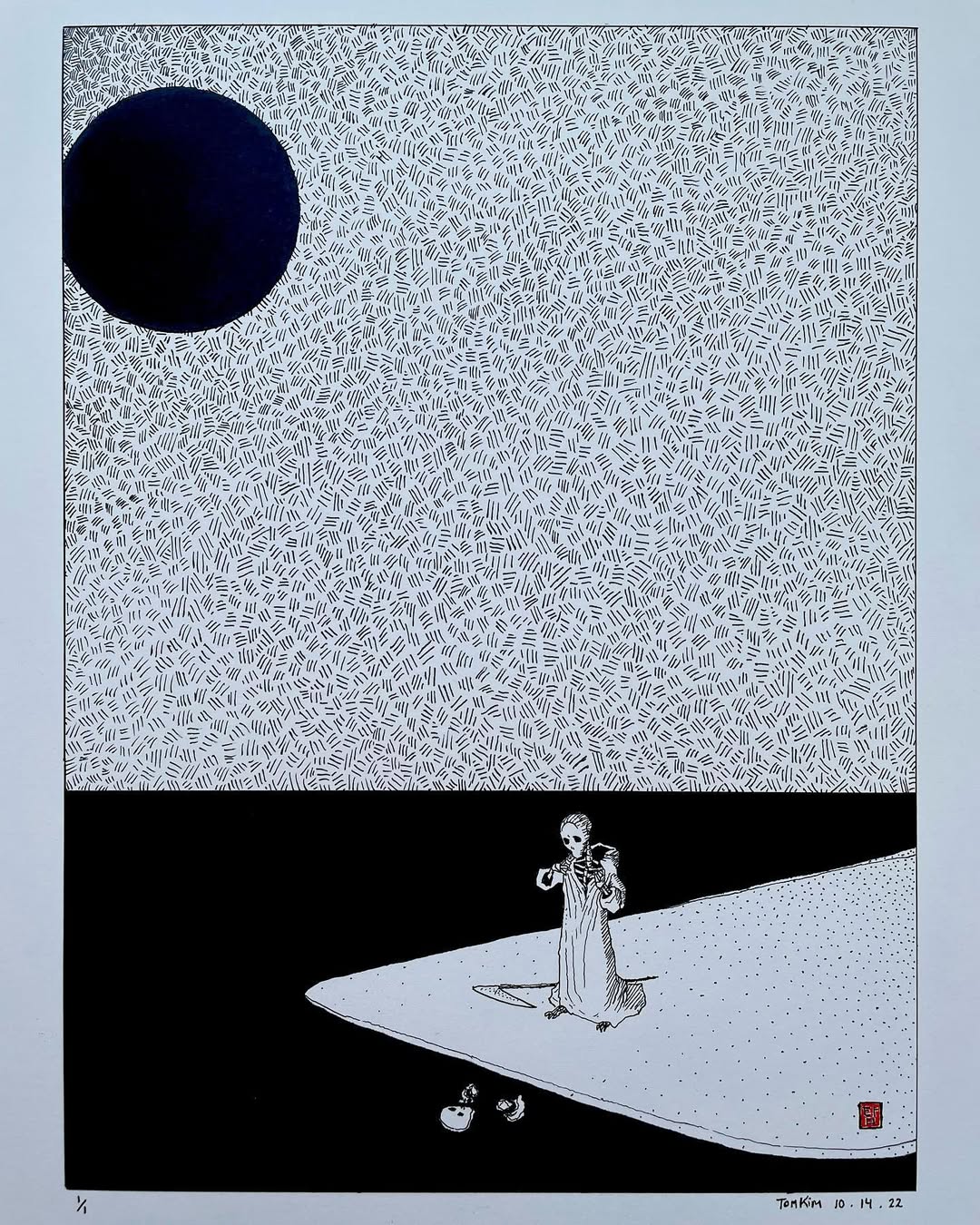
'Reaper Commute' by Death by Narwals
Death by Narwals’ paintings don’t announce themselves. They linger. Built from fragments of memory, cultural inheritance, and quiet observation, the work lives in the space between what’s remembered and what’s felt. By embracing nostalgia without romanticizing it, and identity without narrowing it, Death by Narwals creates images that feel deeply personal yet widely resonant. The practice isn’t about chasing resolution or clarity. It’s about staying with the question, revisiting the image, and allowing time to do its work. In that way, these paintings mirror memory itself: unfinished, evolving, and honest in their search for truth.