Digital Painting
Drawing
Illustration

Isabel Lauren Loewe
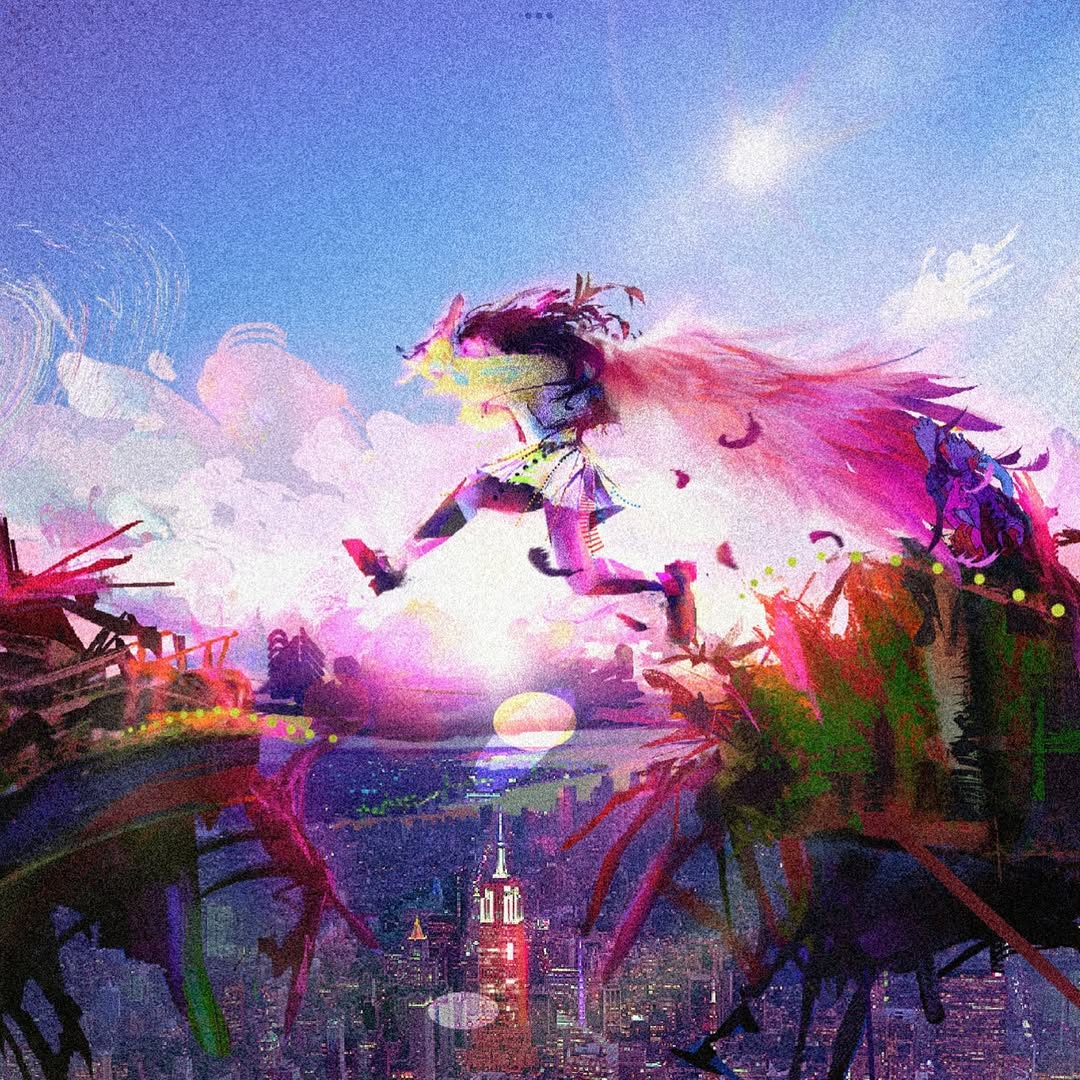
'Color & Light' by Mira
It’s been two years since Mira walked away from a thriving career in graphic design. She felt lost in the buzz of meetings, harping on and on about deliverables and campaign strategy. Since then, she’s found herself pulled into a different conversation, one about emotion and motion as it applies to illustration.
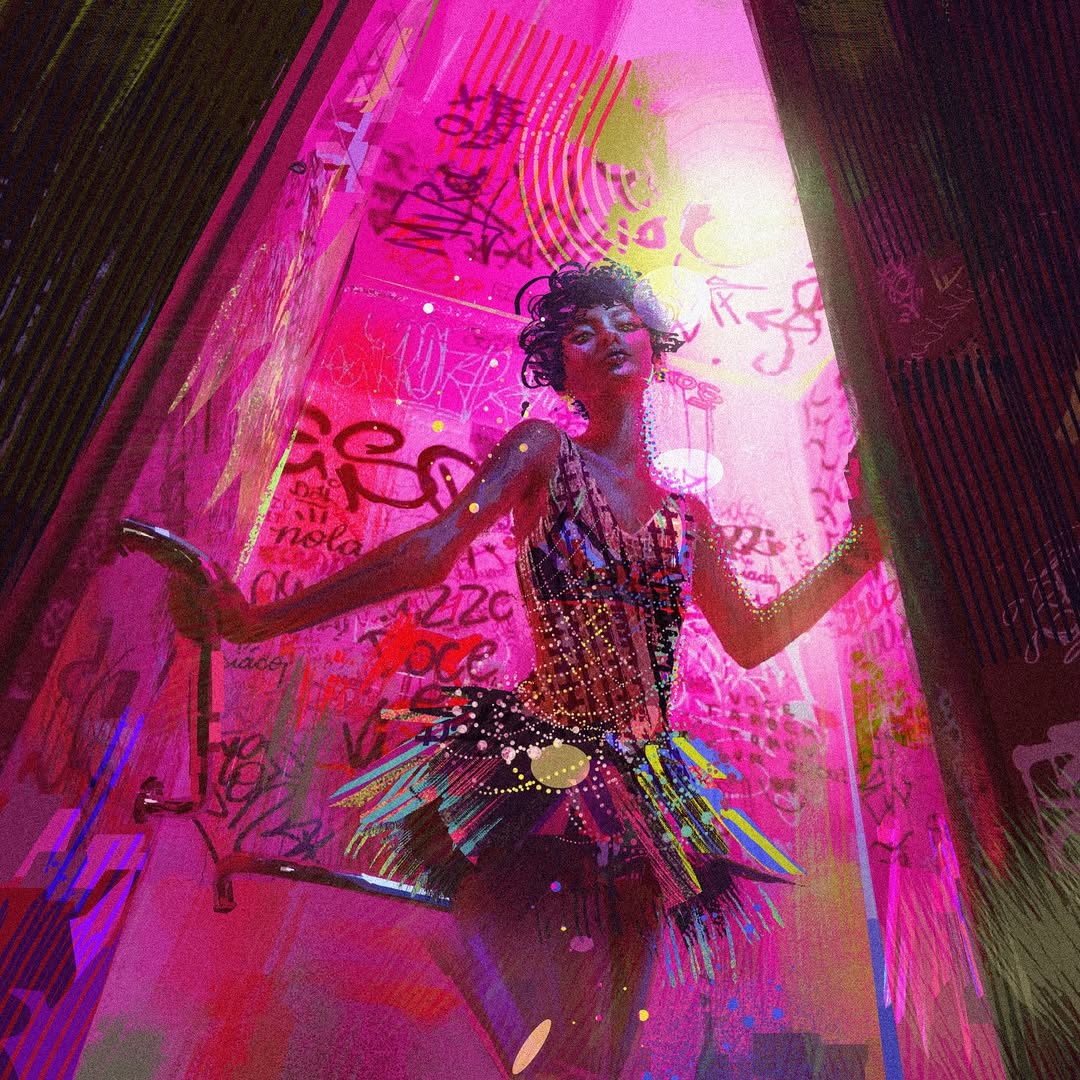
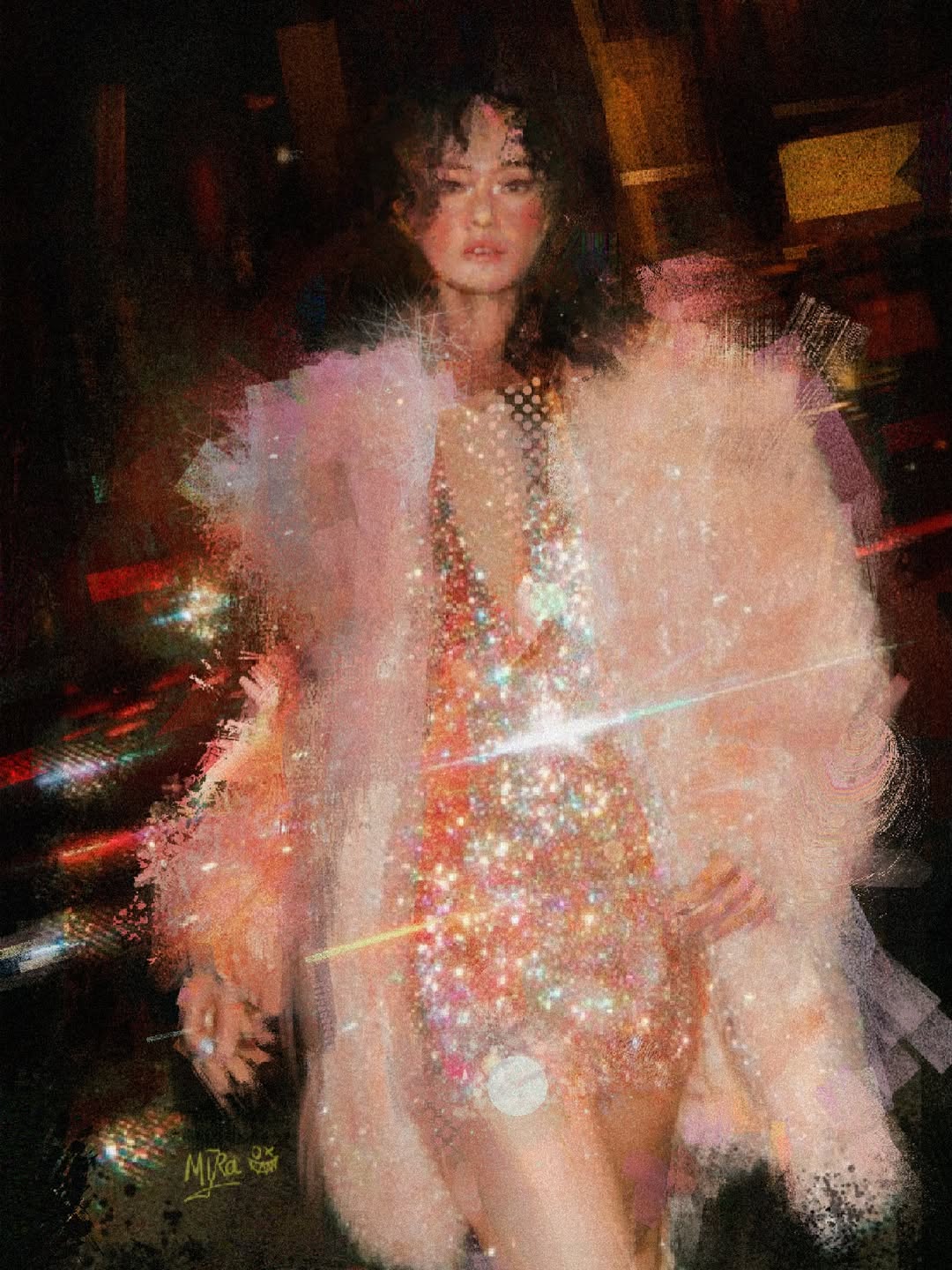
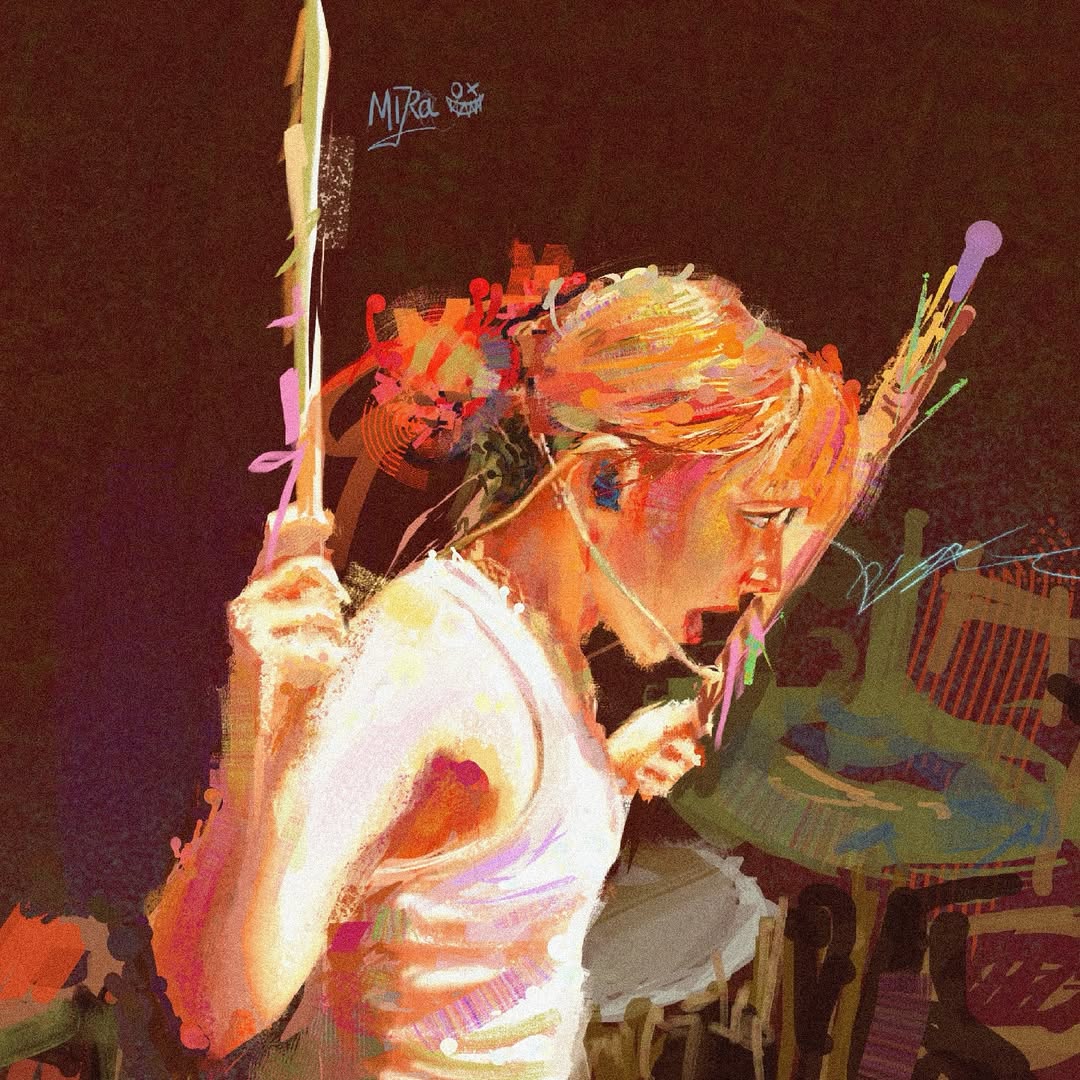
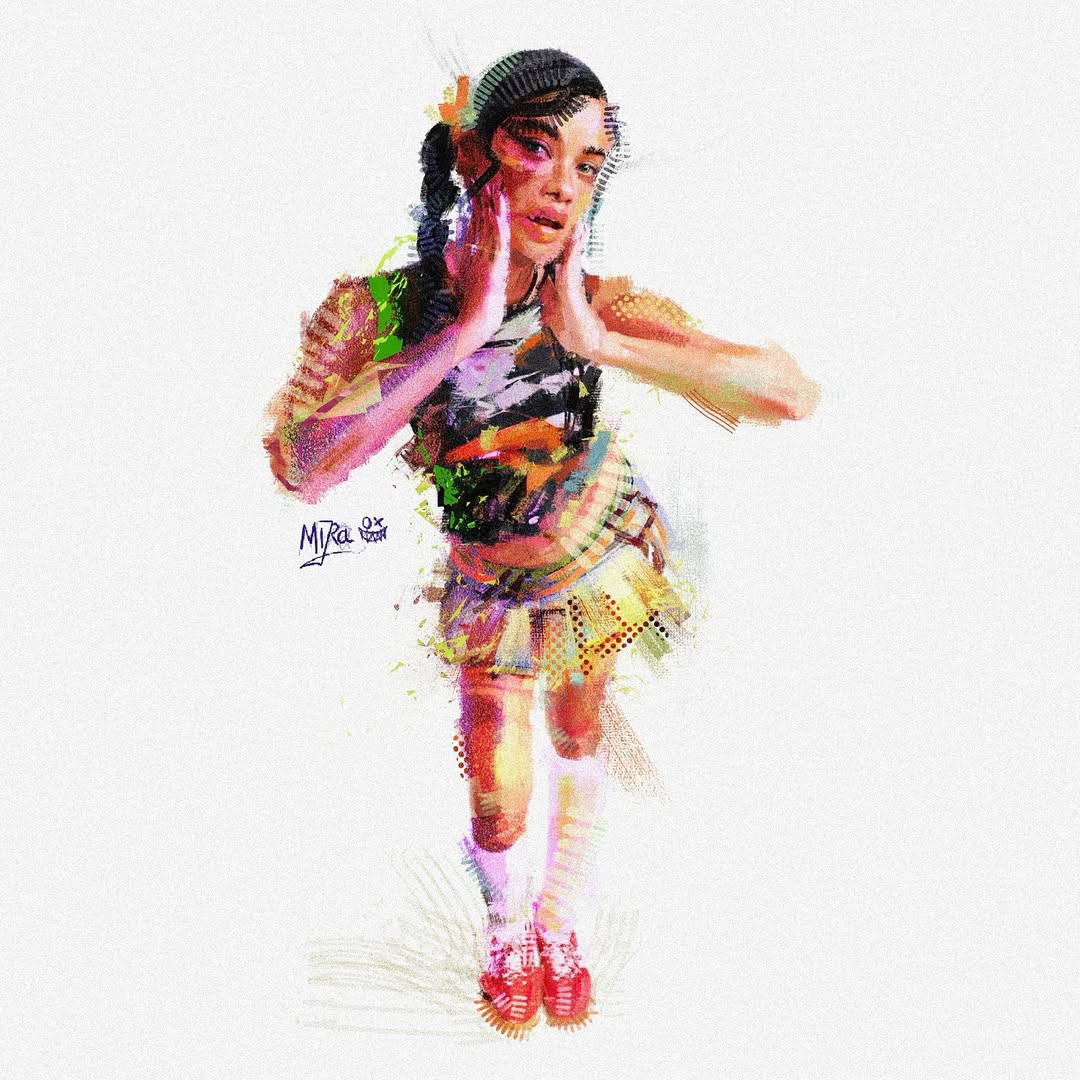
What began as a leap of faith has quickly shaped into an exciting new chapter for the young visual artist, whose work feels like a still image stuck in a moment or caught mid-flight. As she’s explored her newfound medium, she’s developed a style centered around thick textures, grunge layers, and vibrant, neon colors.
We got the chance to talk to Mira about her change in careers and how she finally feels she’s found a field that gives her the space to be unrestrained.
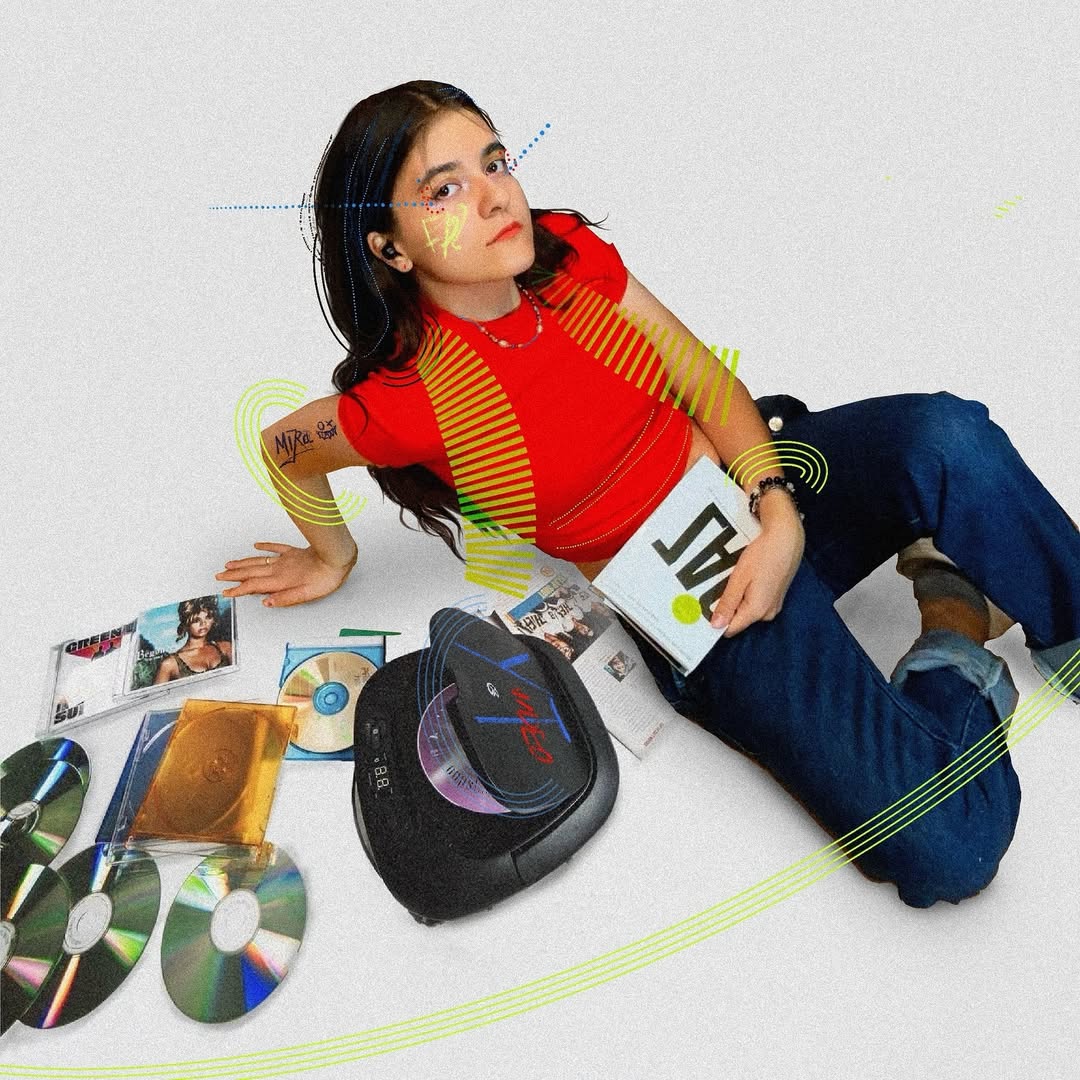
Headshot by Mira
How did you first find your way into art? Was there a specific moment or experience that made you realize this was your path?
That’s a really interesting question, thank you. Umm… I’d say I’ve always been involved with art—it was my way of expressing myself and channeling emotions and energy for as long as I can remember. So honestly, ever since I was a kid, I knew I wanted to be part of the art world. The tougher part for me was figuring out which path to take, ’cause there are so many directions you can go in, right?
At first, my path kinda got tangled—I stepped into the art world as a graphic designer/art director. And even though five years down the line, I was at my peak, I still didn’t feel accomplished. I realized I had no love left for graphic design, and once the love is gone, you gotta walk away. So I did.
Since I was finally standing on my own two feet financially, I decided to be more honest with myself—about what I truly love—and bet on myself. That’s when I made the leap into being an independent illustrator. It was a transition into a new sub-ecosystem, visual development, where I feel like I actually belong. Here, I don’t have to shrink myself or water down my style just to fit in. Honestly, I feel way more at ease in this industry than I ever did in the design world.
Your work feels alive, full of motion, light, and texture, almost as if sound were translated into color. Where do these worlds come from for you?
For me, the way I see the world is like 98% mirrored in my work. That’s why it’s always so full of color and texture. I’ve always been a sucker for that grunge, layered feeling—it’s kinda like looking at life through a kaleidoscope lens.
If I’m being honest, one of the main reasons I gravitate toward movement, texture, and anything that feels dynamic is because I can’t stand stillness. I feel like, if we’re born into this world and get the chance to experience it, then we have to go all in—love as fully as we can, get our hearts broken as fully as we can, feel sadness or melancholy as deeply as we can. That’s how you drink in the energy of what it really means to be alive.
That restless, raw, maybe even grungy energy has always been in me—pacing through life, buzzing with fire, ready to burn itself out chasing dreams. Maybe people call it the energy of youth, I’m not sure. What I do know is that I’m always searching for motion, always wanting to capture and experience it. And I think that’s what comes through in my art too—because in the end, art should be a window into the artist’s soul. Right?
"Ever since I was a kid, I knew I wanted to be part of the art world. The tougher part for me was figuring out which path to take, ’cause there are so many directions you can go in."
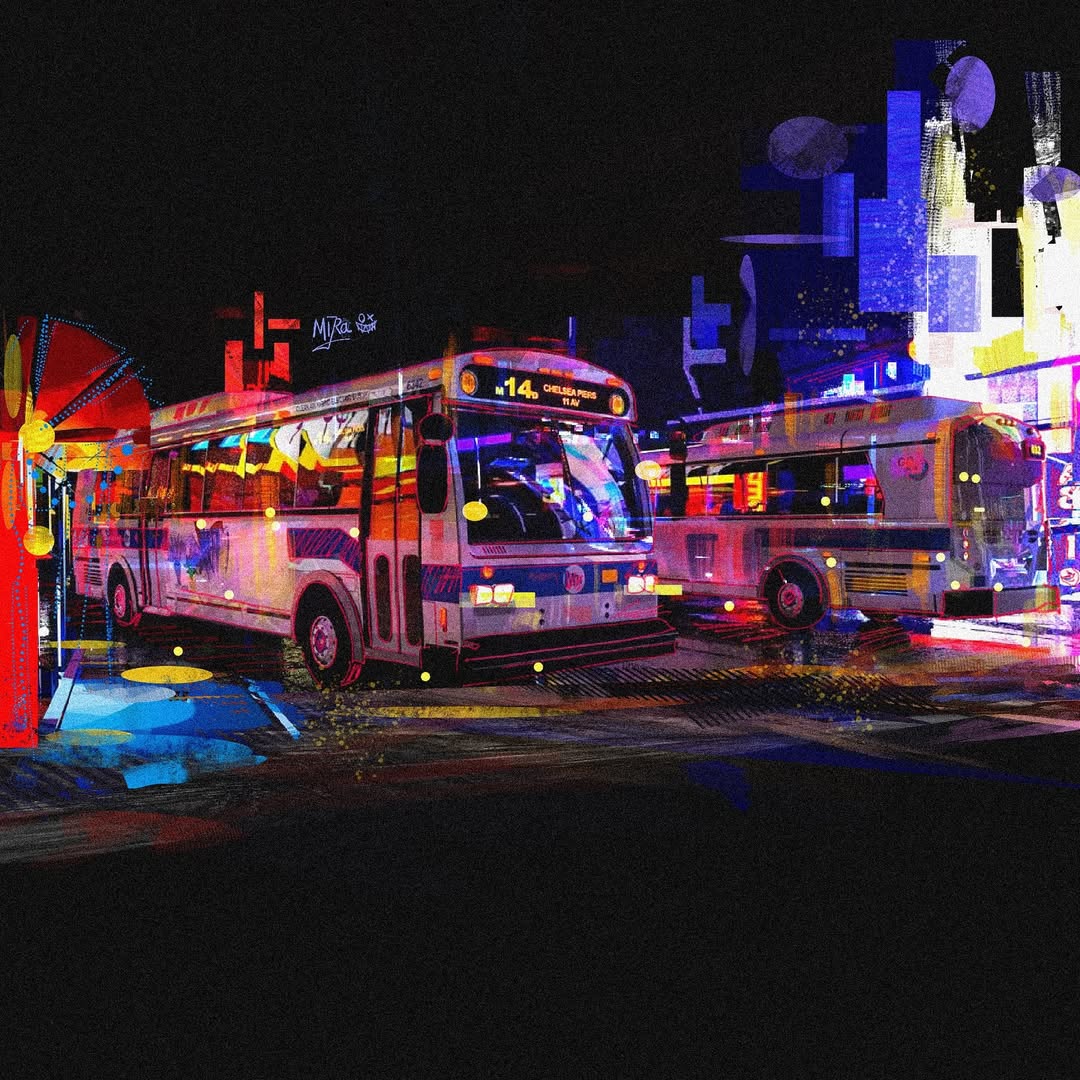
'Chelsea Piers' by Mira
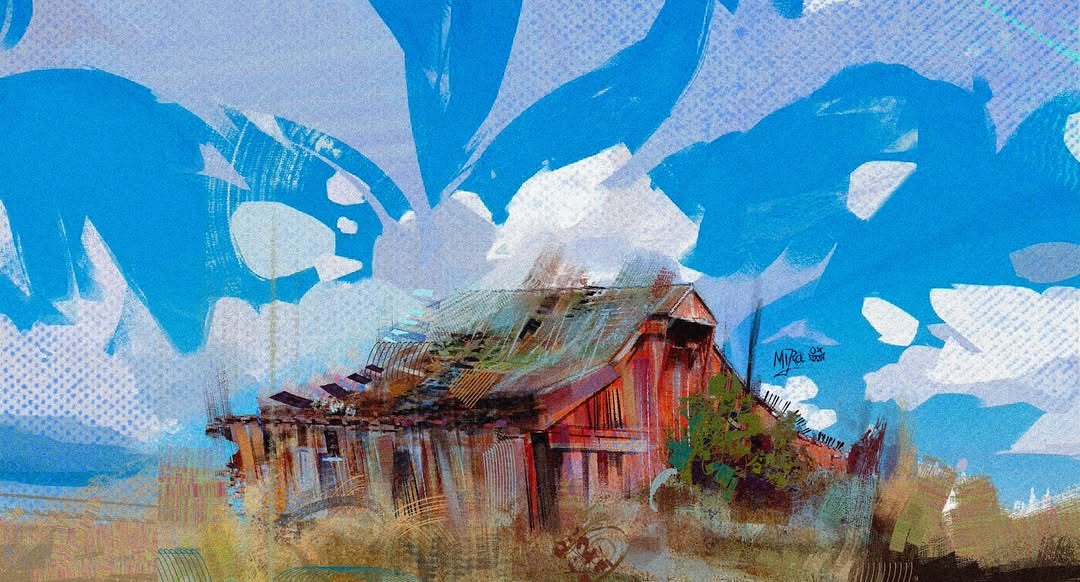
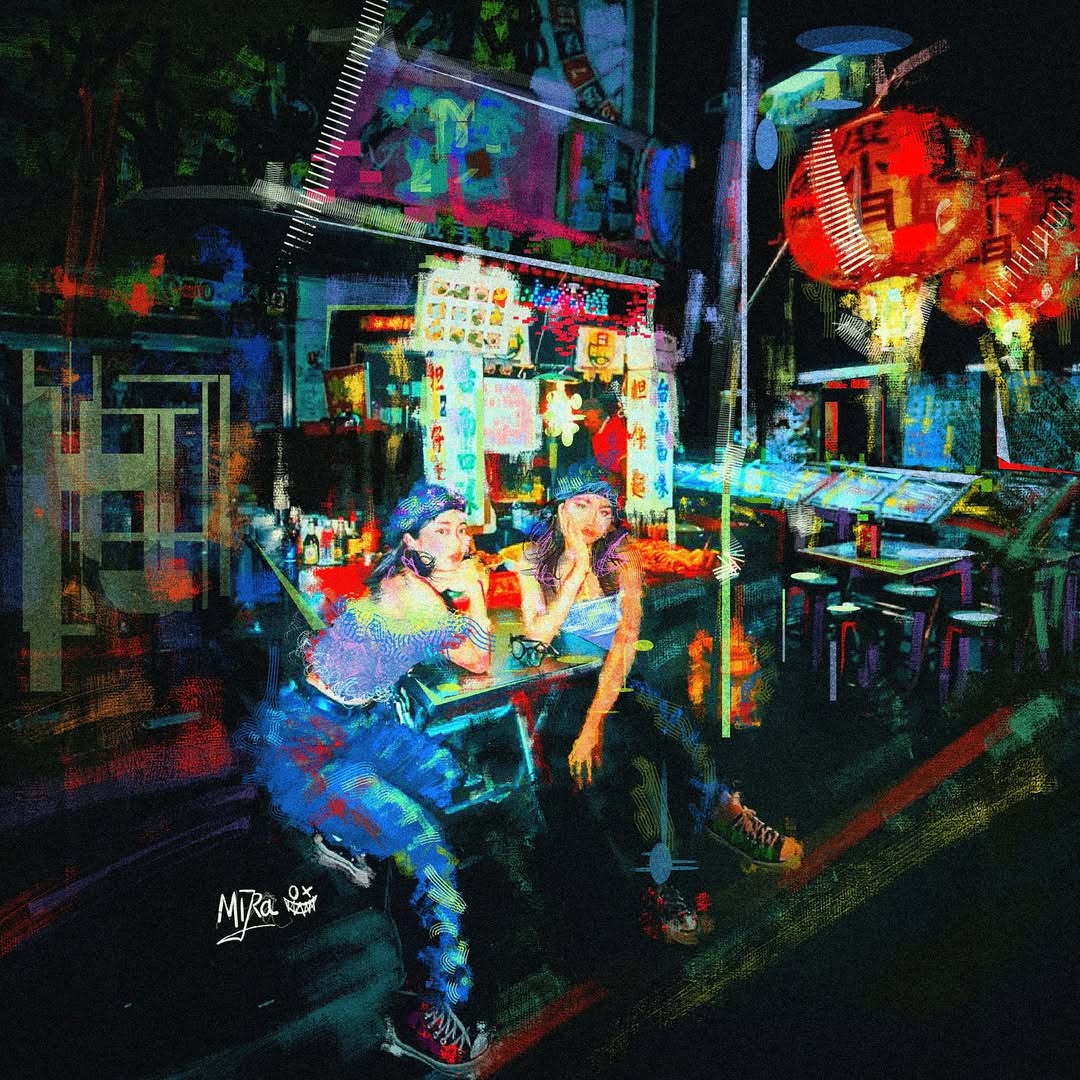
There’s a strong sense of place in your art, from city streets to quiet rural scenes. What draws you to those environments, and what do they represent to you?
That’s a really good observation. I think the main reason I’m usually drawn to rural areas is because of my love for human connection—that’s where I feel most energized and creative. For me, it feels like everything humans touch comes alive in the best way possible.
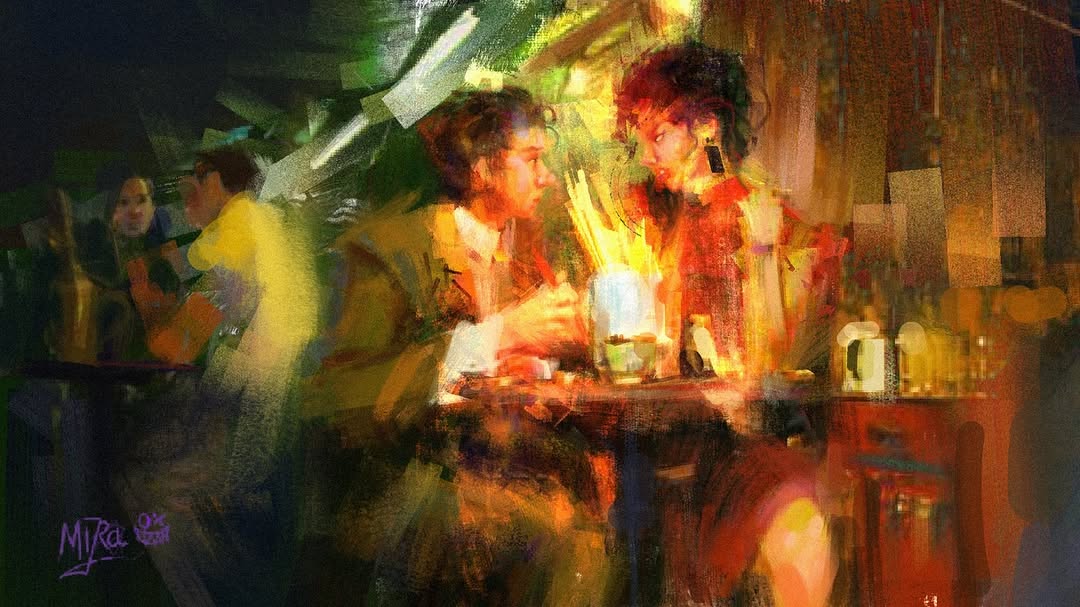
It doesn’t really matter if I’m drawing a huge cityscape or a small, quiet rural scene—what matters is how people make those places feel. I find it fascinating that a busy city street can actually feel more lonely, almost melancholic. There’s a certain solace in being part of the crowd from an outsider’s perspective, yet feeling so far away from the strangers walking right beside me.
In contrast, the melancholy I feel in rural areas is softer—it’s more peaceful, more internal, maybe even tied to memories of my childhood. So yeah, whether it’s a big city skyline or a small house in the countryside, what I’m really chasing in those places is the human touch—the way our presence shapes and transforms the world around us.
Your palette and brushwork feel instinctive rather than polished. Do you think imperfection plays a role in how emotion comes through your work?
Yes. Since childhood, I was taught to be a perfectionist—in everything I do and in how the world should perceive my work. Somewhere along the way, I got stuck in this 'perfectionist cage,' overthinking every tiny detail until it took forever just to finish even the smallest piece.
What’s interesting is that, back in my younger years, I was creating these super polished works where you couldn’t even see a sketch line. But they felt lifeless to me, like I had squeezed all the energy out of them instead of letting them breathe. Art, to me, should reflect how the artist perceives the world—and those works were just too still to capture my vision.
That’s when I started to loosen up. Because the beauty of liveliness, in my opinion, is movement—the way we feel every single second passing. To capture that dynamic, I had to stop over-polishing and lean more into an impressionistic approach. I want to catch fleeting moments the way the human eye and brain really perceive them—with feeling, not with perfectly geometric shapes and flawless compositions.
So to answer your question: yes, imperfection plays a huge role. I don’t even really see it as imperfection—I see it as being dynamic, as chasing motion. For me, that’s what truly matters: letting the art carry emotions in a way that feels alive, instead of caging them in something overworked and too perfect.
"I want to catch fleeting moments the way the human eye and brain really perceive them—with feeling."
When people look at your paintings, what do you hope they notice or feel before they even realize why they’re feeling it?
To be honest, I don’t really have expectations for how people should feel when they look at my art. I create because, in that moment, I want to express my emotions and state of being—but I don’t expect others to feel the same thing or tap into some universal emotion. For me, art should be intimate and personal for each person who encounters it.
Once I finish a piece, I kind of let go of whatever emotions I poured into it. It already exists outside of me, in the physical world. It’s like giving birth to a child—you don’t expect everyone to see or feel the same way about them as you do. You let them exist as their own being.
That’s how I see my work: once it’s created, it has its own life. It will evoke something different depending on the viewer’s inner world, their memories, and their perspective. Because at the end of the day, everything we experience is projection and subjectivity. So I just let my art breathe and let people feel whatever it makes them feel.
Many of your scenes balance chaos and calm, noise and stillness. Is that tension something you’re consciously exploring?
Yes, that’s honestly my never-ending internal struggle. I’m a very dualistic person—I’m constantly drawn to polar opposites in almost everything. Like, even though my fashion sense leans toward classic tones, I’ll throw in a pair of Vivienne Westwood grungy sneakers. I love rock, but I also find myself going to live performances of Beethoven or Bach.
All my life, I was this high-achieving, quiet, timid student, but in university, I became the social butterfly, the loudmouth in the room. I’m naturally intuitive and full of feeling, but I also love putting those emotions into strict structure and strategy—which almost feels contradictory, right? Like, how can you cage raw emotions into a cold framework of discipline and logic?
That duality follows me everywhere. I can spend hours reading Nietzsche or diving into quantum physics, and the next day I’ll be at a festival, completely immersed in the chaos of it. So yeah, I think that push and pull—between chaos and calm, structure and rawness—is just who I am. And naturally, it spills into my work. I’ve carried these different personalities through my life, and they all coexist in the way I paint my worlds.
What keeps you inspired to keep creating?
I don’t think I have an exact answer to that. I guess it’s simply because I love creating—the process itself is what makes me feel like me. It’s as natural as breathing. As long as I’m alive, I’ll be creating, because that’s just who I am. For me, love is the inspiration—the love for my path and for the act of creating itself.
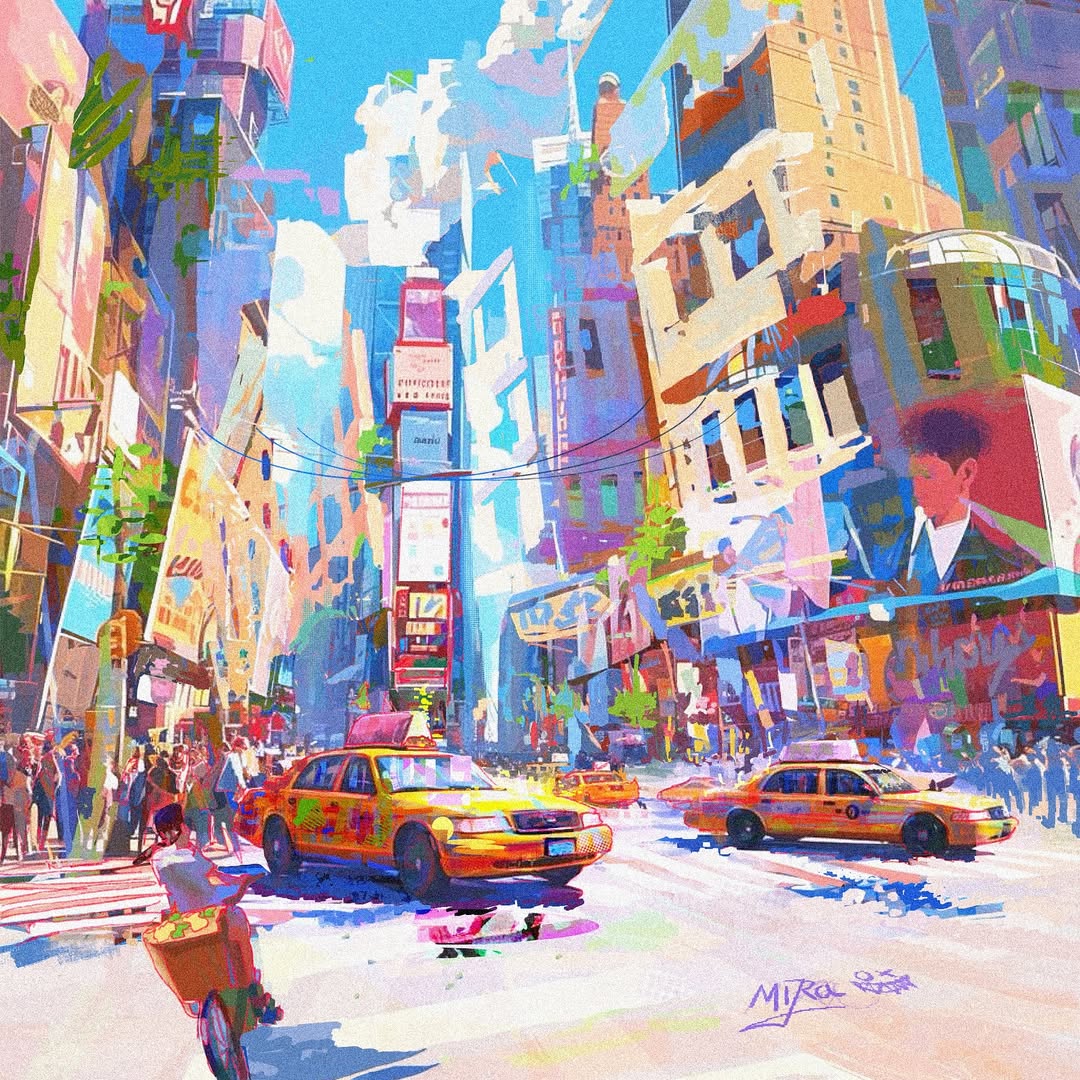
'Times Square in Spring' by Mira
Mira’s work doesn’t try to settle into a single emotion or meaning. It vibrates somewhere between chaos and calm, instinct and intention, always in motion. By stepping away from the rigidity of design and into a more restless, intuitive practice, she’s given herself permission to feel loudly and create honestly. Her illustrations aren’t meant to be solved or smoothed out; they exist as moments, impressions, and lived energy. And maybe that’s the point. Mira isn’t chasing stillness. She’s chasing life as it happens, messy and electric, one frame at a time.