

Animation
3D
Digital

Isabel Lauren Loewe
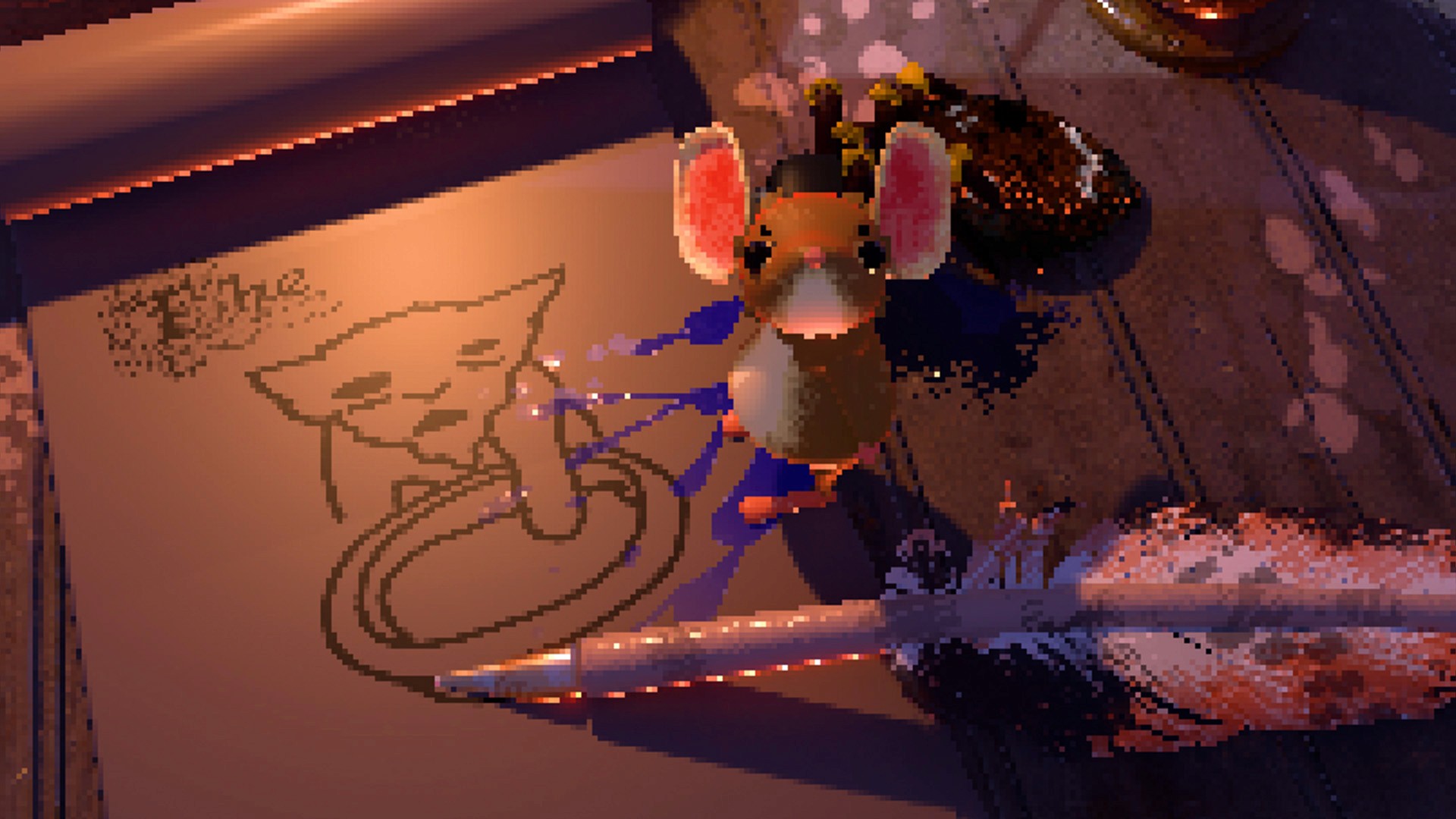
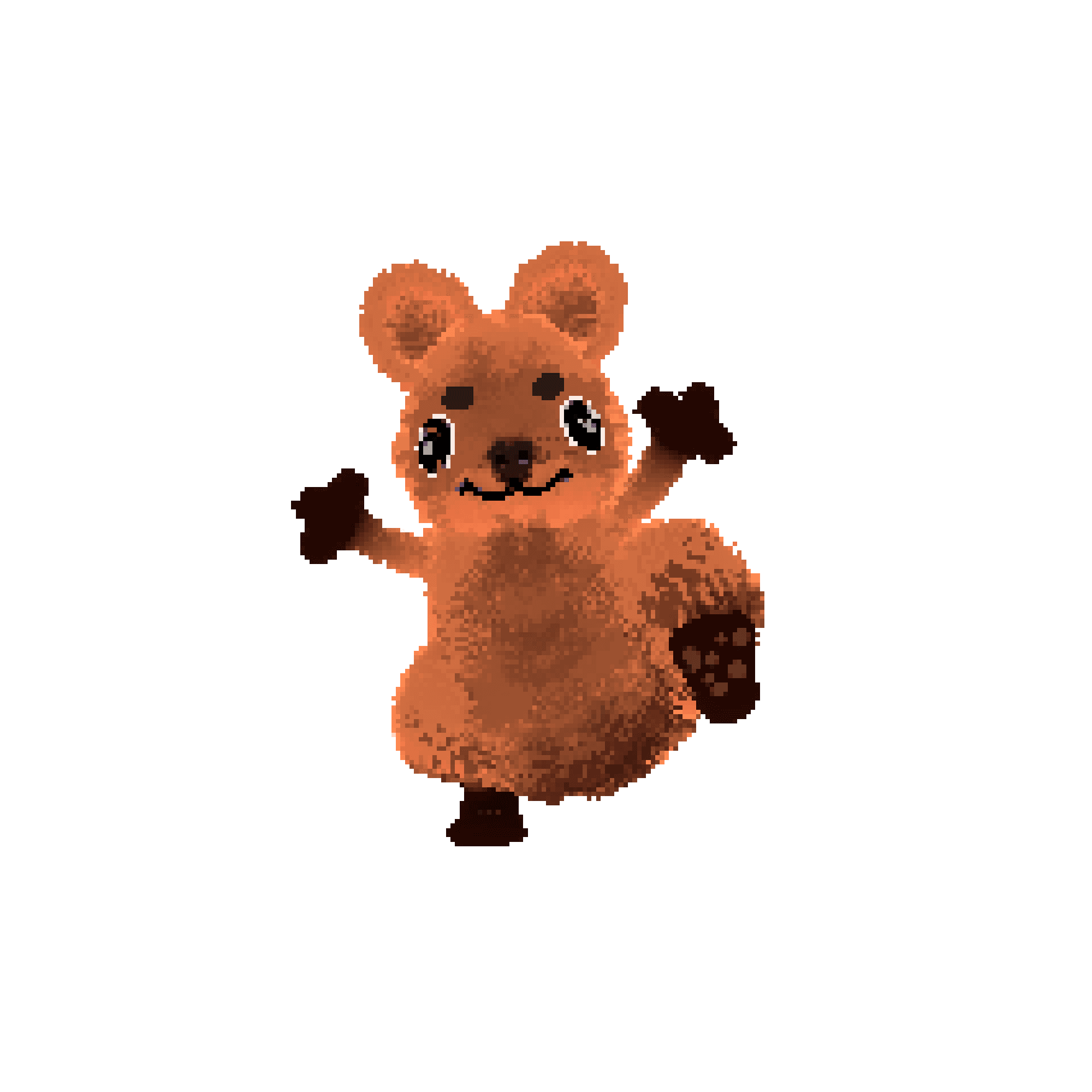
'Spring Heat', 2026
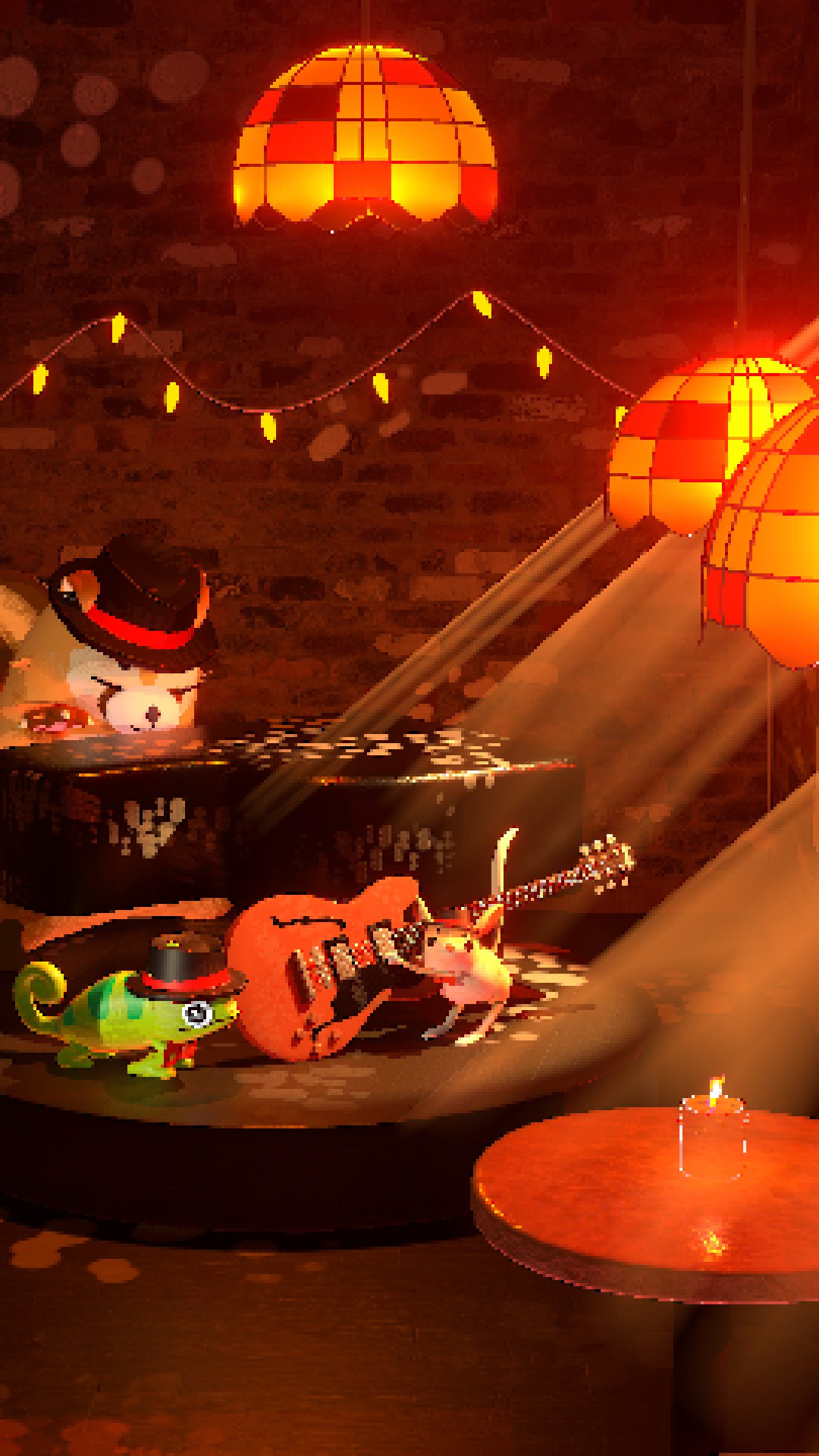
Alex Vargas's worlds are low poly. The characters move with a deliberate choppiness, nothing is reaching for realism, and yet something in them is deeply habitable. There's warmth in the light and a quiet humor running underneath it, and the combination produces the feeling that these places exist somewhere, that you've spent time in them before. His animations feel like playing Animal Crossing on a warm summer morning.
That feeling is built from the palette outward. Before a scene has geometry, before characters are in it, Vargas blocks in the world with rough shapes and puts the lighting in first. The orange he keeps returning to, the temperature of an afternoon through a window, all of it gets locked in before anything else is built. The warmth isn't a quality of the finished work. It's the first decision.
What makes it work is partly how much he's figured out how to do without. His style forgives choppy frames, limited movement, environments that are full of small objects rather than detailed ones. His computer was never powerful enough to do it any other way, and somewhere in there he found that the constraint was the point. Characters who feel real inside a world that makes no claim to realism. A place you want to be that couldn't actually exist.
I saw your first YouTube video posted back in 2022 called Rakook, and the description says you started animating in Blender that year. What pulled you to animating then, and what were you making before?
I never intended to be an animator going into college. I was on a path of architecture and also interactive art, like video game slash museum exhibit kind of stuff. I had a class called Immersive Experiences, which was literally making interactive art in Unity. To do that you use 3D models, so we got a little bit into Blender in that class. I was really bad at it obviously, but at the end of the class I had made a project that I really liked and I wanted to continue with it over the summer. I decided I wanted it to look prettier, so I decided to learn Blender. And as I was learning it, I realized that I enjoyed it a million times more than programming and trying to make games.
Rakook was kind of my first project ever and that's how I learned Blender. I had this idea of just wanting to make a raccoon cook. First I wanted to learn how to make a character, so I watched videos on that. Then I wanted him to move, so I watched a rigging tutorial. Then I wanted him to cook soup, which is liquid, so I learned how to do a liquid simulation. It was kind of an amalgamation of a lot of tutorials, and that's the best way to learn in my opinion.
You taught yourself Blender through that project. What tips would you give anyone learning Blender or getting into animation?
A lot of people want to learn those tools because they see things they like and they want to make stuff like that. And a lot of the time what I've seen happen is they'll follow one tutorial, then another tutorial, and they'll never really leave that tutorial phase. They'll always just depend on making stuff through tutorials. That's fine if you just want to pick it up casually or just learn the software, but if you only rely on tutorials, that's where people get stuck and never really progress.
If you really want to learn Blender, the best way is to have a goal. For me, I wanted to make a short film, and that's how I learned all the aspects of it. Whenever I got stuck, I'd look up a tutorial for that specific part and then keep going by myself until I got stuck again. If you have something that you want to make, that's always a better way to learn the tools. And you get rewarded because you get to make what you want to make. It's a lot more reassuring that way.
What artists inspired you to create 3D animations?
There was one artist I followed on social media who really encouraged me to get into it. Her name is Janice Lee, her tag is Janice Journal. We're actually pretty good friends now because she also lives in New York. I stumbled upon one of her videos and it was like a "my first five projects" kind of thing, and I thought they were really cute. I was like, wow, these are her first five, that means I could probably get good too, pretty quickly. She's definitely the one who got me into it.
A lot of people in your comments ask about your animation style, which has really popped off on social media. How would you describe it?
When I first started with this new style, it obviously wasn't my style in the beginning. But I've always liked low poly, video game aesthetics since I grew up with video games. When I first started I wanted to imitate that, so I wanted to do something like PS1, low poly, pixelated, lo-fi kind of aesthetics. Then I realized I also really liked warm lighting, and when you do PS1 aesthetics, lighting isn't usually a big part of that. You typically want your characters to not react to light. So I kind of just mixed both. Now what I have is more of a DS or 3DS feel, I think it's probably closer to those systems. But at the end of the day, if somebody calls my style low poly or PS1 or game-like graphics, I would never correct that because that's pretty much what I was going for.
Your aesthetic pulls a lot from Animal Crossing and that GameCube era of Nintendo games. What does that style do for you that more stylized or newer CG can't?
I've always loved the amount of personality those games have. One specific reference is Mega Man Legends, a PS1 game that I think looks incredible. It was the first piece of media where I noticed that instead of using bones to move the characters' mouths and eyes, they would just replace all of that with PNGs. Whenever they wanted the character to blink, they'd just put a blink PNG instead of actually moving and closing the eye. I just think that limitation and the amount of personality they were able to create with that was really charming. And honestly, part of it was that my computer was really weak and that approach is a lot easier for it to handle. But I always just thought it was cute. Limitation breeds something really beautiful, you know.
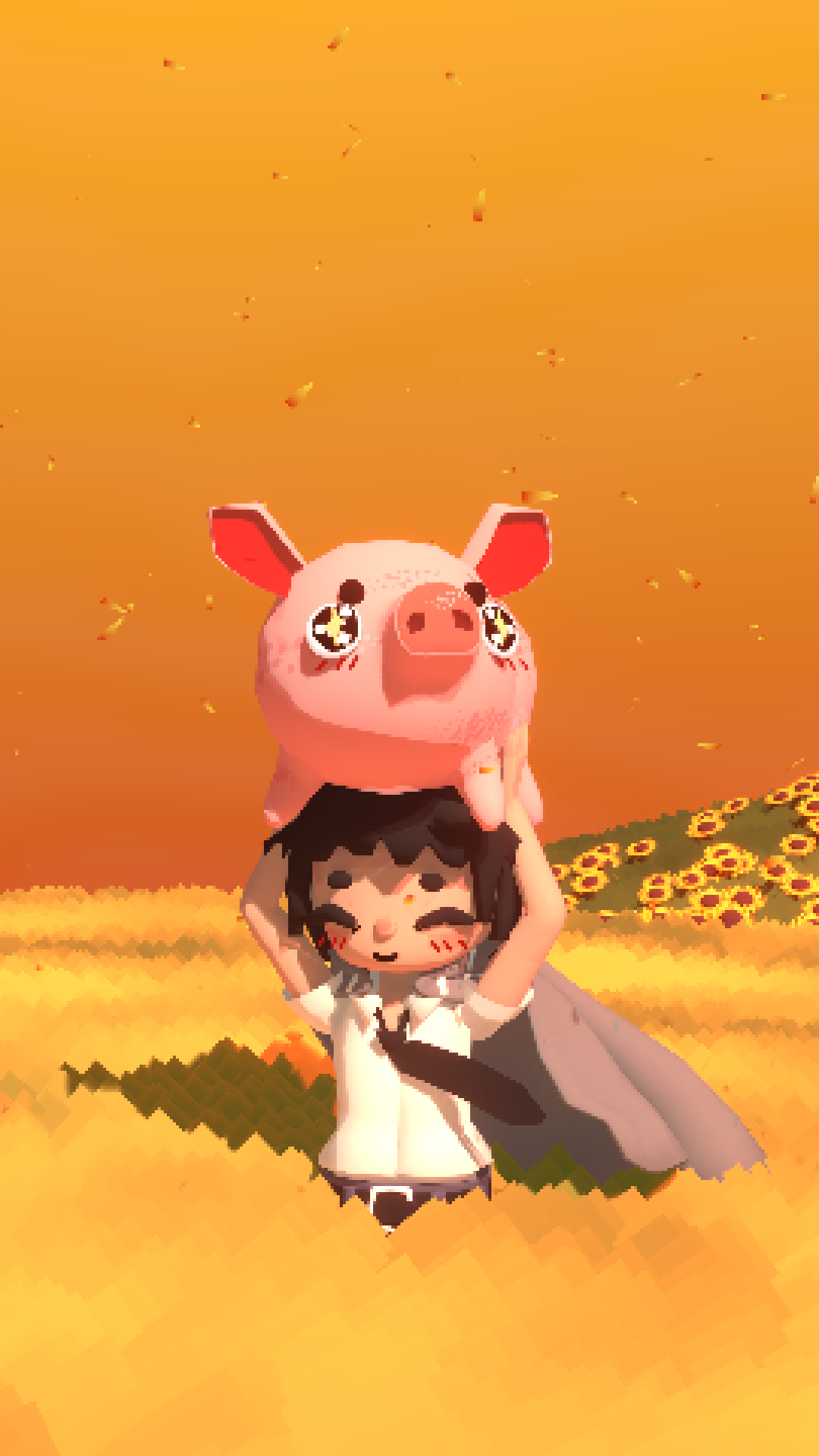
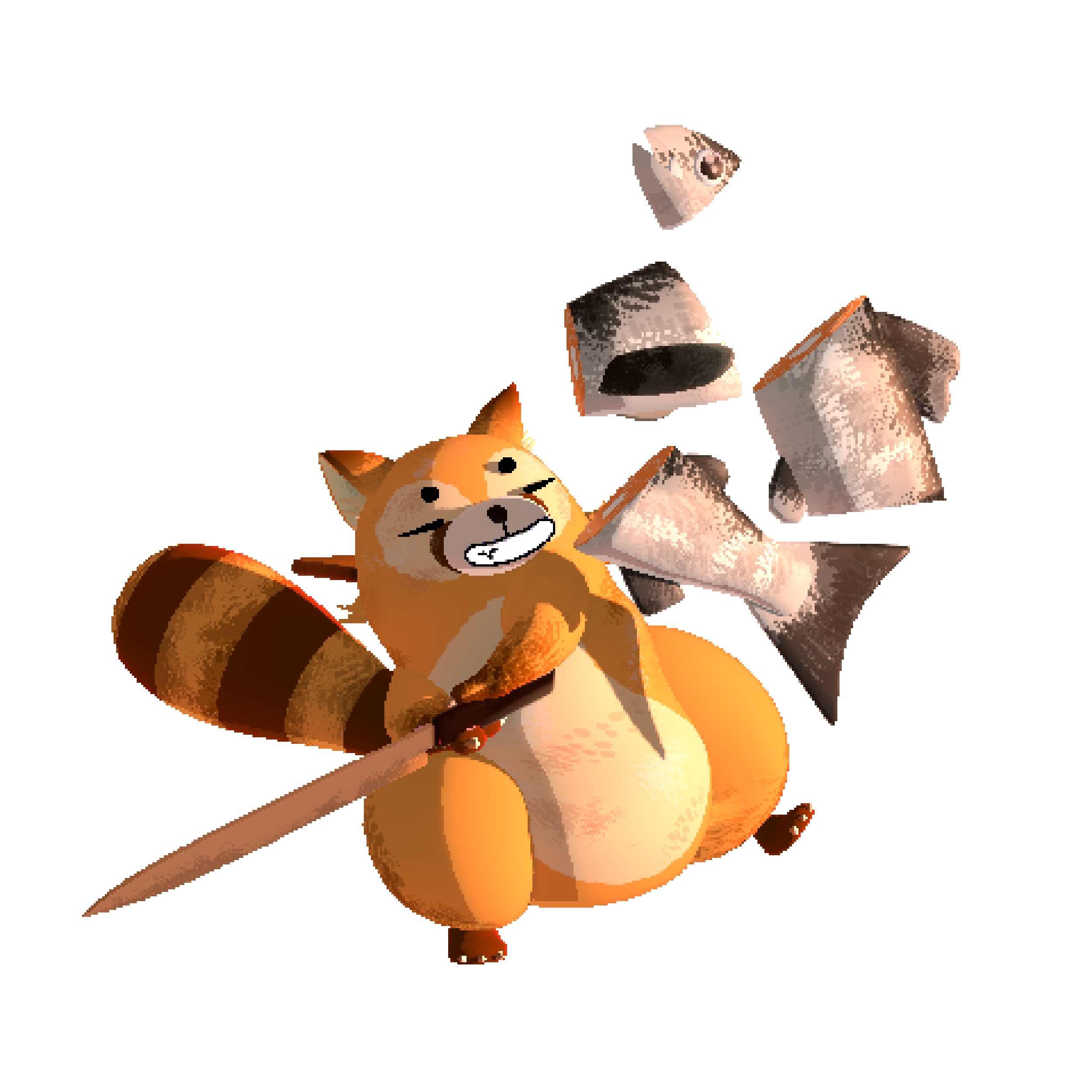
'Can I Get a Pig', 2026
Are there other limitations that built your style or helped you instead of hindering you?
When I started posting regularly last year and my account started gaining traction, I never intended to make weekly animations. My goal was just to make a lot of stuff to build a portfolio and hopefully get hired by studios. But what I realized was that these animations were gaining traction and I kept making them weekly, and I think that was the best way to grow my following. If I had tried a more realistic style or something that took more time, I would not have been able to make them weekly.
This style is really forgiving to mistakes, and it's also forgiving in terms of how many keyframes you have. I don't have to have a lot of movement for these characters to feel like they're part of a living world, since it's all so low poly that people are almost expecting them to move a little jittery and choppy. It allows me to make videos a lot faster and play with crazier ideas because I don't have to put as much detail into the environment or model as many things each week.
Would you recommend this style to someone wanting to get into 3D animation and Blender?
Honestly, I don't think so. It's kind of like if you want to paint comics or make stylized work in a lo-fi way, it's always going to help you to know the basics first. With 3D, knowing the more complicated parts of rendering, like normal maps, understanding everything thoroughly, is going to always help you in the future if you run into issues. Going for a low poly style right away is going to limit your skill set because everything is limited. So then if you eventually want to move on and do more complicated effects, you won't know how because you only focused on the really limited style.
If you just want to make the limited style for fun and you don't particularly want to focus on a career, that's honestly fine. But if somebody wants to make it a career, I would definitely recommend learning 3D thoroughly and not limiting yourself to a certain style.
Is there another style you want to explore with 3D animation?
Definitely. What also really inspired me to pursue 3D animation were newer movies like Puss in Boots 2 and Spiderverse. That kind of painterly animation is really beautiful and I think most people would agree it was kind of a revolution in 3D. I have tried doing that in the past with some short films and found it to be incredibly time-consuming. But if I had unlimited time and money, I would absolutely love to revisit that and maybe add some twist to it. I definitely don't think my current style is going to be the last thing I ever do. I definitely want to experiment in the future.
Are you still building your portfolio since graduating two years ago?
Now I'm more so just building my social media, and it's been working out. I've been doing a lot of freelance gigs and I have a Patreon. I'm incredibly grateful for everything that's happened. It's been working out for me as an independent artist. But yeah, that was the main goal out of college: build a portfolio, try to get employed, because Lord knows it is rough out here. Thankfully now I'm okay and I'm hoping to just keep growing my skills and eventually move on to bigger things.
What feelings do you want your work to give people?
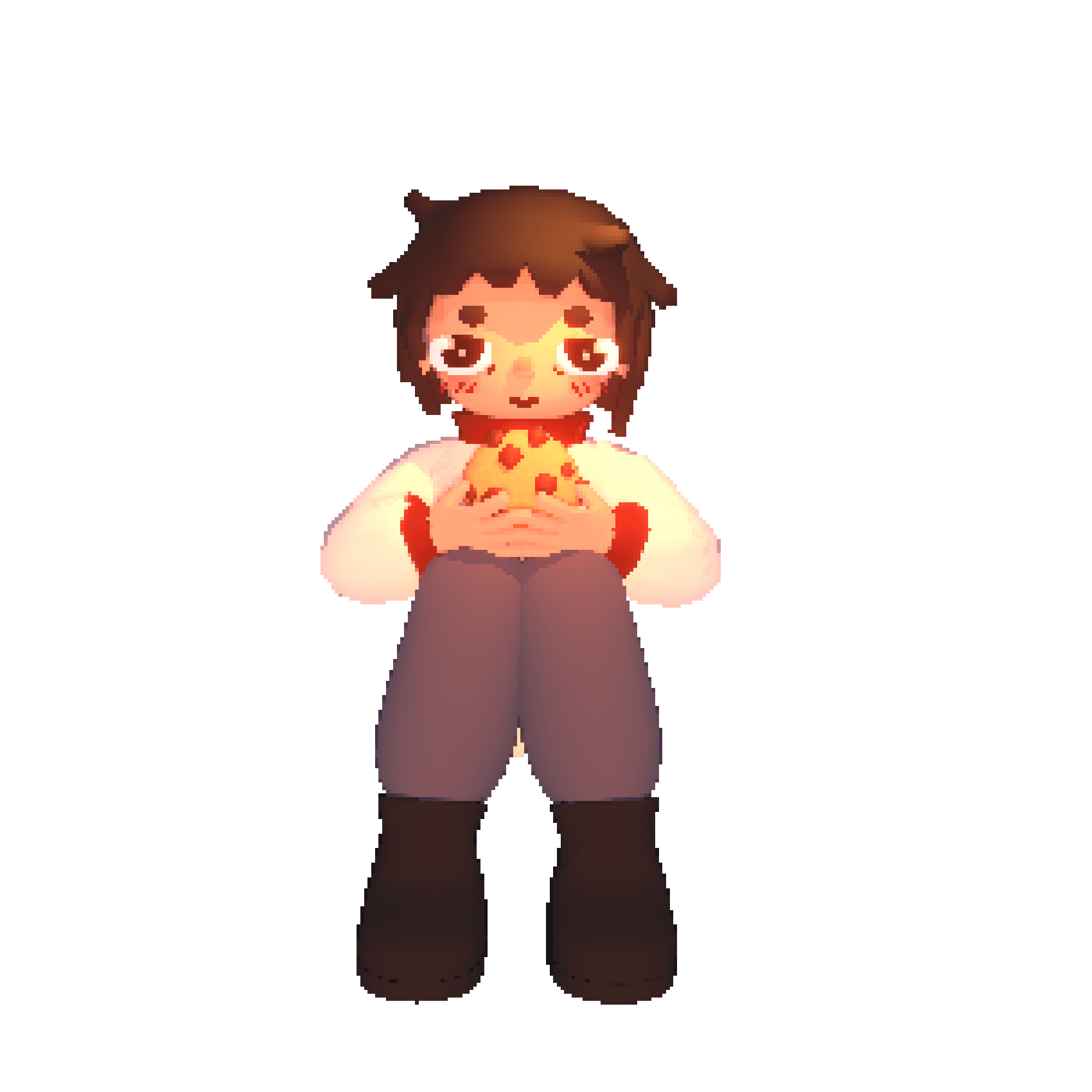
I try to put a lot of humor and warmth in my videos. I don't know if that's always what people get from them, but my main goal is to have a world that people want to live in. All the characters, while goofy things happen here and there, usually have very positive interactions. Most of all, I really want my characters to feel real and not Pixar-ified or corporate. You know how companies will say they want a character that's accessible to every single person on planet Earth. I feel like that kind of takes the joy out of the media because the character ends up so sterile. So while I do want my characters to be kind and have a positive energy, I'm also okay if people don't like them sometimes, or if they do goofy, mischievous things here and there.
So they're not just one-offs. You're building full characters in a universe.
That's definitely the goal. I definitely want them to have more personality than just a one-off or one-dimensional thing. With my recurring characters, I try to give them more depth and slightly different roles in each video. It's very important to me to not just make them boring or sterile.
And I also would not want to use the word family-friendly for my videos. Not that they're not, but I do have alcohol and smoking in there. I want it to be like the real world. I want adults to be able to laugh at this. I want kids to also enjoy it, but not necessarily entirely know what's going on sometimes.
Do you see yourself building longer form animation with these characters?
100%. That is the goal right now. As a struggling independent artist, I kind of have to keep the mill running and I don't really have a lot of time for that. But I think a goal at some point is to make a pilot for a show, or just make one short film. I absolutely love long form content, so that is definitely something I want to do.
Your videos feel very warm. What's your technique for getting the lighting right?
The very first thing I do for my videos is build the color palette, and that comes from lighting. Since my computer isn't powerful, I don't build the world first or anything like that. I'll make a block out of the world using just blocks, then I'll put all the lighting in there and make it as strong or as weak as I need it to give off the vibe I want. Then I'll add the animation and all the details afterwards.
I do really focus on the lighting and the overall colors of the scene. I also use a ton of references, especially from 90s movies. I find they have really strong lighting sometimes, and that might just be me being biased, but yeah, I definitely focus on it before starting anything.
If you look at my Instagram profile right now, you can tell that each one of my animations has a different color palette, and that's something I do on purpose. I never want to do the same color palette over and over again, though I do sometimes because I really love the orange palettes. I try to mix it up: how can I make green lighting look really pleasant? How can I make blue lighting look really pleasant? And that's honestly what inspires a lot of my stories too. I'll think of fun lighting that looks really good and then figure out how to make a story around that.

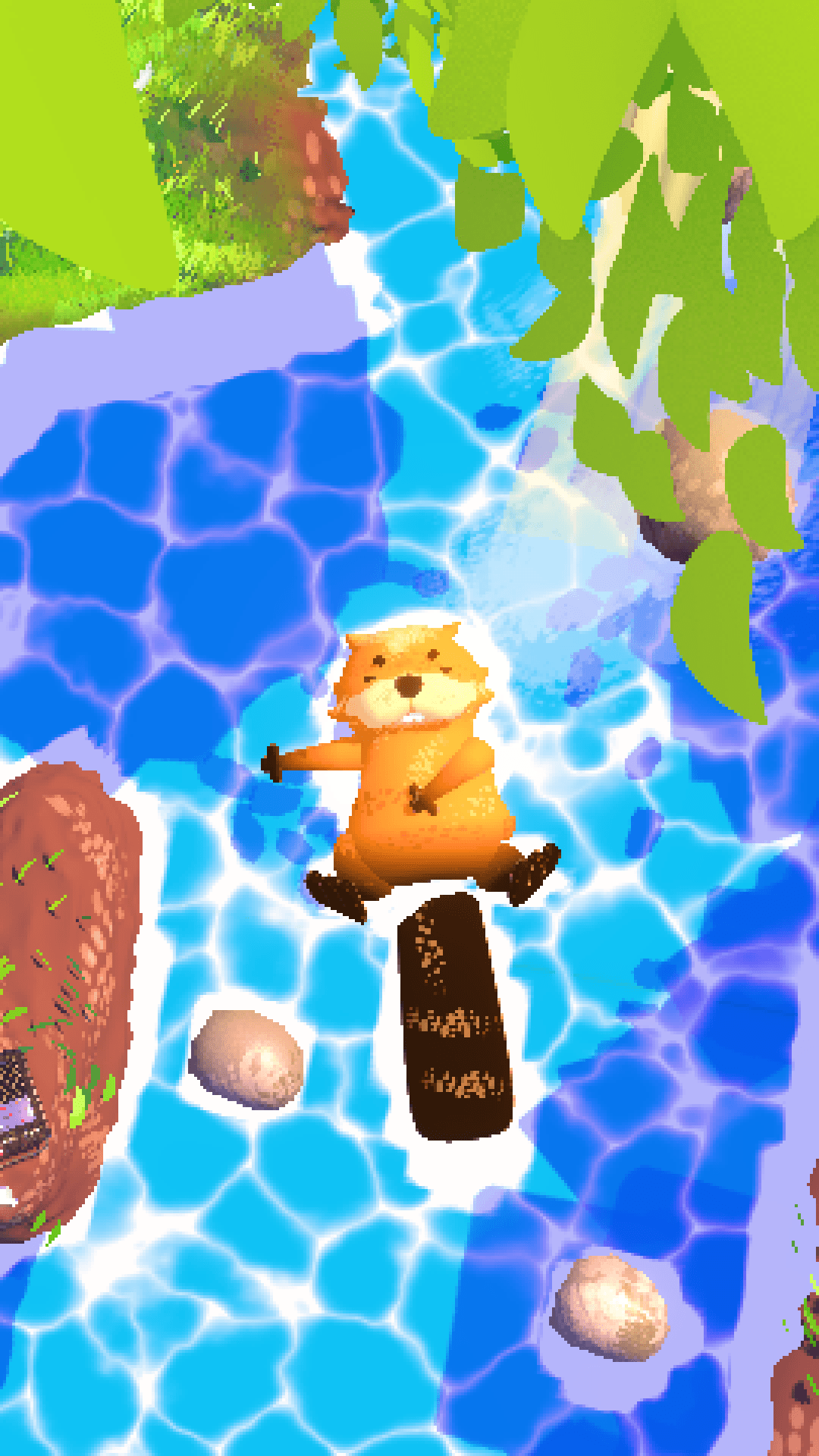
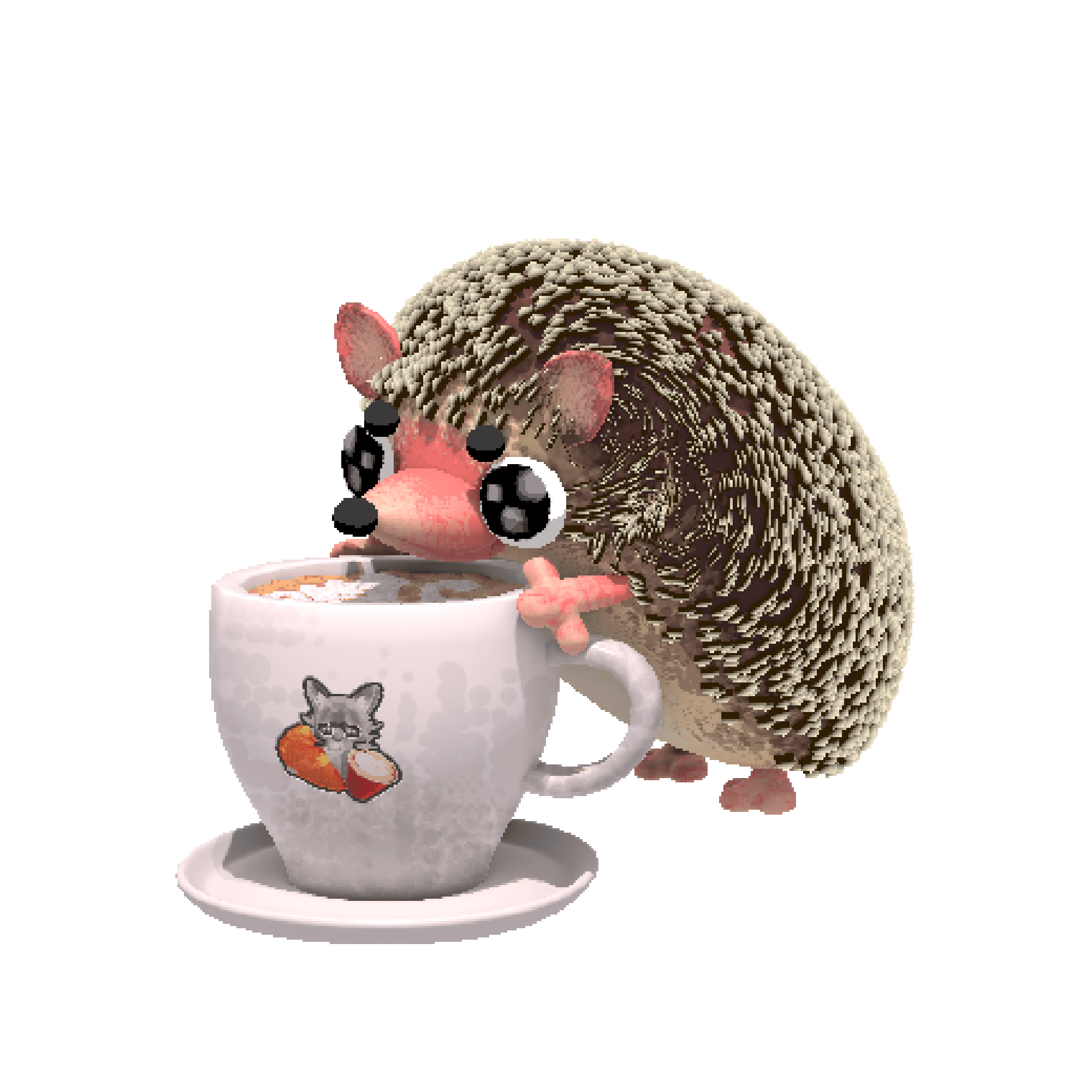
'Emigly', 2026
Why do you gravitate toward those color palettes and lighting choices?
I think that's what I find really beautiful about digital art. Colors in general, and I'm not saying it's not possible with live-action films or photography, but that's definitely what inspired me to pursue 3D animation specifically because I have all of it under my control. I can make any color happen. Really strong colors give people a stronger vibe than a good story sometimes. With art and images and animations, it's really important to have the visuals tell the story themselves, apart from the narrative. Strong lighting is the way I found to do that.
How do you find your references and what are you looking for when you use them?
I'm really lucky because I grew up playing a lot of video games, so I already have a bank of things to pull from in my head. I grew up mainly playing single player games and I really love lower fidelity games and Nintendo games. Nintendo has always focused really strongly on stylization. They've never pursued realism, and that's something I really value in art. I really prefer non-photorealistic stuff over ultra-realism.
So I already have a bank of references from Nintendo games. Sometimes I'll go on Pinterest and look up something like "sunny snow scene," but my issue now is that it's so easy to stumble upon AI generated images and they all feel a little less soulful than like a video game snow scene I already have in my head. I tend to try to stick to references I already have in my head and build from there, whether it be movies or video games. Sometimes I'll be outside and see a really pleasant scene and take pictures of that. But most of the time I'm thinking of a scene from a video game or movie that I like and I want to recreate that vibe through the colors or the general feeling.
Are you still primarily working in Blender, and what other programs do you use?
Blender is pretty much what I do everything in. A lot of people ask about the pixel effect. That's just something I achieve by adding a filter on the final render at the end. It's not done in the software itself because I want the actual render to be as high definition as possible so I don't lose any of the crispiness. It's just a mosaic filter that you can add on pretty much any video editing software. Other than that, maybe I'll up the saturation a little bit, but everything is pretty much done in Blender.
How do you decide how much detail a surface gets, and what earns a texture versus staying flat?
Since I have the forgiveness of a low poly aesthetic, it's not so much about adding a lot of detail to one item. It's more about adding detail to the scene in general. For example, I recently did a video of a dog in an apartment just lying down. It's not that each item was super detailed. It's more that there were a lot of items in the scene and it made it look a lot more lived in and realistic. So for me, what makes a scene look more alive is not making each item super detailed, but adding a lot of items that would actually be there and make it look like a real place.
For the characters, I obviously try to make them look as good as they can. And sometimes I'll just feel like making a really detailed asset for fun. I've made a lot of stereos, like 90s boom boxes, and I'll just add a lot of detail to those because it's fun. I also make a lot of Walkmans and audio devices for some reason. But honestly it's not something I really think about. If I'm feeling it and I want to make something highly detailed, I'll do it. But it's not crucial to my workflow.
What are you focused on most in the beginning stages of making your animations?
Definitely color palette and animation pacing. Whether it feels like it's flowing well or feels boring and stagnant. For a lot of my animations that are joke-based or plot-based, I'll get all the animation done, all the camera cuts done, and make everything feel good pacing-wise before I do anything else. Because once I start adding any detail, my computer brings the frame rate down and I need to make sure all of that is locked in before I start adding anything else.
How would you explain your process to someone with no reference for 3D animation?
Pretty much all of my assets are hand painted because I already know what I want them to look like in my head, or I know what color palette I want them to follow, and making your own assets is always going to be better for that.
But if somebody asked how to do this, I'd go back to what I said earlier: learn how to do it properly first. A lot of people DM me asking, "How do I achieve your style? How do I make animations like yours?" I'm not really doing anything crazy. I maybe have strong lighting or more stylized color palettes than some other artists, but for the most part I'm just making animations in Blender using established techniques. I just apply my own sense of taste with color. So my answer is always: learn the fundamentals first.
Are there any particular tutorial channels or resources you'd recommend?
A lot of people try to follow the donut tutorial as their first Blender thing. I find that being bombarded by all of the features Blender has, which is what that tutorial does, is kind of really ineffective. It overwhelms you and you're like, "Oh my god, when am I ever going to use this?" What I've found works better is a froggy tutorial, which is about making a really simple geometric frog character. That was the first tutorial I ever did.
But for me it's like, learn what you actually want to do. If you want to do character animation, learn a lot about rigging, modeling characters, texturing characters to make them look good. If you want to do more procedural stuff, then get into geometry nodes and things like that. Just laser focus on a particular part of the software because there's a lot to it, and if you try to learn everything, you're going to learn nothing. Literally 99% of Blender's features I don't use to this day. As long as you know what you're going to be using most of the time, you're going to be fine.
What would be your advice on rigging specifically? You're very character heavy.
Rigging is probably the most technical part of the software. Whenever I tell people I love rigging, they're like, "Why would you ever say that? Are you human?" But in my opinion it's the most important thing for character animation. For my characters specifically, I have a lot of jiggly parts. I make them squishy and malleable, and all of that is done through rigging.
For learning rigging, and this is kind of an antithesis to what I've been saying, I would say start as simply as possible to really learn the basics. You could even start with just a cylinder and put multiple bones in it. Truly understanding what rigging is, what weight painting is, bone constraints, all of that is going to be ten times more valuable than trying to follow a super realistic humanoid rigging tutorial and then not knowing what you just did. Take it one step at a time and truly understand what each bone does and what each constraint does. When you're animating, it helps a lot to know exactly how your rig works and how to fix something if it's not moving the way you want it to.
Was the choppy, low-frame pacing ever something you were fighting against before you leaned into it as part of your style?
Honestly, when I first started making shorts in Blender, I didn't really care too much that it looked good or had a particular color scheme. I more so cared about getting the characters to move the way I wanted them to and just making that work in general. Once I started really doing this for my portfolio and being like, wow, I really need to make things look good, I realized that lighting is 100% the most important thing to any 3D work. It's so easy to have 3D work that looks really good and then give it bad lighting and have it look super flat and boring.
But my machine has never really been a limiting factor for the lighting itself. The bigger performance factors are usually textures or really high poly counts, but lighting surprisingly has never been a big issue for me.
What's the most underrated skill in stylized 3D that nobody really talks about?
Probably good animation itself. Even when something looks really incredible, if it doesn't move right, it's going to look cheap. There are studios that produce feature length 3D films that a lot of people would call cheap imitations of Pixar, and I think they're incredible animations regardless, but if the animation looks stiff or if you're going for a Pixar style and it just doesn't land like that, it makes your work look cheap. That really sucks.
For me with my low poly style, if my characters move a little stiff, that's fine. But if somebody's going for photo realism and their characters don't move photorealistically, they're cooked. If somebody's going for a Pixar style and their characters don't move like Pixar, even if they're animating ten times better than me technically, it's going to look worse because that's not their visual identity. It's the kind of thing that if you can't point it out while watching something, then you've done a good job. That's what you would call underrated.
Do you use anatomy at all in your work?
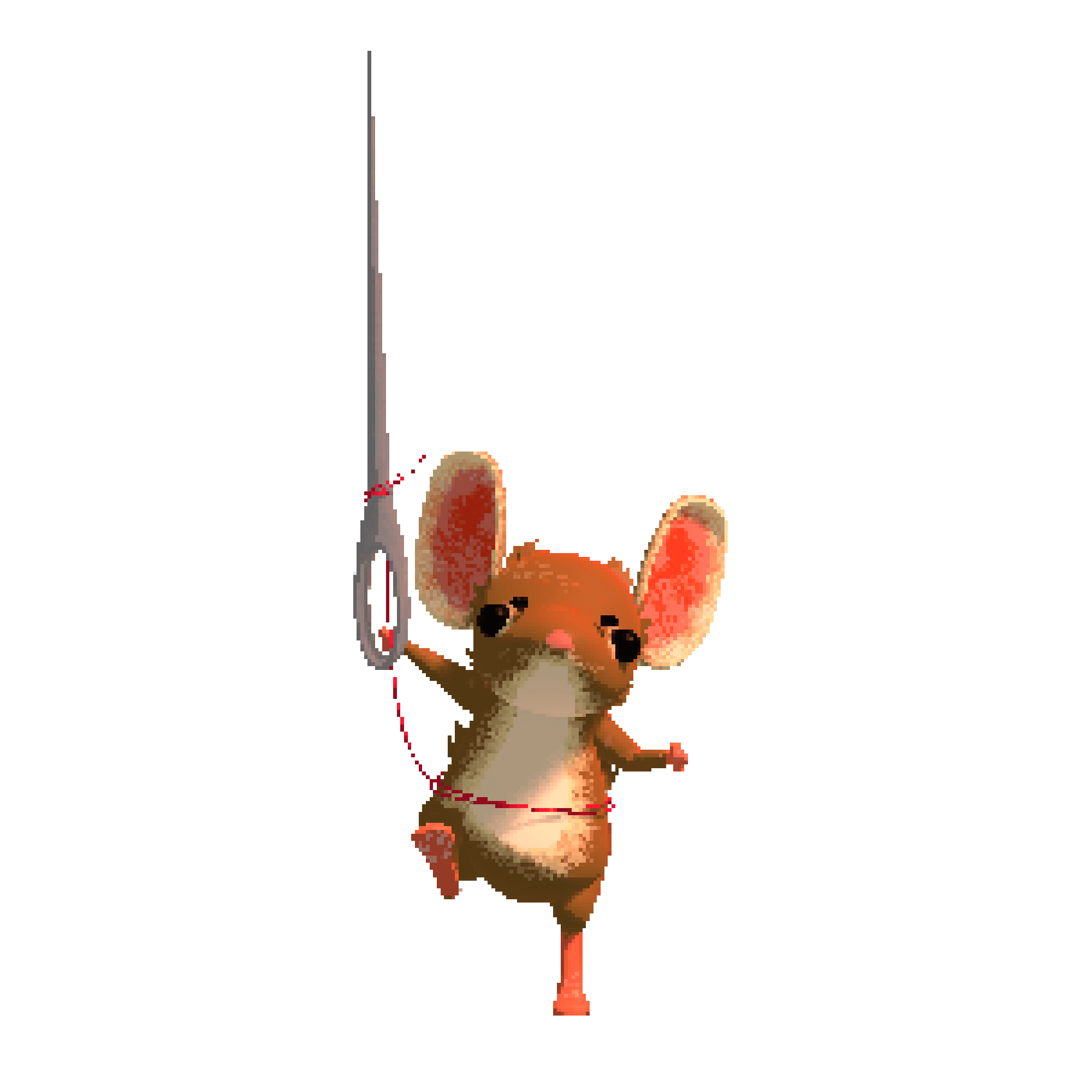
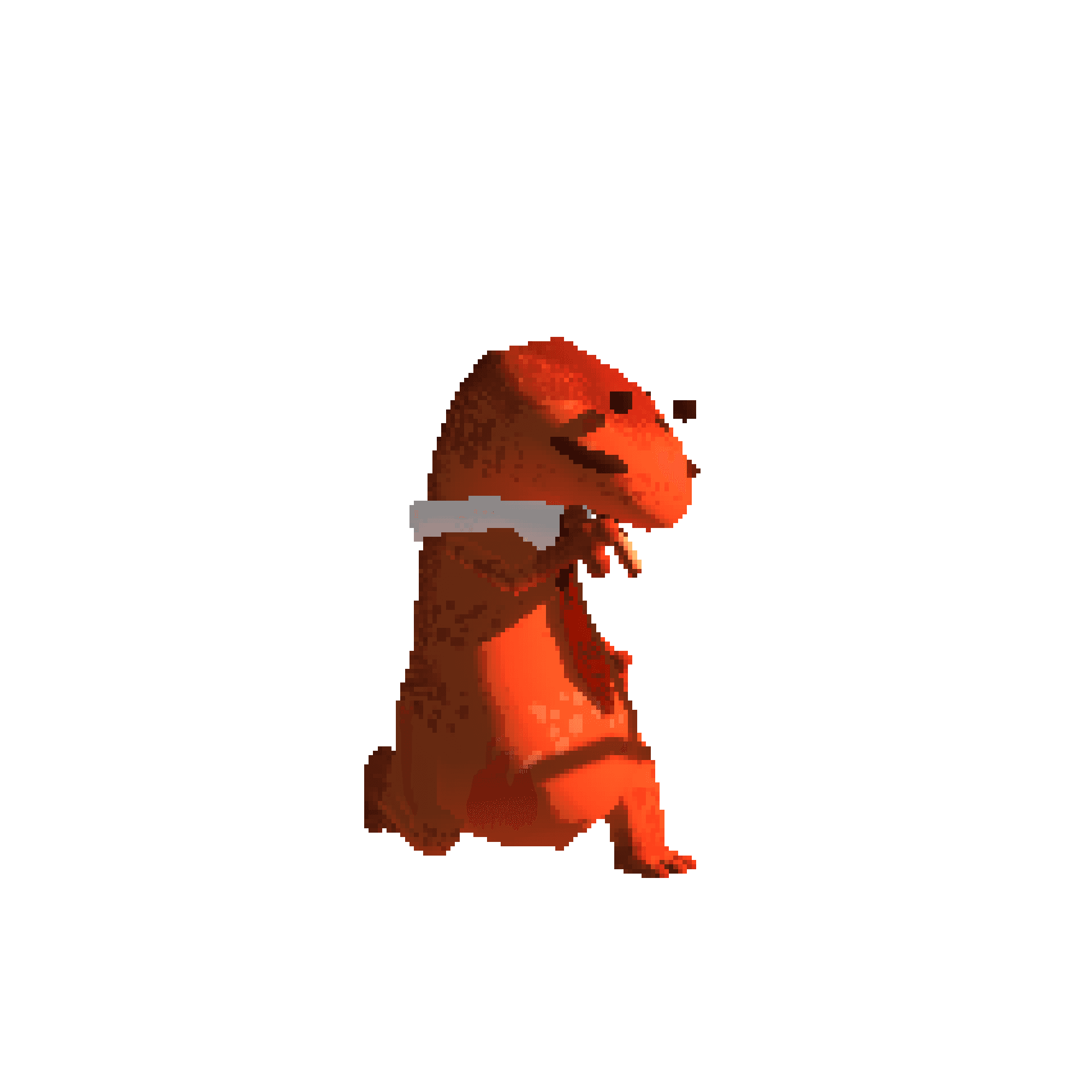
Of course my characters are really stylized, but I do very strongly tend to follow the anatomy of real animals. Sometimes I'll make them more stylized, like I have a humanoid raccoon, but when you follow anatomy that's at least somewhat realistic to the animal, people don't exactly know how those animals move 100% correctly because they haven't observed them that closely.
Like I have a jerboa, which is basically the jumping mouse from Coraline. My model looks about okay, I wouldn't say it's 100% anatomically accurate, but the movement I completely messed up. It's not moving like a real animal at all. But it kind of looks like it is, and as long as it makes sense in your brain, it's fine. It's more so about what has more charm. A little mouse moving really fast with its legs going everywhere, your brain is going to find that charming and not think too much about it.
How did you learn sound design? It seems like a weak point for a lot of animators.
Oh my god, it's also my weak point. But sound has so much impact on an animation. It's on par with the visuals. If you don't have good sound design, it makes the visuals look bad, and vice versa.
What I've been able to do is lean on the lo-fi style a lot. I use a lot of video game sound effects, low poly kind of stuff. My main thing is that whenever I focus on the music first instead of the sound effects, I'm much better at it. I'm able to get a certain vibe just from figuring out what song I want to use, and then I add the sound effects on top of that. And even though the sound effects might not be mixed super well or might feel a little lazy, the music carries a lot of that heavy lifting. As long as there are sound effects when characters do something, that's going to work because people can read it.
Where do you source your sound effects?
There's a website where you can procedurally generate 8-bit sounds by mixing sound waves and adapting them. I forget what it's called, but for when characters are stepping on the ground or interacting with each other, just adding a little bit of that works really well. People love it.
Then also YouTube to MP3 for more particular sound effects. Like I had one where a character was whisking a matcha bowl and adding water, so I looked up water pouring sound effects on YouTube and went through a million of them before finding a good one. And having ambiance in the background, something barely noticeable, does make a big difference.
Honestly if you saw my sound design process, you would be like, "How does this dude get away with this?"
Your videos feel cozy even in quiet moments. How do you make a quiet scene not feel empty?
Ambiance, 100%. That's the strongest thing there. If it's a sunny scene, I'll add some white noise, maybe a fan in the background. It gives you that summery vibe. You'd never consciously think about it, but the fan is usually something that reminds people of their younger years, summer with the fan going. Some birds outside. And with a lot of the music in my videos, I'll give it an old-timey radio effect, which makes people feel really nostalgic and I think really helps with warmth.
For cozy specifically it depends on the aesthetic you're going for. There's beachy cozy, storm cozy, winter cozy. For winter I was mostly focusing on snowy sounds, fires going in the background, fireplaces, a chimney, the ambiance of warmth in a very literal sense. For the beach, I'll focus on what makes me nostalgic for it, waves crashing into the sand, seagulls, a lot of wind. It's usually whatever makes me feel relaxed in those environments.
Your biggest piece on social media so far is the pig and flowers piece set to Caulfield's. It's doing something a little different from your character-driven work, more purely vibes-based. How do you approach a piece that's more mood than story?
It is different. My usual workflow of getting the animation done first is less important in those cases. I'll listen to the song and try to figure out what color scheme I think about when I hear it, because the Caulfield's one has such a strong visual image when you listen to it. I also took inspiration from the cover of Tyler's album. In those instances it's so important to get the aesthetic right. I'll really focus on making sure everything looks visually cohesive with what you're hearing, and making sure it looks beautiful, just something you want to look at. Honestly the animation in those cases comes sometimes even after, like I'll be animating at a lower frame rate, which is not something you'd ever want to do normally. But in those cases the aesthetic is 100% more important because you want to do justice to those pieces.
When you're animating to existing music, are you trying to illustrate the song or build something that runs parallel to it?
It's more so the parallel side of it. When I do stuff with a particular song, I'm not illustrating what the song is saying or following the plot of the lyrics. It's more so what the song makes me feel. It could be something very different for a lot of people. Just my interpretation of the feelings I get from the song, and the colors.
Music is very auditory obviously, but I can visualize so many colors just from listening to it. That's such a huge inspiration to my work.
What do you think makes a vibe piece actually land versus just look nice?
Being able to translate the feeling I feel into the animation mostly depends on which part of the song you pick and how you frame it. For the pig piece, I made sure that the warm feeling came at the beat drop, and the character on screen was also happy at that point. But I don't really have a set answer for that. It's more like an instinct of where to put what. It's just knowing this moment in the song will illustrate my feelings the best.
A big part is also knowing when to let the characters chill to the song instead of always doing something. Letting the audience feel the song and not forcing them to watch the characters as much as just feel the vibe in general.
How did the sledding game collaboration come together, and what shifted for you when you were animating in someone else's universe?
Whenever I animate for other people it is a lot more different. When I'm making my own stuff I don't have to follow any guidelines. It's a lot more freeing. But when I work with other people, I definitely have to figure out: what's the vibe you're trying to give off? What are your characters allowed or not allowed to do?
Sometimes companies will just be like, just do your own style, we trust your sense of humor. That's what the Sledding Game did. They were just like, we trust your sense of humor, you got this. For them I just made sure it was clear that it was for the game. I didn't want it to be cute with their characters but have people not know it was for the game. So I made sure there was sledding, that it was talking about the game, and that their characters were front and center.
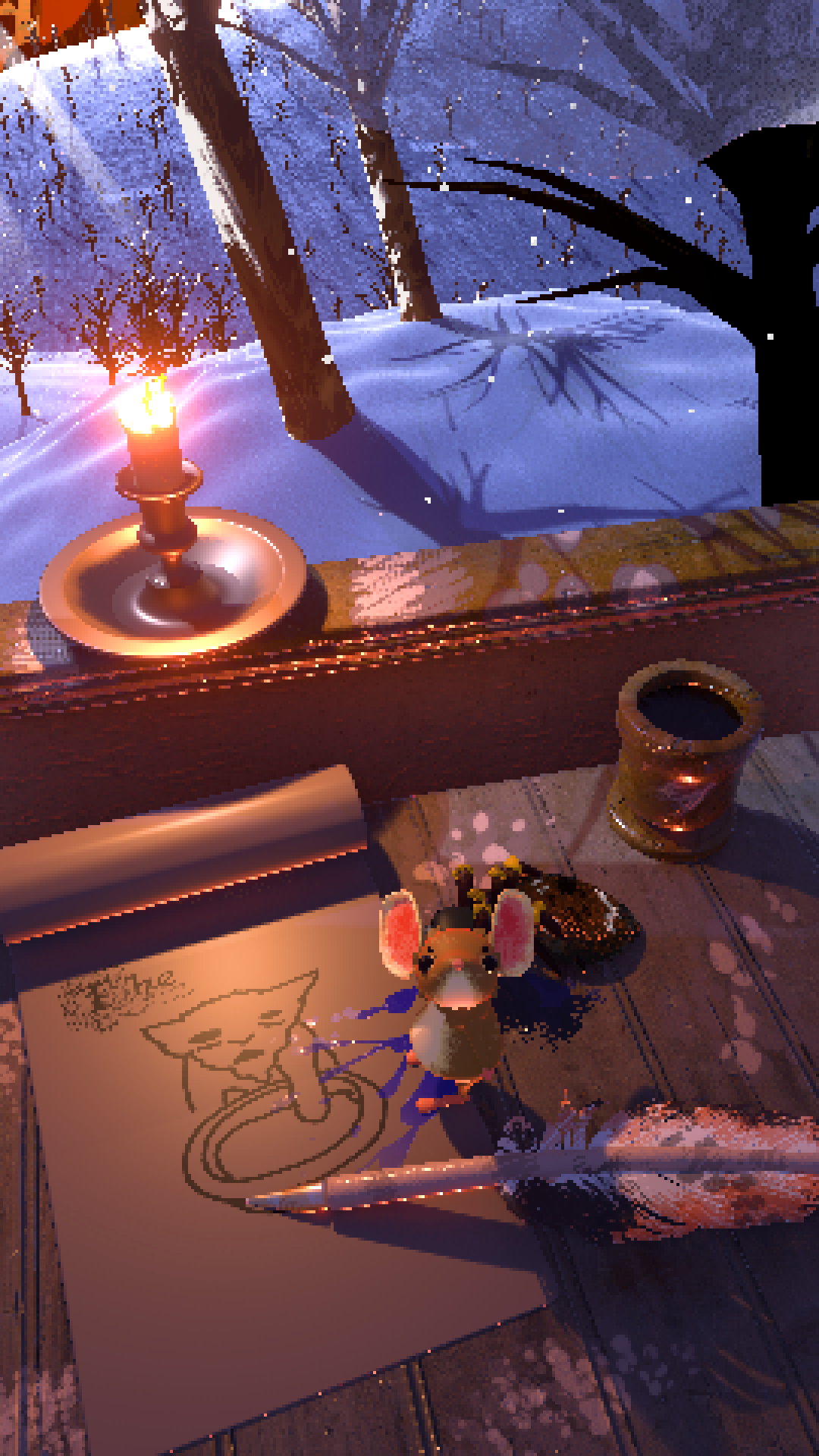
'Are Your Gonna Eat That?", 2025
What has working with other artists or companies taught you about your own work that solo work might not have?
Something I've learned is that when companies say "just do whatever you want, we trust your style," they usually mean it in the sense that they love your sense of humor. But usually they're lying. They typically have something specific in mind and they want you to get there without telling you. They're like, "Oh, just do your own thing," but they already know what they want you to do.
So something I've learned is that whenever I work with companies, I ask a lot of questions upfront about what they want, and I try to get to a point where I make something they're happy with that also feels true to myself. It's about figuring out their vision for the work.
How do you go about figuring that out? Any specific questions?
At the beginning of any project, I'll give them a general guideline of what I'm going for. They'll either say yes or no, and then I'll just keep working to get a yes. With companies I share every part of the progress because if I don't and I get to a polished piece by myself, I'll have to redo everything so many times. It's just sharing iterations and making sure they're happy with every part of it.
And sometimes I do have to be like, "Guys, what you're suggesting is incredibly corporate." Which is fine, but I'll be like, "If you really want this to be fun or make sense for why you'd pay somebody to do this, maybe go this route instead." And then we talk about it. It's always a discussion process. Always sharing your process as much as possible.
What do you think most people get wrong about pacing in short form animation?
The problem with short form animation is that it doesn't give you a lot of time to let moments sit in silence. I'm also definitely guilty of that. I've had shorts where I'm like, I wish I had given this scene a couple more seconds. And that's also really scary because the algorithm is sometimes pretty harsh on longer videos since people won't be rewatching them as much.
But the biggest issue is that people are usually scared to let their scene sit and let their characters seem like they're actually processing information, instead of just going from one piece of dialogue to the next immediately. I try my best to let my characters react in real time. If somebody says something kind of ridiculous, the other character will just stare at them for a little bit before responding. Just making them feel like they're actually thinking about what they're saying, instead of just getting through the dialogue and moving on.
My last question: are there any references outside of animation or video games that have shaped your work more than anything else?
100,000%. I think it's really important for somebody making their own plots and their own sense of humor in any form of art to get out and have experiences themselves. No matter how much animation you do at home, coming up with plots and ideas, the best way to do that in my experience is from your personal life. Sometimes taking a break from work and just living your life for a little bit will spark ideas or experiences that you might not have thought about if you just stay home and animate.
What I've also found is that thinking more about the vibe you want to give off and the energy you're chasing is more important than the amount of focus you put into the actual animation. It's more about the aesthetic you're trying to give off than the technical aspect. Like if I was out doing something and I got a very specific warm vibe from an experience, how do I get that onto a screen? How do I get my characters to represent that? Because when you're at your desk, you're stuck with the experiences you already had and not making any new ones.


Articles
Magazine
Submissions