Traditional Art
Drawing
Sketch Book

Isabel Lauren Loewe
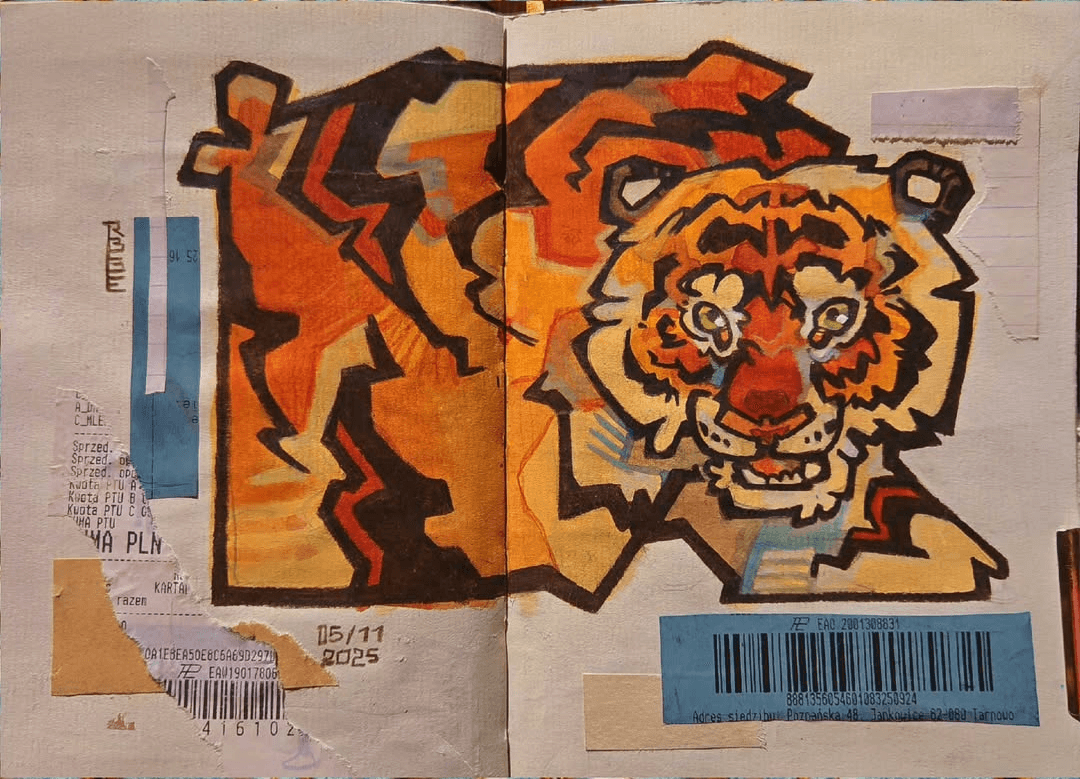
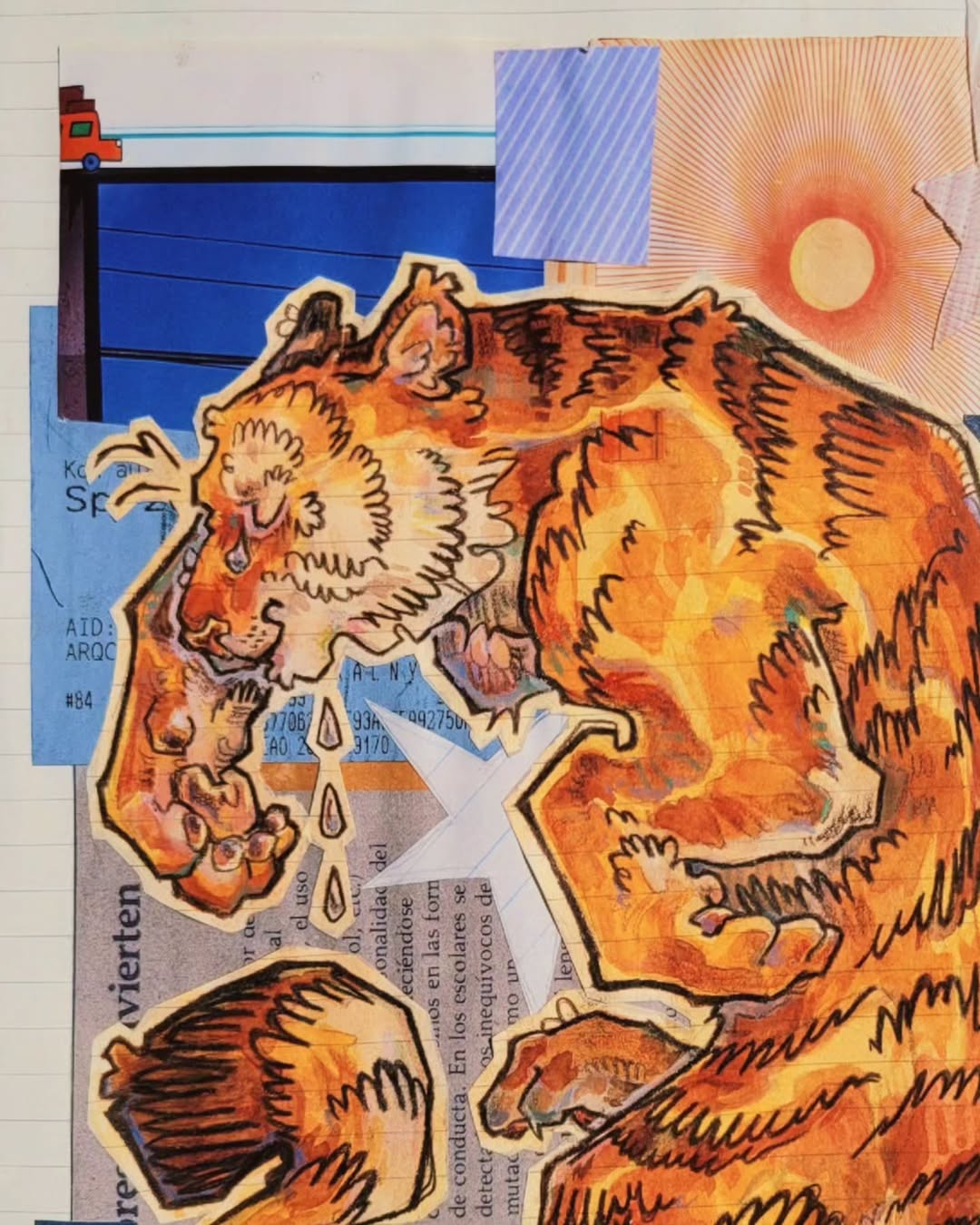
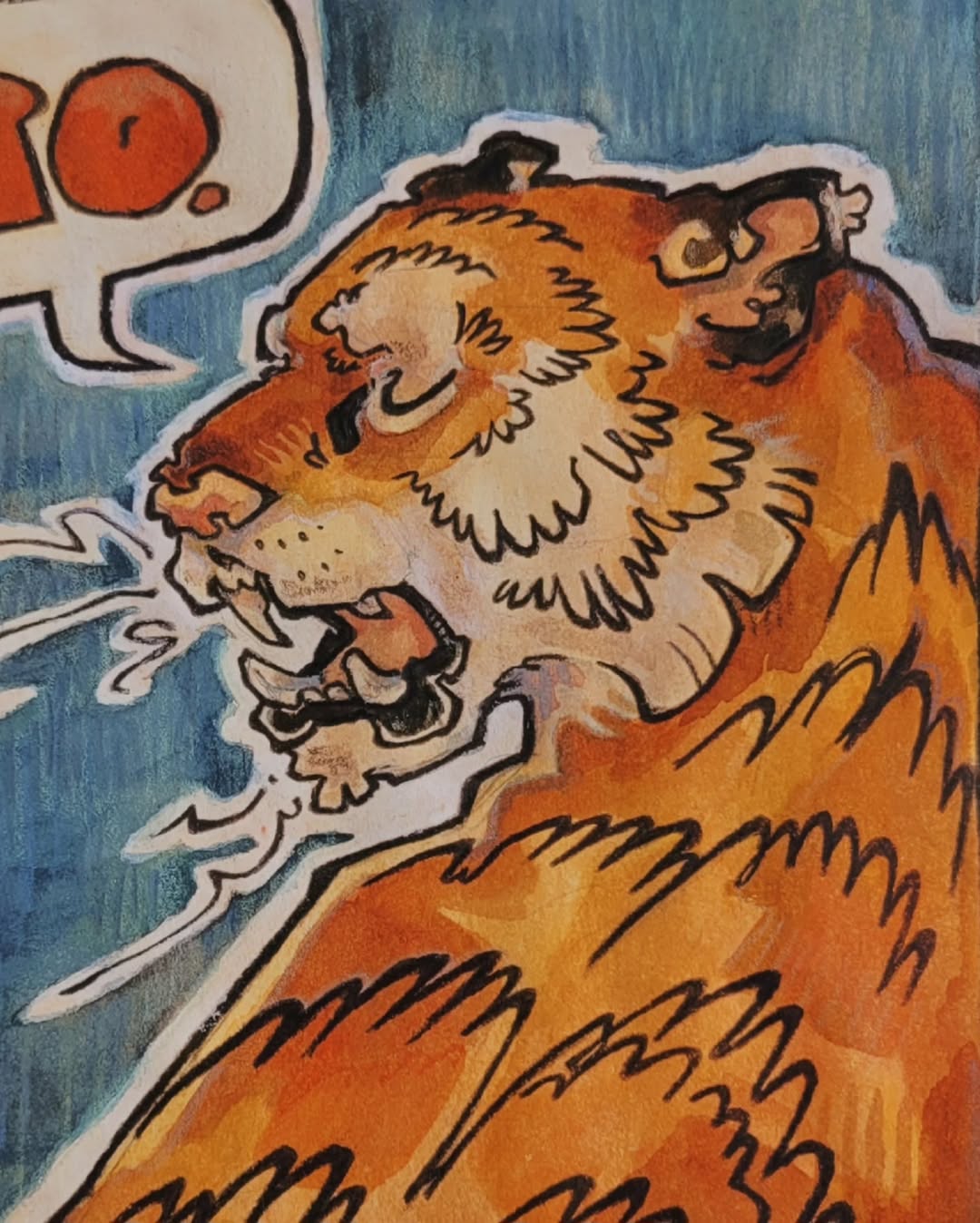
Tiger Spree, 2025
Robbie has spent most of his life drawing. Always armed with sketchbooks and digital tablets. Creating was never the problem, but instead how tightly he tried to control it.
Before his current work began circulating online in 2023, Robbie spent years locked in a cycle familiar to many artists: perfectionism and self-imposed standards that lead to eventual burnout. Digital tools made precision easy, but they also made mistakes feel permanent. Every line had to earn its place, and every page had to prove something. Eventually, the pressure hollowed the process out entirely and Robbie fell out of love with drawing.
The burnout lasted months. When he returned to art, he did so cautiously, abandoning digital tools altogether and picking up traditional materials instead. What emerged wasn’t a strategic rebrand or a sudden stylistic pivot, but a gradual understanding of how to stop forcing outcomes.
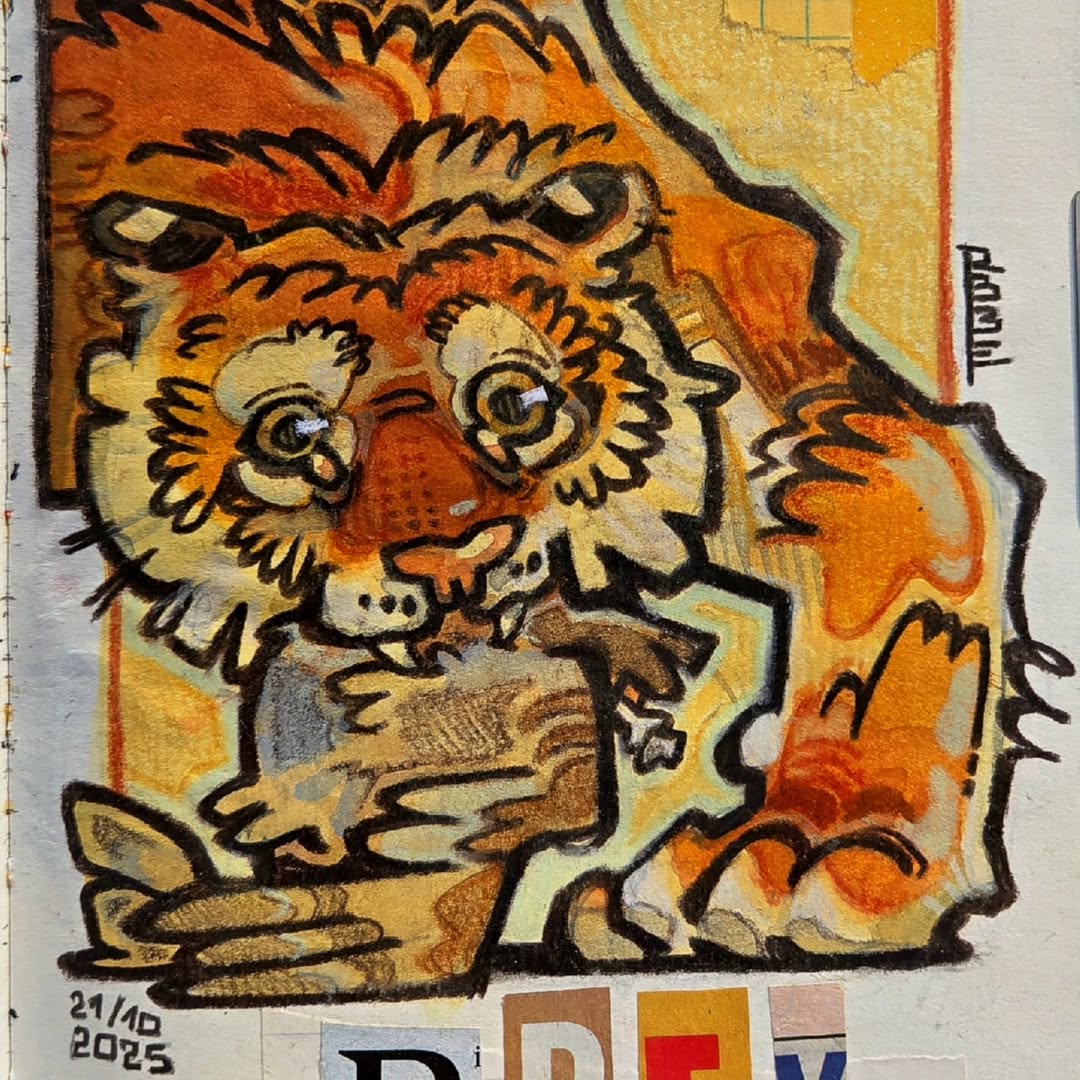
Untitled, 2025
When you came back to art after that burnout, what did you do differently this time?
Some time before starting this account, I had a different one, on Twitter, I believe, where I’d post my drawings regularly to try to maintain it as best I could. Unfortunately, that meant pushing myself past what was comfortable, or probably even healthy for me, just to maintain my unattainable standards. And to nobody’s surprise, it all resulted in an insane artistic burnout. Opening Photoshop revolted me, I couldn’t create anything and had absolutely no ideas, no drive, nothing. It lasted around half a year, I believe. That art account obviously did not survive.
I still have not gone back to digital art, and truthfully, I don’t know if I ever fully will.
The way I managed to get back into art is by trying to rid myself of what first drove me away from it. I chose traditional because the aversion towards digital was not easy to combat, and I decided to take it slow. The key to what got me here is that I just started sketching. Loose, imperfect sketches, letting my hand guide me on how it would turn out. The shapes weren’t meticulously crafted, rather loosely laid out on the page. Complete antithesis of the rigorous perfection I applied beforehand.
And slowly, I shifted away from humans and into animals, where I felt I could experiment with the shapes even more. All of my progress that took me to where I am now, I dedicate to that switch, as most of what makes up my current style was made by just letting it be, observing where my hands and eyes took me, and picking out my favorite parts to implement intentionally.
So I would say what wasn’t working wasn’t necessarily the medium that I worked on, but the mindset I carried when creating, and not letting the lines and the shapes come to me naturally, so I could slowly but surely let them grow into something I’d be satisfied with. The best lesson I learnt through all of this is that trying to force something out of you is not going to come out as what you need or want it to be in the long run. If it’s meant to come to you, it will. You just have to let it be.
Before this style emerged, what did your drawings look like, and why did you feel the need to move away from them?
As I mentioned before, I drew purely in digital form before this account. From what I recall, it was mostly humans or humanoids from various fandoms, as I was very into fanart as a teen. It was very detail-oriented, colorful lineart, and not many textures. One thing that definitely stuck throughout my life was my love for implementing color into my works. It might come as a surprise, but I also didn’t draw animals at all before this switch. It was mostly humans or humanoids.
I believe I explained thoroughly why I moved away from that style in a previous question, but I didn’t necessarily move away from drawing humans for any particular reason, maybe to move away from the previous part of my art journey, or, as I mentioned, because I felt I could do more with animal shapes. I still sometimes draw them in my own spare time, like for my DND campaign or characters I make up with my partner, but it isn’t that often, and certainly not as often as I used to. I believe I found my ‘niche’ in animals, and I think that’s what is closest to my heart at the moment.
You draw animals exclusively and use a very natural color palette. What draws you to this subject matter?
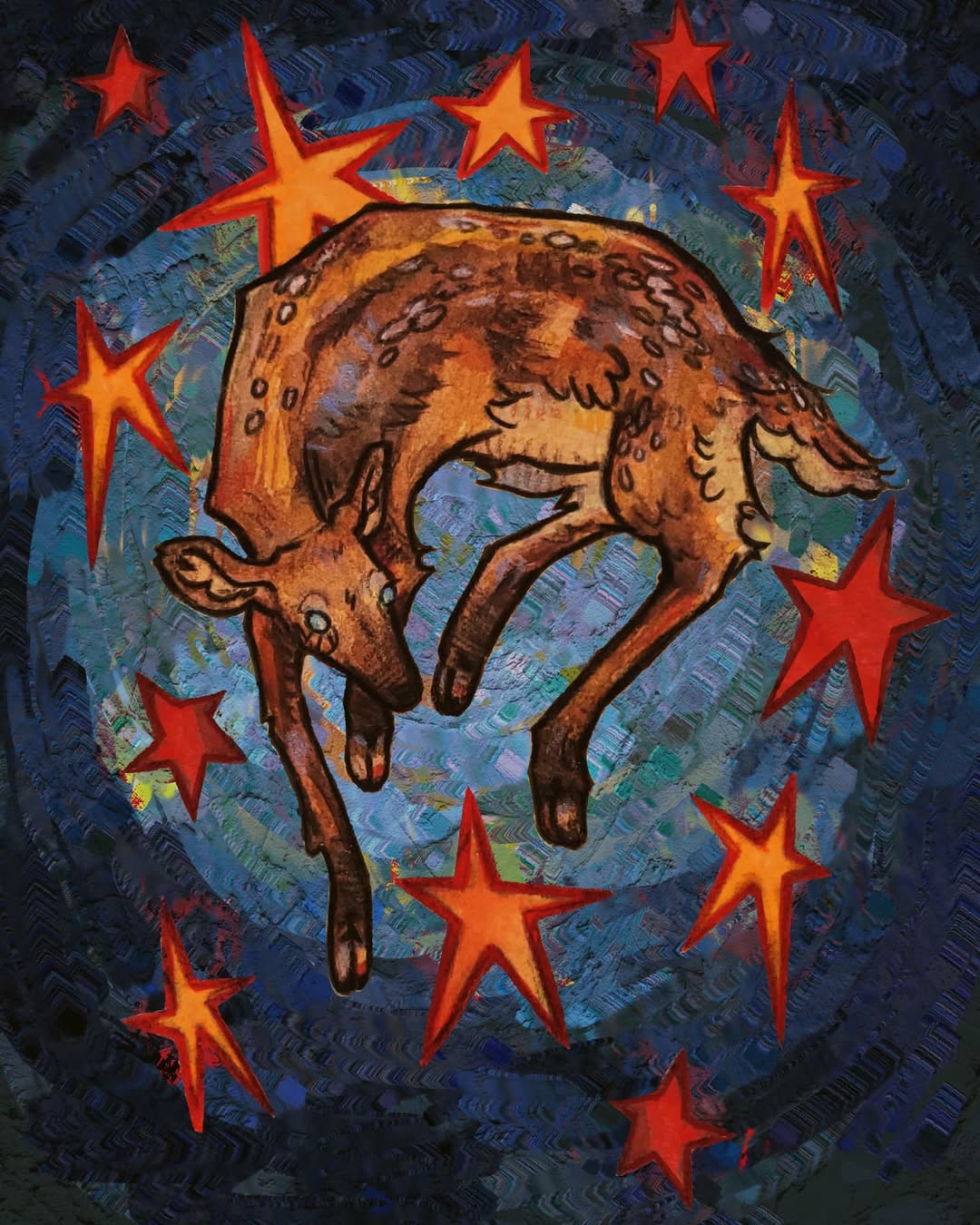
It’s a difficult question, as I never analyzed before why exactly I gravitate towards drawing what I do, and using the colors that I do. I suppose I find the color palettes I use the most visually aesthetically pleasing: the warm, vibrant colors that make it pop. The subject matter is also based heavily on visuals. I like painting what I find pretty or interesting to look at; deer are the only heavy exception to that. Alongside finding them gorgeous, I also feel a connection to the species. They’ve been my favorite animal for a good while, and what deepened my connection with them was when my mom told me that I appeared in her dreams in the form of a deer, before disclosing to her how I felt about them. That’s why when I want to put a certain meaning or feeling of my own into my artwork, I tend to do it through a composition including a deer.
Your figures are boxed, segmented, and contained. How did you develop this visual style, and what do you think it represents about you?
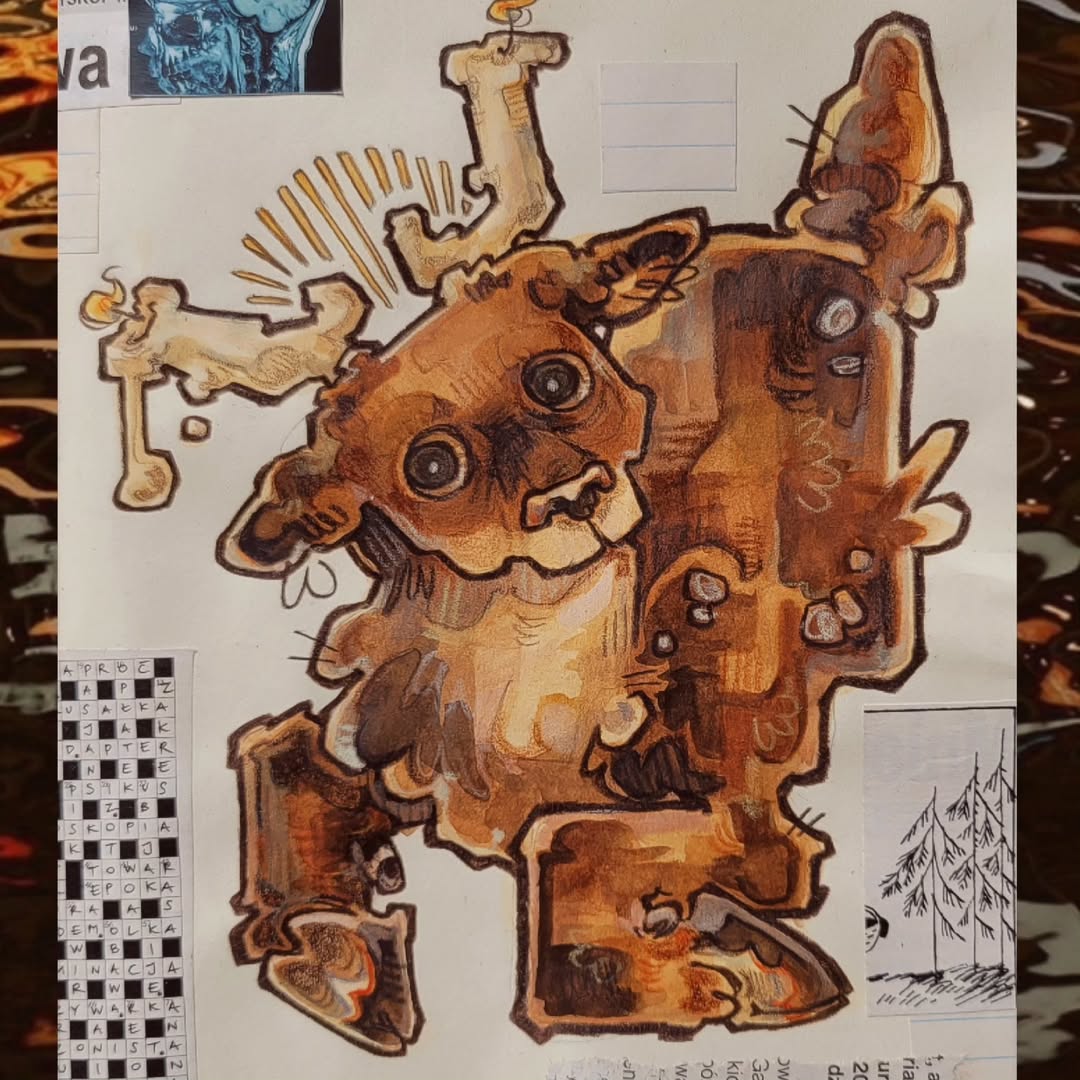
I think the development of this style came naturally to me after a while of experimentation. Back when I was still searching for that thing that would make my style mine, I did not think too hard about why I made the choices I did; it just happened. I certainly took inspiration from artists I looked up to, however, I cannot recall how exactly I came to this creative solution. I think I just naturally gravitated towards squares and rectangles to frame the subject. I think it might represent a certain order to the chaos that usually comes with my uneven lines and loose sketches. I, however, encourage people’s own interpretation of my work, so it can mean whatever one deems appropriate. I think it might represent my search for balance amongst the playful nature of the figures I paint. I usually leave what my art means about me to my subconscious, as most pieces aren’t created driven by any specific life experience or emotion, just a drive for creation.
“Opening Photoshop revolted me. I couldn’t create anything and had absolutely no ideas, no drive, no anything.”
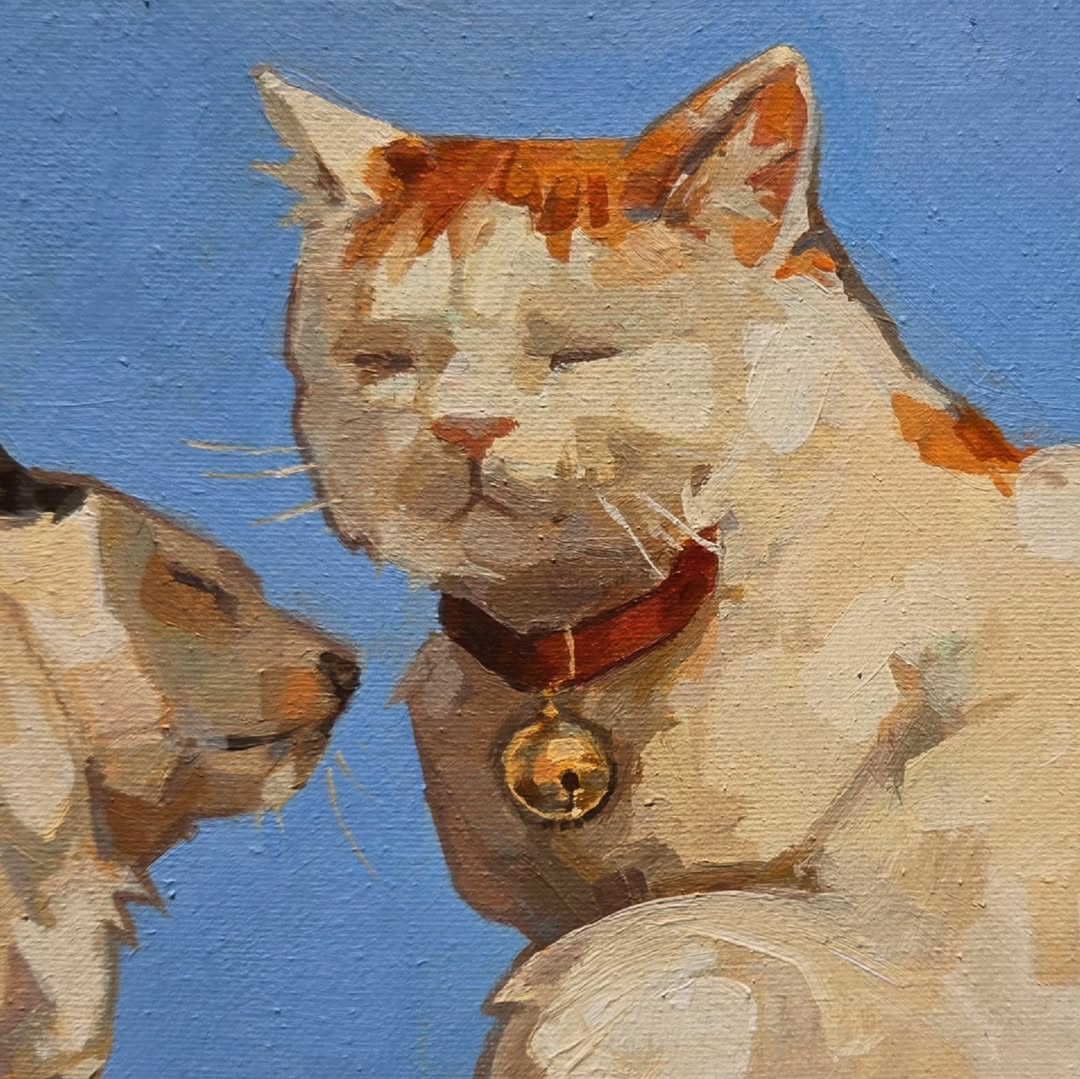
Untitled, 2025
How did you arrive at that combination of watercolors and colored pencils?
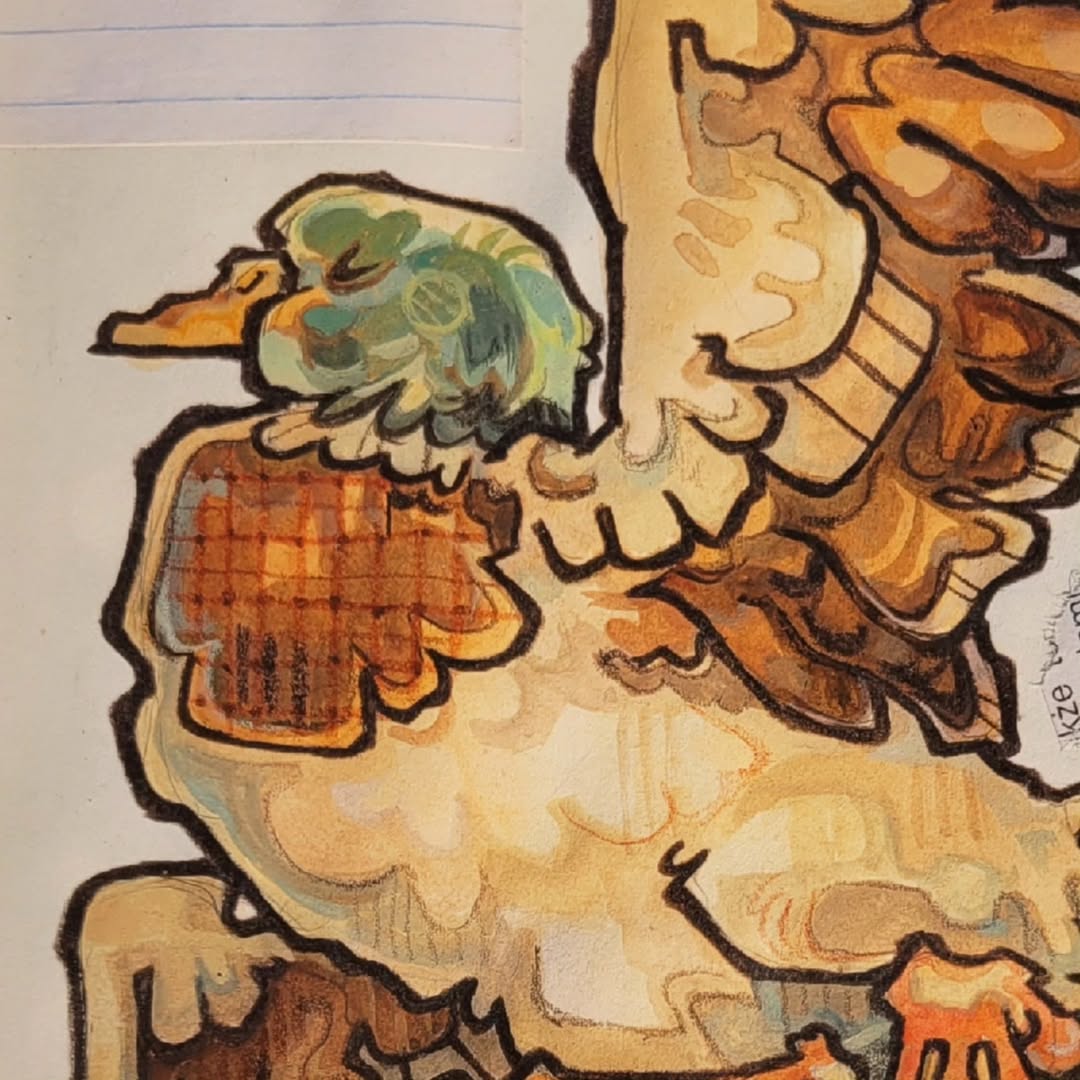
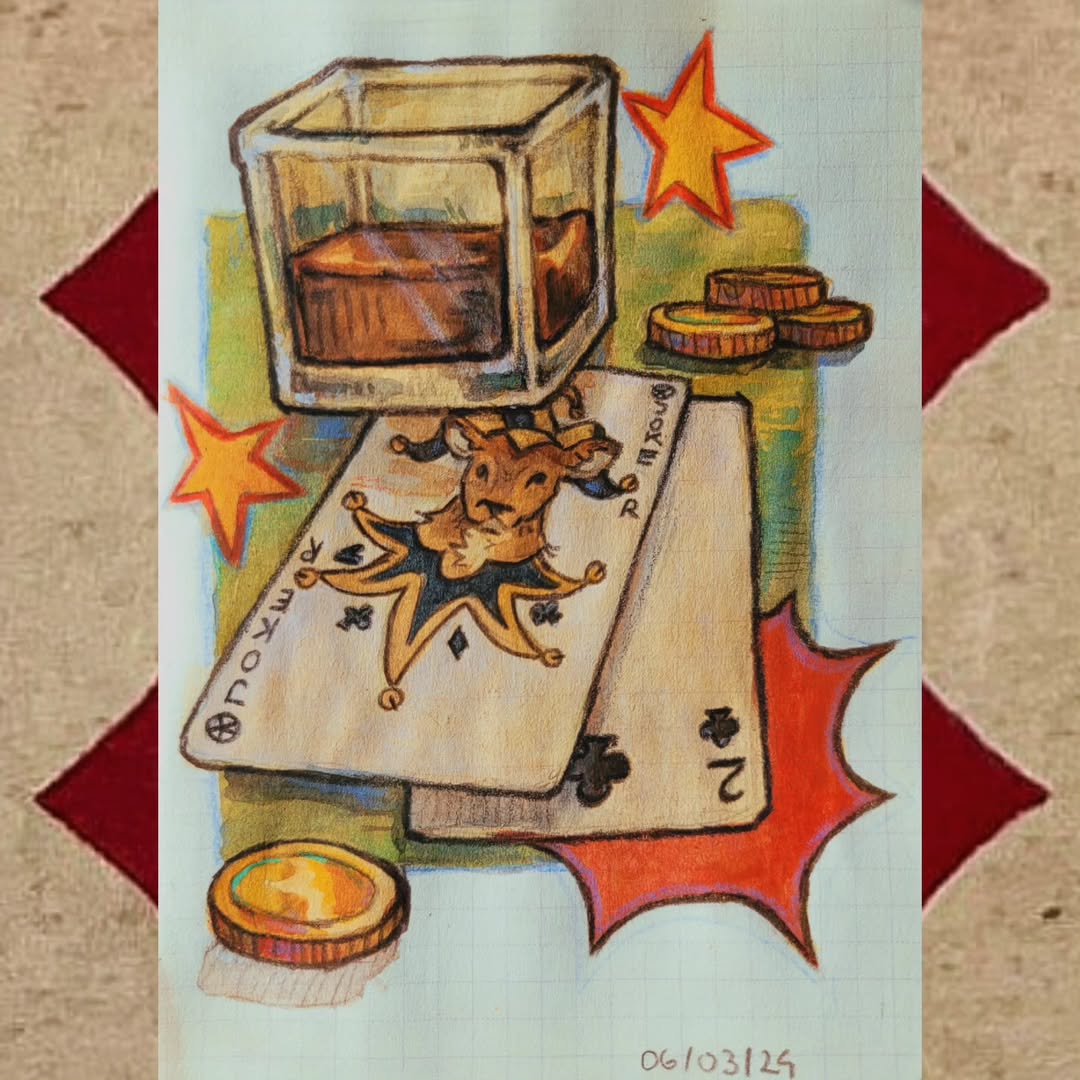
I have been using colored pencils in my art as long as I can remember, having multiple expensive sets throughout my life, some of which I still own to this day. It was no shock that I’d gravitate back towards it when traditional art techniques took the spotlight once again in my life. When it comes to watercolor, it has been a medium that has eluded me for a long time. I’ve experimented with a lot of art supplies throughout my childhood, and somehow it never really stuck, or at least the traditional way of using them via thin, watered-down layers of paint. When I picked up a physical pencil again, somehow the thought of them popped back up into my head, and I decided to give them another shot. I remember first going through a phase where I used alcoholic markers instead, a medium I was much more familiar with. I slowly graduated towards a paintbrush. I do not recall the exact reason why that change was made, but I do remember the intrigue I had with watercolors and the urge to finally try them out properly. I started combining it with colored pencils naturally, as I wanted my art to have more bold lines and more popping colors, things I usually do not see with watercolor art. Combining the two seemed the most natural, and it created an effect I was very happy with, so I explored the mediums further, eventually making it my absolute go-to combination.
When did you start bringing in the collage elements and why?
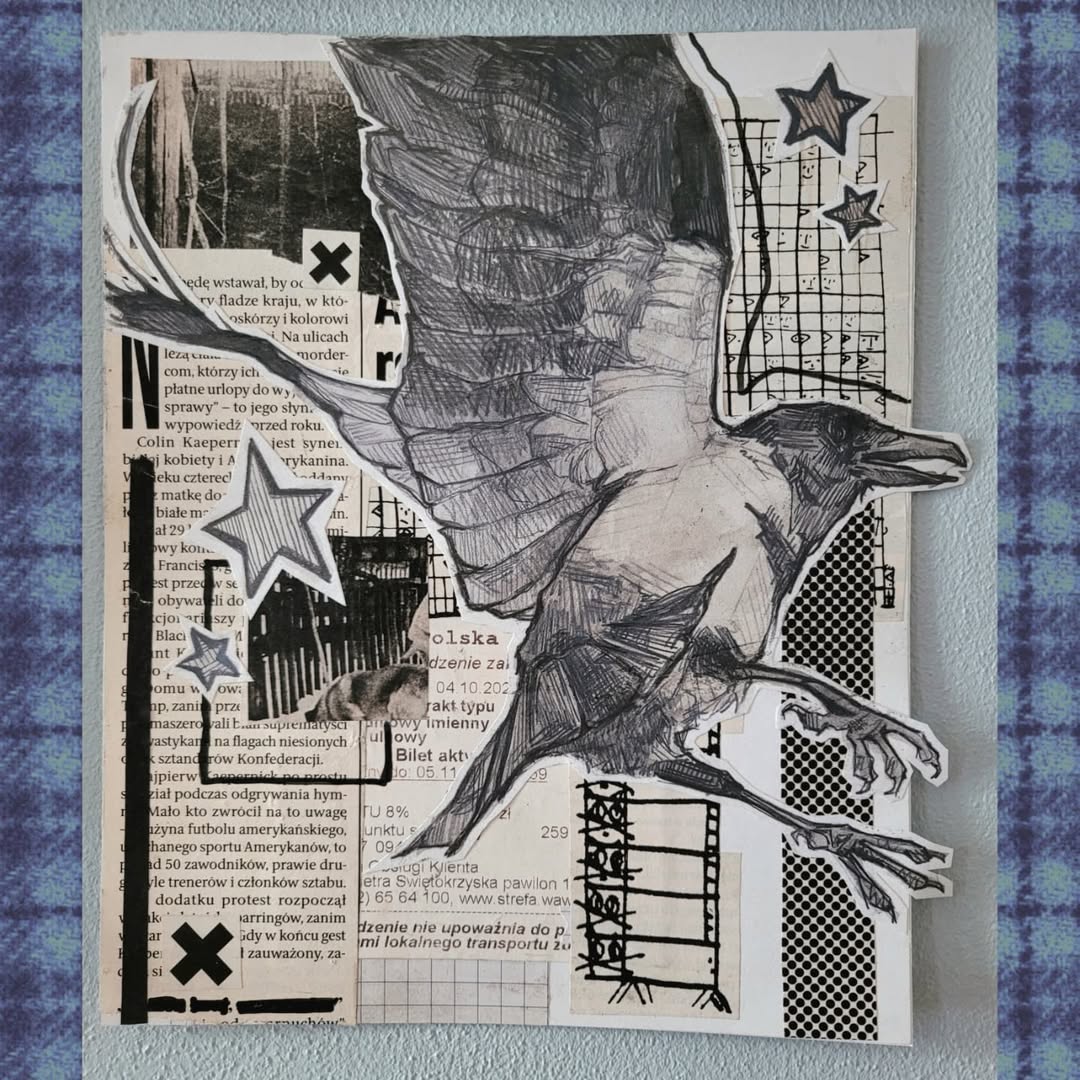
I believe I started to add collage elements with the first sketchbook I treated more seriously, and they began as a way to fill in backgrounds and space around the subjects I was creating. I was never a big fan of creating elaborate and detailed backgrounds, more interested in the figures themselves, so for me, filling in the blank areas on the page with empty sugar packets or receipts felt like a good creative solution. Just filling it in with color or shapes wasn’t enough for me, and I believe that adding extra, glued-on elements provided very interesting varieties of textures that I couldn’t achieve otherwise. Quickly, I started deliberately collecting scraps of paper and such to have them at hand for when I was drawing.
Do you find your collage elements in your day-to-day life?
I do! I mostly tend to take them from magazines I find, brochures, receipts, and anything I happen to find at random. It’s never specifically ordered paper or anything of that sort. I simply started with my mom’s old magazines she had lying around the house, and went from there. Now I sometimes use things others have discarded as trash, like leaflets I find on the ground, or interesting tags I get from items I bought. I also try to use up as many materials as I can to minimize the trash I produce, because I believe I can find a use for them, and I am usually proven correct. There aren’t any patterns or restrictions to what I will or will not use. If I find it visually appealing or get an idea for what I can do with it, I will pick it up and store it for when its time comes.
You use heavy linework that outlines the entire figure. What emotion do you think this style evokes?
This is another hard question to answer, as I typically leave my works entirely up to interpretation, and not many people share what exactly they experience when viewing my art. I’ve heard polarizing opinions, ones speaking of a certain calm and stability that comes with my bold linework, and others that claim it to be more chaotic and dream-like. I usually don’t state my own interpretations of my work as I love hearing about how others interpret it, sometimes it being a complete opposite to what I intended. But I do think it evokes a certain curiosity, its boldness being very eye-catching and standing out. It invites one to look at it further; it demands attention with how much space it takes up. And I think that can evoke a myriad of different impressions on people.
You’ve done ‘draw this in your style’ on your page, and you’re very active in your comments. How important is community to you and your work?
I believe upholding a sense of community is very important. As intimidating as it can sometimes be, having a relatively big art account can certainly bring feelings of detachment from everyone else, feeling better than others, and an inflated grandeur. What I find of utmost importance is retaining the mindset that I am on no pedestal, I am a human, just like everyone else, and I will treat everyone like I would like to be treated. I try to keep a healthy distance with certain boundaries of course, as I am aware I am still interacting with strangers and I am a reserved person that values my privacy, however, I will do my best to be as warm and friendly as I can, as I feel that makes my platform and my art more welcoming, rather than cold and distant. I want people to treat me like I’m no better than them, because I am not, and I feel a lot of artists, unfortunately, create such environments by being detached from the people that support them. I feel it is important to mention I am in no way criticizing anyone, as I do not know anyone else’s story or thoughts, even if they decide to maintain their platform in an opposite way to my own, I’m simply stating what is personally important to me and what effect I would not like to achieve with the space I created with this account. I want people to feel listened to when they post a comment, make it known that I’ve seen and appreciated their story repost, and express gratitude for their continuous support, because to me it is invaluable, and I shouldn’t and wouldn’t want to take it for granted. To have such an audience is a great privilege, and I will always want to hold the respect and gratitude I feel it deserves.
What do you think makes your work special, and hinders AI from being able to copy it?
On a purely technical level, I think a big factor is that my work is done purely in traditional media, completely removed from the digital sphere. In the artistic and emotional sphere, however, I feel that I don’t use very precise, thought-out movements to create my artwork – it’s mostly based on feeling, as well as wherever my hands will guide me. I trust the shapes to take me where I’d like them, based on a loose pattern that I carry over from my previous artworks. Since AI is only able to replicate, not create, I believe it wouldn’t be able to capture the fluidity and freehand feeling that I try to go for when I create. It can try to mimic my style, as it can anyone else’s, but it’s always going to lack that human touch that comes with art made by people. I pride myself on my imperfections, in the paint that spills over the lines, the unevenness of the borders I create, the rips, and the element of randomness in my collage elements. I don’t believe AI can ever replicate the human element in art, because it will always lack in that sphere.
“The key to what got me here is that I just started sketching. Loose, imperfect sketches, letting my hand guide me.”
You’ve developed your style and grown so much as an artist. Where are you going from here?
I’m going in the same direction I’ve always been heading – towards more growth and development as an artist. I want to keep discovering and trying new things alongside my ‘main’ mediums, like linoleum printing, developing my ‘tattoo’ artstyle, leaning more into acrylic paintings and work on canvases, and all the things the future will bring with it. Alongside that, I’m focused on finally making my works available as purchasable items, as so many people have requested. I’m working on opening a shop online, and that will certainly be a huge endeavor with plenty of new challenges to overcome. I have a few big ideas for the future that I’d love to have the opportunity to make a reality someday, but everything in due time.
With your recent move into tattoo commissions, what part of your career as an artist does this represent?
I think it definitely represents me broadening my horizons and properly stepping into making this hobby my career. As I mentioned, throughout my life, working with color was my main go-to; I never liked drawing purely in grayscale, let alone exclusively in black and white. However, I reconsidered it after a few people expressed interest in having my work tattooed. This was the first time I have ever put anything for sale, and with the amount of love and positive feedback it received, I feel it was a kind of breakthrough, showing me that making this into something serious is worthwhile. It is certainly only the beginning, a slow one at that, but it started something that I would personally consider a pipe dream; selling my artwork as a career was what I always dreamed of as a kid. And I am determined to make the most of it as I can, for myself, and for the wonderful community I cultivated that has been waiting for this for a while now.
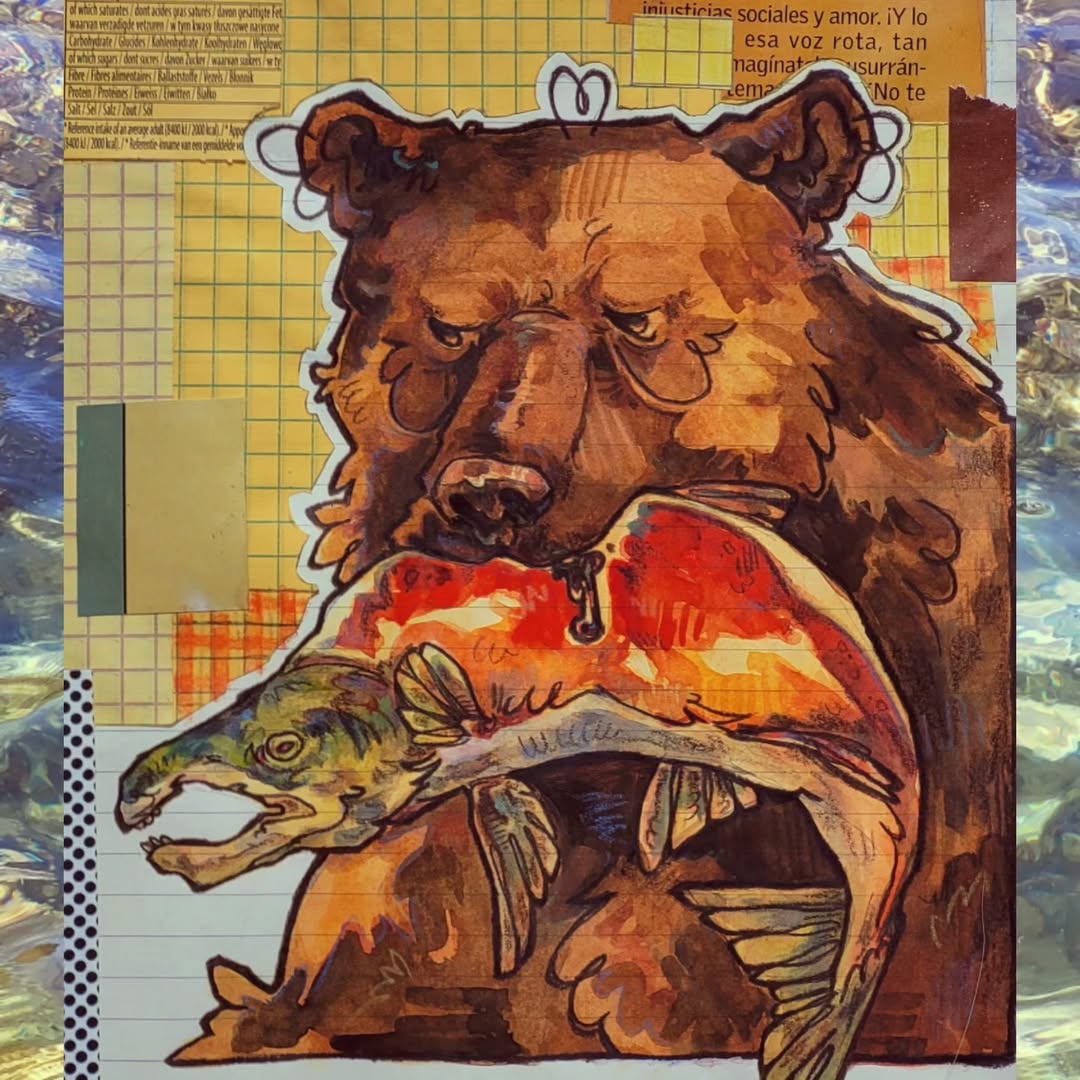
Untitled, 2024
Walking away from digital tools gave Robbie the space to work without exhausting himself. In the analog, he found the ability to focus on shape and colors, capturing feelings instead of perfectionism. Traditional materials slowed him down and made room for the kind of instinct-led decisions he used to edit out. His work now carries the marks of that shift, with natural color palettes that bring a realism to his animal subjects and shapes that bring out the emotion of each animal. Choosing to stay off the screen wasn’t a step backward, but instead how Robbie finally let the work be.