Digital
Motion Design
Branding
Design

Isabel Lauren Loewe
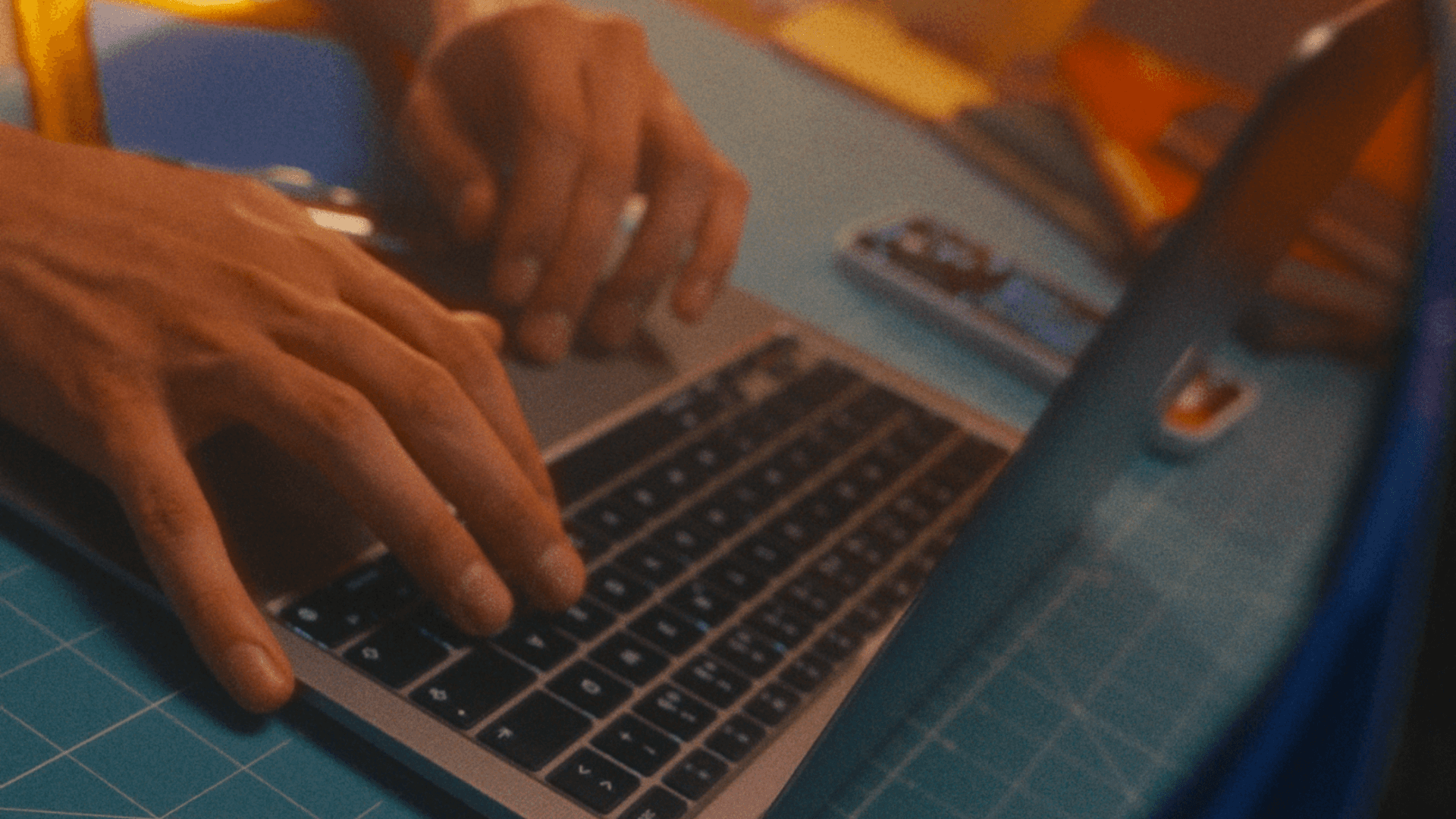
'Untitled', 2025
Sam Hox's clients see three pitches. They never see the ten or twenty that came before them. By the time a mood board lands in front of a client, Sam has already done real design work inside it: quick logo concepts, color explorations, actual type choices. What the client sees as a starting point is, for him, already a refined edit of a much longer process.
He's based in Pristina, Kosovo, founder of Second Date, and has been working in brand design since he was thirteen. His practice sits at the intersection of branding, motion design, 3D, and web, and he'll tell you directly that branding is the field he chose specifically because it doesn't limit him to any one of those things. Science and healthcare companies make up most of his client work right now, not because he set out to specialize, but because those are the briefs that give him the most freedom to push what a brand can look and feel like.
What makes his process worth understanding is the discipline underneath the breadth. He won't share a skill until he's spent months or years developing it privately first. His 3D work existed long before it appeared in his portfolio. Everything he puts out has already been through a longer, invisible process. The mood boards are the most visible version of that, but the principle runs through everything he does.
Can you tell me a little bit about who you are and maybe a bit about your artist statement?
My name is Sam. I'm based in Pristina in Kosovo and I've been doing design since I was very young, around 13. I started as a hobby, but as I went along I discovered how lucky I was that design is actually what I want to do. Even though I started just playing with it, I didn't even know that in the future I could be a designer or do this long term or make a career from it.
I just enjoyed that I could do art on my computer. I used to paint in school, and then I was also a bit addicted to computers, and when both of those things came together I knew this is what I wanted to do. I'm the founder of Second Date. I got that name very early. I work in branding, but I'm more focused on building systems, not just logo design. I'm focused on building systems where motion design, digital experiences, and everything come together, because I enjoy working across different things. I don't want to work in the future only as a web designer or only as a brand designer.
My goal is to keep learning as many things as I can. Even with technology, I use it as a tool. I might even learn film in the future. I'm already touching on it a little. Usually I learn something for quite some time through personal projects, then maybe after a year or two or three, after I've developed it a bit, I start to include it in my work. I work across different disciplines, but branding is where everything can come together: animation, design, web design, 3D. It all fits inside that.
When I look back, I see I'm a bit more refined now. I don't see the difference super fast. Maybe if I look at designs from two or three years ago only then I can see it. Very small changes I would make now. Spacing, some refinements that before I didn't understand or know to make. I can spot things a bit more now.
In terms of look and feel, in branding it's always different because each client is a different exploration, a different brand. We're not like painters who have one style they stick with for their whole career. Each client for us is something new. So the look and feel always evolves. I'm just a better designer now. I can see spacing, I can see balance a bit better.
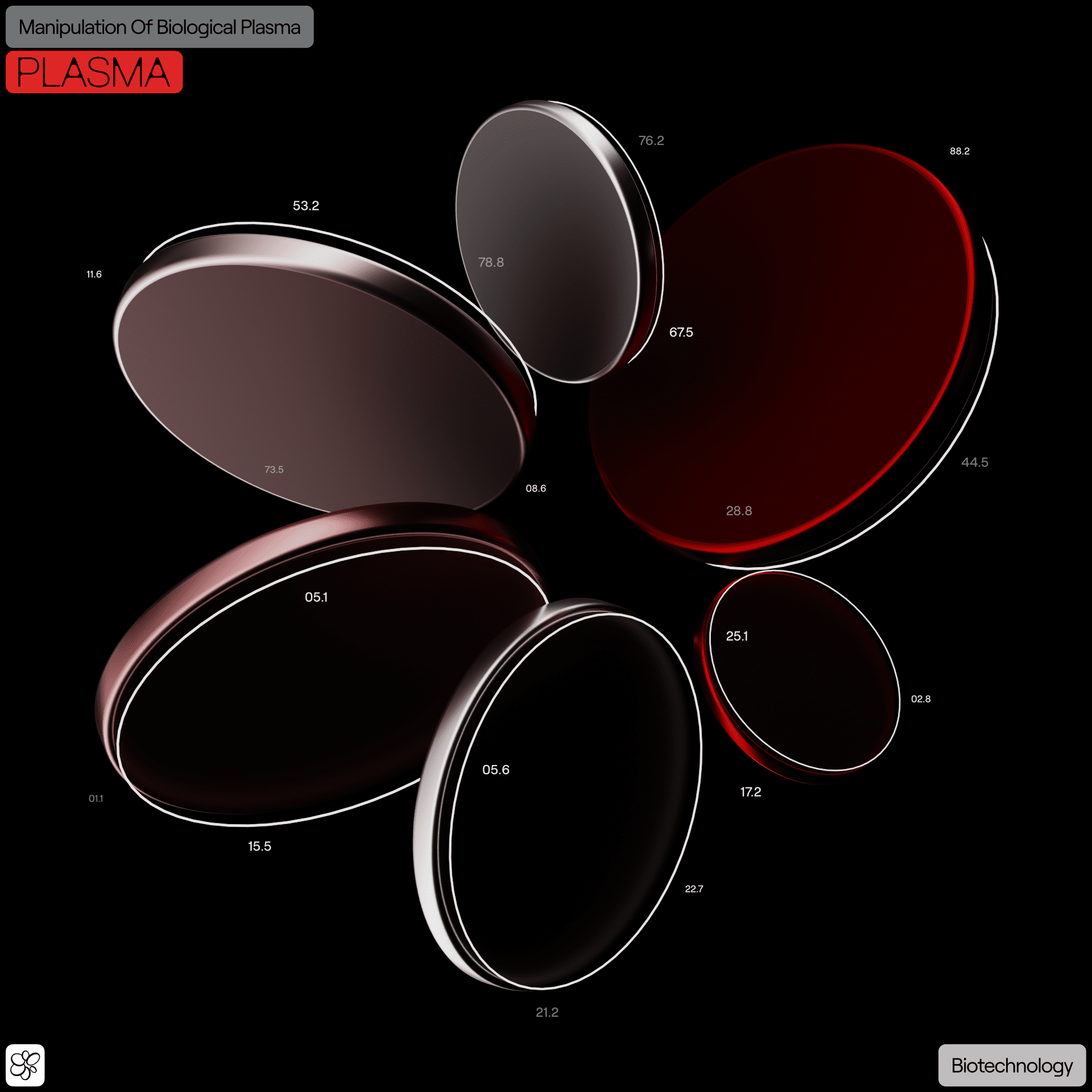
'Plasma Brand', 2024
You went to school for integrated design. Can you talk about that experience?
So I started with graphic design and after some years I wanted to keep learning as many things as possible. That's one of my goals. The way I think about design is that the more I learn about other fields that aren't necessarily graphic design, the better I get.
I went to a school in Pristina for integrated design. In that program you have fashion design, graphic design, industrial design, and interior design. In the first year you learn a bit about everything, then as you progress you specialize in one. But I have to say, school wasn't something great for me, just because most of my knowledge and skills came either from spending all day and night looking at tutorials online, working with clients, or having the luck to work with some amazing creative directors I learned a lot from. I would say I'm mostly self-taught. In my later stages there were some people I really learned from. One of them is Matthew Smith. Learning from him as I was progressing further was one of the most beneficial things for me.
How did you land on brand design specifically?
I initially started doing mostly logo designs when I was very young, and logo design has a really unique place in my heart. I see myself even when I'm old, 80 or something, still doing logo design, still designing just for myself.
The reason I chose branding design is because, as I mentioned, it's one of the fields where I can use all my skills. I can shoot photography, do film, do 3D, do web design, and everything comes together in branding. It doesn't limit me to just one thing. I can use all my skills to build the system and then it becomes the full brand.
I really got into design just by doing the stuff I loved most. Initially I didn't even think I was going to do this for the rest of my life because I was very young, 13 or 14. But I was sharing a lot of my brandings, a lot of my logo designs, a lot of my work, and the work spoke for itself.
As I progressed and started working with different clients, I began sharing on social media. I got a lot of friends into design as well, and a lot of clients I worked with two or three times throughout the year. Then it became easier because I was making a name for myself while also building connections. I started working full-time for different agencies in Europe and also in the US, and as I progressed more, I think connections and getting your name out there helps a lot.
In the beginning I wasn't even focused on social media. I was posting on random logo or brand websites and focused on getting feedback and getting my work out there. I didn't understand marketing that much then. Now I'm a bit more intentional. I try to market myself, share more on social media, and put myself out there a bit more.
Where does a project really start for you?
After I get a brief or the initial meeting with the client, we usually do workshops. We start to identify what the goals of the project are, where we want to see it go, how to position the brand. After I get all that information, we move into the moodboarding stage, but not traditional mood boards where I'm just gathering random stuff from the internet and sharing it. The way I do moods is I might find something online or pull from a previous project, and then I do work on top of that. I might create a very quick logo design for them at that stage, some colors, some typefaces, some graphics. I combine everything, and they don't even have to be final, just an initial point. I do three directions in that initial stage, and after that we might pick one or combine elements from all three to create something new. Then it's refinement, exploring, and delivering the brand.
How do you know when you've found the single line that becomes the foundation for everything?
Sometimes you just know you have something very good that you can expand on and build on top of. I think it has a lot to do with experience as well. If you've been in it for a long time, you've seen a lot. Everything you put in, you also put out. So when you research, when you see what's out there, when you get inspired by something and combine it with something else and build on top of it, you just know when it's something a bit more unique, something you've created. And then of course experience plays a role. You know what things can work and what things can't.
I wouldn't say it's ever perfected, because sometimes it never is. But you put it in a state where you're happy. Sometimes the deadline has to stop you, and sometimes you go for days.
Can you walk me through a project where a concept came fast and one where it didn't?
The client never sees whether I got the idea fast or late. Sometimes I might be in a meeting and while the client is describing something, I already have an idea forming in my head: a metaphor or concept I want to evolve. I might communicate it to them or share it as a direction.
But many times you get stuck, which is actually a good thing sometimes, because it means you'll work harder and might find something you never thought of. You might do 10 directions the client never sees, because in the moodboarding stage the client only sees three. Maybe you do 10 or 20 until you find the three that are final. It just means you have to do more research, learn more about that field, learn about the client's technology or philosophy, until you find the right concept or the right design.
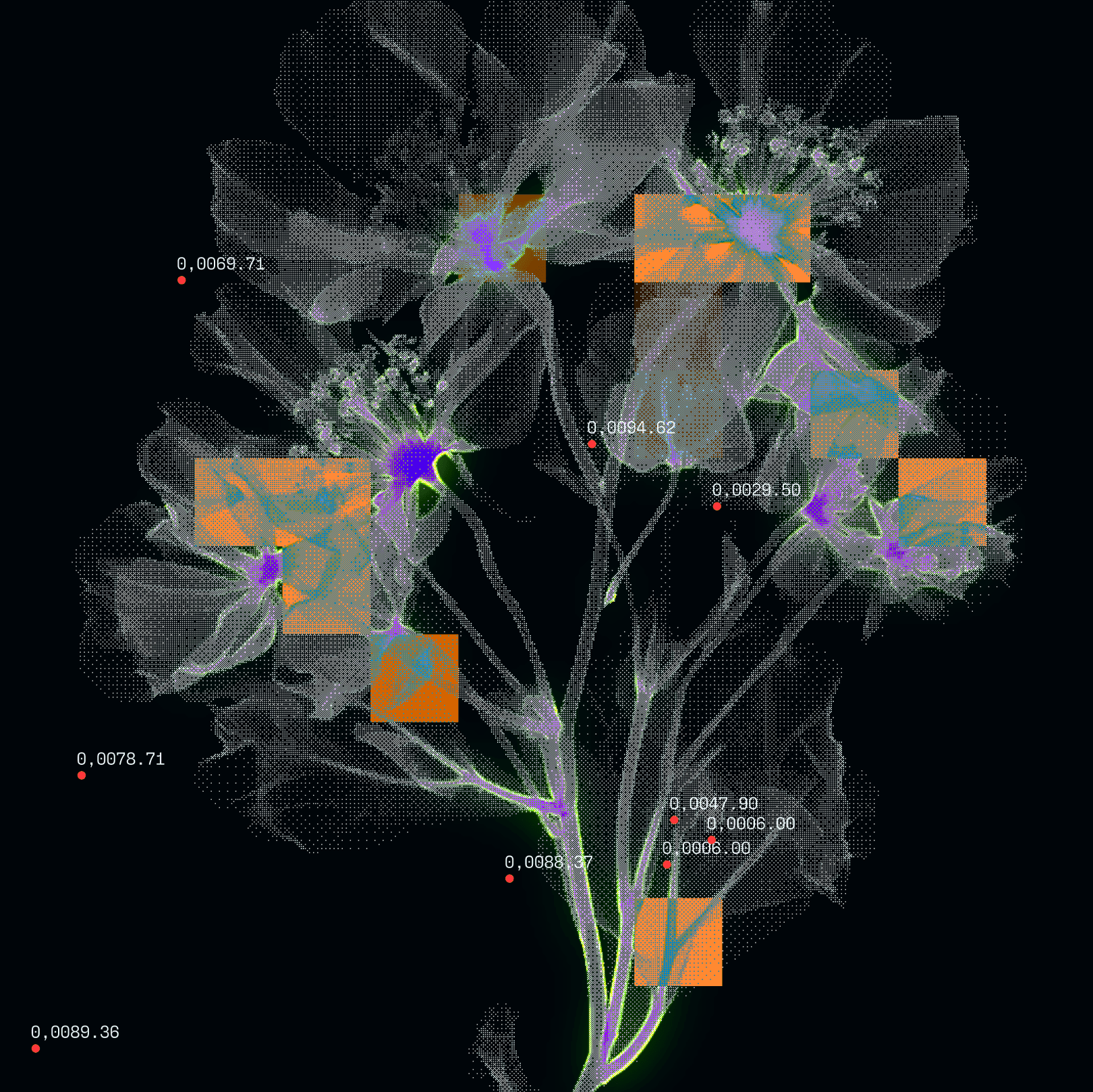
'Radial Brand Identity Design', 2026
How much of your process is analog versus digital?
I would say 98% digital. Because I started everything on a computer, I never fully explored the analog phase. I always have a notebook in front of me but I might do something very quick in it, never a high-fidelity sketch. Even when I do sketch, I use an iPad, which is still digital, or sometimes I start directly in software. So maybe 98% or even more is digital.
What tools are you working in day-to-day?
I use a lot of tools, sometimes even tools that aren't specifically for graphic design. Some of what I currently use: Figma, Illustrator, Photoshop, Premiere, After Effects, Cavalry, Blender, Cinema 4D, Rhino 3D, which is a tool for architects and people in completely different industries, and Moi 3D. I also use AI, sometimes OpenAI. It really depends on the project. I see everything as a tool, and the tools might change depending on what I need to do.
What do you think about AI in the art and design space?
For now, AI has been a lot of help with the boring and repetitive tasks, and I think it's a tool. You have to use it if you want to save time, and it doesn't take away your creativity. I think it just enhances it. I see it as a tool and I use it as a tool. If in the future it becomes AGI and replaces everything, that's a different conversation, but for now I enjoy it.
I've been working for a long time, from the days when we were doing web design in Photoshop to now having AI. I think it's just going to change the way we work and elevate our output to a different level. Ten or fifteen years ago, without the tools we have now, our designs might have been a bit worse. So maybe in the future, with AI and other tools, our output will be much better because we'll have a lot more help.
How do you balance your own creativity within someone else's brand?
I think that's one of the hardest things for designers, because we might share personal projects that are always better than projects where a team or client is limiting you a bit.
The best thing for me recently has been that a lot of clients who come to me already know my work and style, and they trust my direction. So I don't have as much limiting me. But sometimes of course there's someone who wants something very specific. That's where we come in as designers: working within boundaries but still making it beautiful, understandable, and solving the problem. Sometimes the boundary is something that might look pretty but the experience would be terrible. That's always something we have to keep in mind.
Has a client ever rejected a direction you pitched?
Oh yes, of course. It happens every time, actually. This is why the mood boards are very important. He might hate direction one, but like direction two. He might like something from direction three. Then we might combine all three and get something fresh that solves the issue. If I presented only one direction, we run into trouble: he either loves it, which saves a lot of time, or he hates it. So yes, of course it happens.
What does a good client relationship look like in your line of work?
It's pretty simple, actually. Understanding of what they want, having clear boundaries, and collaboration. Just working together and finalizing everything.
Your work pulls a lot from biological and scientific imagery. How do you create those visuals?
It really depends on the brief first. If we want to create something that looks slightly more 3D, we use a 3D program, usually Blender or Cinema 4D. Then it's about understanding the software, but also understanding the brief and what we want to create. It's a bit tricky to give specific advice on how to create those visuals because you have to be both a designer and slightly technical to combine both worlds.
Do you enjoy the challenge of bringing someone else's vision to life, or do you sometimes wish you could just work in one consistent style?
I really enjoy the change from project to project. I think I would get bored doing just one thing all the time. This is why branding works best for me: each client, each project, is something new. I always have to learn a bit more, maybe start using different tools, different look and feels or styles. I have to explore new things constantly, and that's what I enjoy the most.
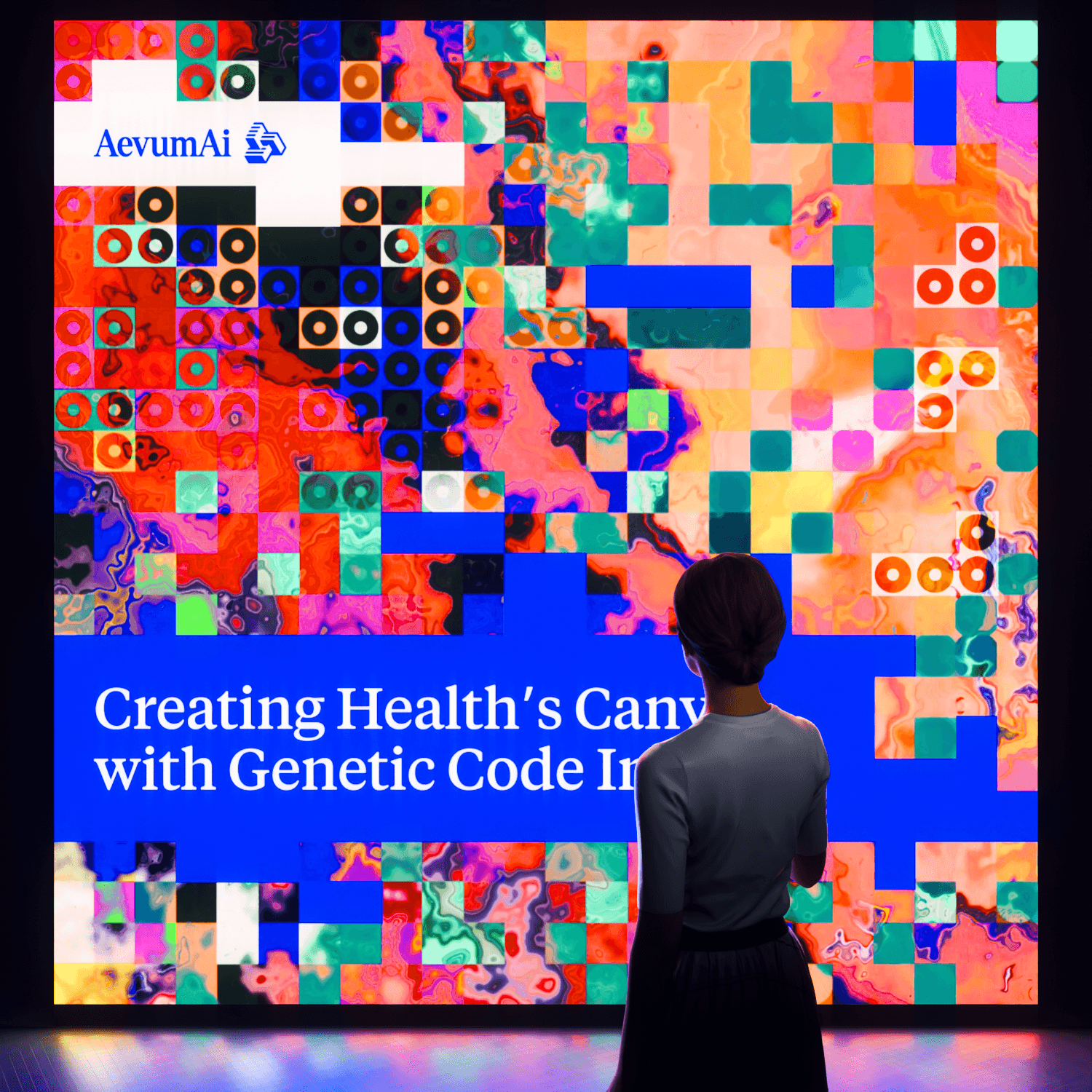
'Aevum Ai Branding Design', 2024
Where do you draw inspiration from outside of the design world?
All of my references and initial inspiration sometimes come from random things: nature, biology, insects, cells, molecules. For my work that's super inspiring, because if you take imagery from a microscope or look at galaxies and stars, you see a lot of patterns, a lot of colors, a lot of amazing things you can get inspired from. The way light bounces, the way shadows work, all of that is always important. It's so easy to find inspiration everywhere you look.
Can you explain what building full brand systems means for someone outside of your world?
In the early stages of my career I would do like a logo design and some colors, not much beyond that. A system is different. It's the graphic language, the animation, the look and feel, the website, the tone of voice, how we talk, the film, the videos: everything in the same coherent style.
For example, the graphic language can be complex, different shapes, maybe circles or rectangles, and the logo design can be a very simplified version of that, but they share the same concept, the same idea. The way they're connected in look and feel, that's what the system is about. Being coherent. Having everything in the same line. So even if you see a brand on a billboard with no logo, you might still know which brand it is just from the colors, the way they do videos, the color grading, the shots. That's what the system creates: a coherent design language where everything connects.
What's the hardest part of creative direction that maybe no one talks about?
The research phase. You have to cover a lot of ground from the brief, you have to be fast because deadlines are always there, you have to create something new, and you have to get your vision out there. That's probably the hardest part.
And you have to always keep learning and stay current. If you take a long break, if you're not learning constantly, if you don't enjoy learning, that's something that will punish you in the future. So I think you have to enjoy what you do, and then it becomes easier.
What's next for you?
I really want to keep exploring my skills and learning, not just in graphic design but in other fields. Maybe film in the future. I'm also playing with the idea of creating a clothing brand as a side project. Even in design, I've never had one specific goal other than to have fun, learn, and advance my skills. So it's about taking those skills somewhere new and seeing how they interconnect with everything else I do.
Articles
Magazine
Submissions