
Illustration
Digital
Design

Isabel Lauren Loewe

'Untitled', 2026
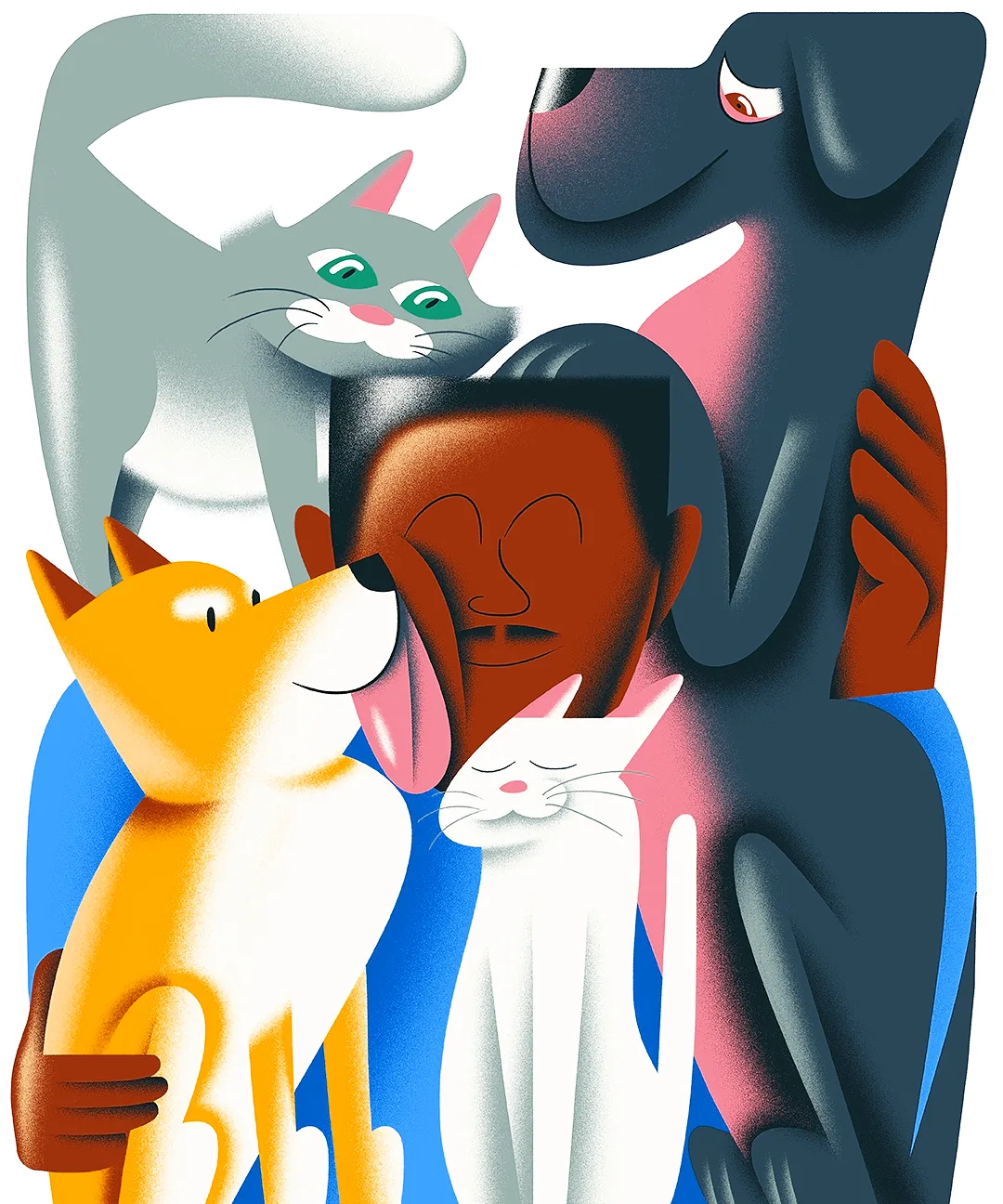
Yann Bastard is a French-Spanish illustrator working in the space where editorial image-making meets graphic design. Since 2017, his work has appeared across publications including The New York Times, Bloomberg, WIRED, Jacobin, The Baffler, and Asterisk Magazine, often attached to subjects that are difficult to make visual. Mental health, political corruption, burnout, discomfort, and the private humiliations of modern life have passed through his hands and come out sharper, stranger, and easier to enter than they might have otherwise.
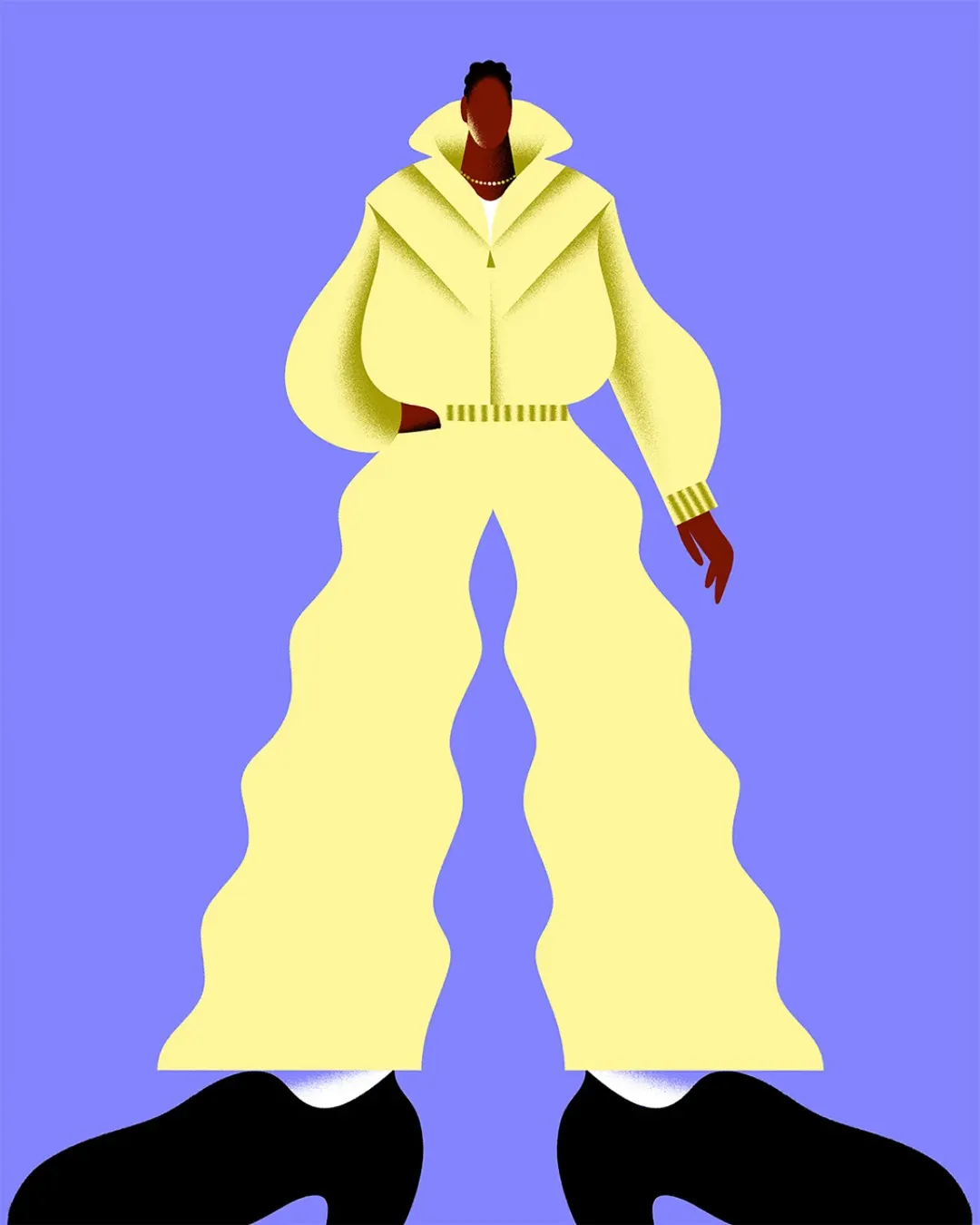
His illustrations are built from bold shapes, bright palettes, theatrical bodies, heavy shoes, and shadows that make a flat image feel suddenly physical. Bastard studied graphic design before becoming an illustrator, and that training still sits underneath the drawing. He thinks about an image the way a poster or a book cover thinks, with the pressure on immediate recognition, clean composition, and the removal of anything that does not need to be there.
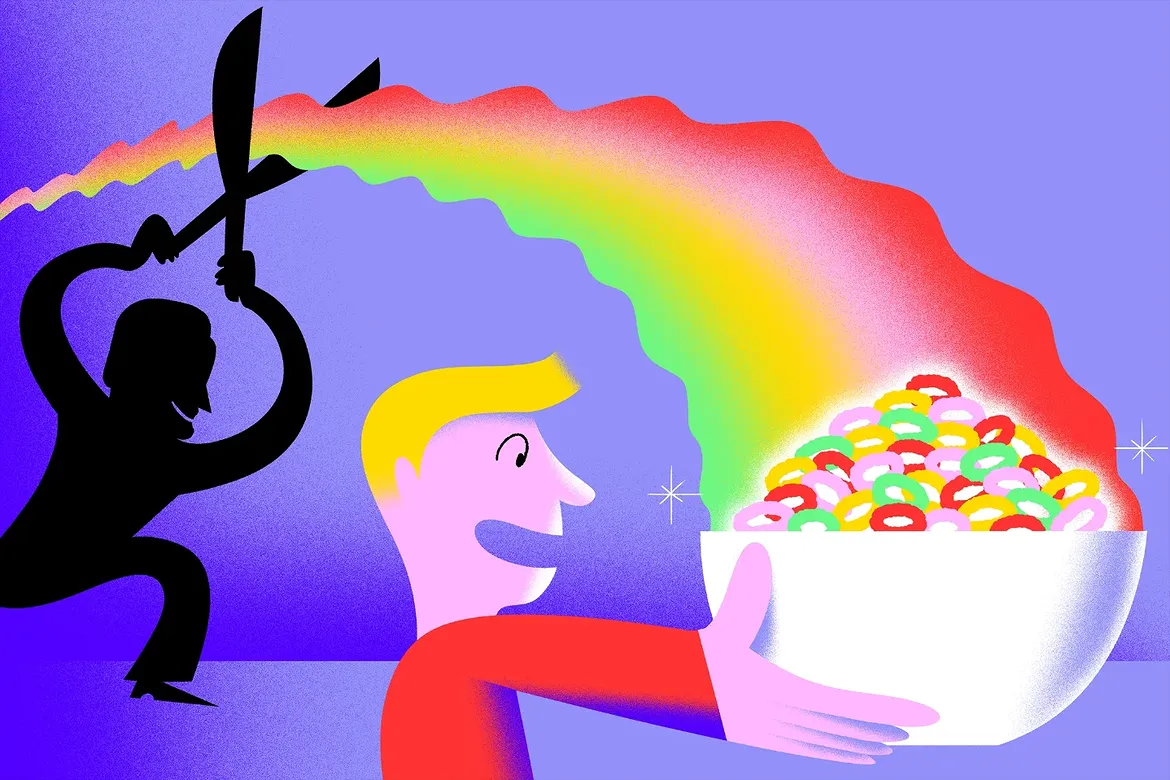
That is why his process usually begins with everything taken out. Before a client sees color, he sends two or three sketches in black and white, letting the shape of the idea stand on its own before anything else is allowed to carry it. Color comes later, after the image has already been chosen, which makes the palette feel less like decoration and more like the final pressure point of the piece. He keeps it limited, often to four or five colors, and looks for those combinations in whatever has stayed with him from the day.

'Untitled', 2026
How would you describe yourself and your background?
I am a French and Spanish queer illustrator, and I've been working since 2017. I mainly do editorial illustration, but I've had the opportunity to work on advertising and packaging projects, too.
What is your artist statement?
My aesthetic focuses on bold shapes, playful characters and vibrant colors. I love to tell stories through my illustrations.
You were born in Zaragoza, grew up and live in France, and your last name is Bastard. How do you introduce yourself?
The question pretty much sums it up!
When did you first start calling yourself an illustrator?
I studied graphic design, and I loved it, but during my course I realized that ultimately I wanted to spend my life drawing, so I decided to pursue a career in illustration and it felt liberating. I probably started calling myself an illustrator around that time.
What did you study, and how much of what you do now came from school versus figuring things out on your own?
Graphic design definitely shaped my approach to illustration, in terms of composition, use of color, etc. I also always managed to infuse my student work with some drawing, so I guess I was already on the path to becoming an illustrator. What I had to learn the hard way was how to be a freelancer, taxes, invoices, etc. Almost none of it was taught in school, which is a shame in my opinion.
Walk me through what a typical working day looks like for you.
I like to start my day with a quick to-do list to review my upcoming deadlines, etc, then I generally follow with a quick warmup doodle and get to illustrating. When I'm not working on a commission, I'll spend the morning reaching out to potential clients, then try to do something else entirely in the afternoon (painting, working on personal illustrations, taking a walk) because it can feel a bit draining otherwise.
What does your workspace look like? Do you have a studio, or do you work from home?
I share a studio with some friends, but I generally work on commercial work from home, and go to the studio to work on personal paintings. At home, I like to be surrounded by my favourite books, and various souvenirs from trips abroad.

'Untitled', 2025
You're based in Rennes. Does the city factor into your work at all, or is it mostly incidental to what you do?
I've been living in Rennes since 2013 and fell in love with the city. It's not too big, yet really lively. So far, the city itself hasn't really played a part in how I work; I work mostly with international clients. But lately I've been playing with the idea of doing a big, map-like detailed illustration depicting my favorite spots in the city!
You've worked with clients like the New York Times, Bloomberg, and WIRED. How did you land your first major editorial client?
Immediately after finishing school, I started sending emails daily to potential clients, while also building my portfolio out of personal work, fanzine illustrations and gig posters that I did for friends. At first, I only reached out to local and "small" clients but then I thought "I don't really have much to lose, do I?" and started contacting bigger names which I dreamed of working with. It took me years, but I still remember getting my first commission with the New York Times and the feeling of accomplishment it brought me!
Editorial illustration is a specific niche. Was that always the direction you wanted, or did you arrive there through a process of elimination?
I think editorial is the easiest way to get your work out there: the art directors are usually easier to find and get in touch with, and I guess it doesn't feel too risky to book a freelancer with little experience for a one-shot illustration, versus, say, a big advertising contract.
You worked with Asterisk Magazine. What was that collaboration like, and what kind of work did it produce?
They reached out with a very specific idea: turning an 1880's/1900's black and white etching into a contemporary, vivid illustration. I had never done anything like that before so I was really excited! And I got to draw a dragon, which doesn't happen too often. The resulting illustration is one of my favorite I've ever done.
How do you typically receive a brief, and what's your first move when you sit down with it?
At first, I like to write down notions from the article/brief that immediately bring images to mind. As I start listing them, I generally doodle a lot of really quick ideas, then pick the ones I like the most and turn them into actual clean sketches for the client.
You've really pared things down to two primary tools: bold shape and shadow. Most illustrators add more elements over time. You seem to have done the opposite. Was that a conscious decision?
Once again, I'm pretty sure graphic design helped shape my aesthetic: I like my illustrations to be simple and easy to read, just like a poster or a book cover would!
How hard is it to work within those constraints? When you only have shape and shadow to carry an image, where does the pressure land?
I like to think of the best way to make an image understandable, by stripping down every element of its additional details to capture its essence. It does make the process harder sometimes, but I think the final image is more impactful that way.
What do shadows actually do in your work, technically and expressively?
Shapes are essential to my work, but shading helps bring my illustrations from flat 2D to something that pops out.
Color seems to be doing a lot of heavy lifting in your pieces. How do you approach a color palette for a new piece?
This is actually my favorite part of the process. I generally send 2/3 black and white sketches to the client, and once an option has been picked, I draw multiple quick color sketches using different palettes, playing with contrast, etc. When possible, I like to use a maximum of 4 to 5 colors.
Do you work with a consistent color library, or does each piece get built from scratch?
I do have some favorites, but I'm constantly on the lookout for new bold color associations that can be inspired by anything around me: nature, food, the clothes my friends wear.
You've said shoes are your favorite thing to draw. What is it specifically about shoes?
I love curves, and can spend a lot of time trying to draw the perfect curve for a specific element of an illustration. Shoes have lots of curves! Also, I love filling the illustration frame entirely, so when I draw characters, I like them to be physically "grounded" in that frame: drawing them with big shoes makes them feel solid, powerful.
When you're working on personal projects versus commissioned work, does your process change significantly?
For some years now, my personal work has mainly been acrylic paintings on paper. It feels liberating to use a traditional medium since my commissioned work is always digital. Although the process is not that different: I start with flat colors, then use big brushes and masking tape to apply paint in small taps for the shading. The feeling when you lift the tape and get a perfect shape is so rewarding!
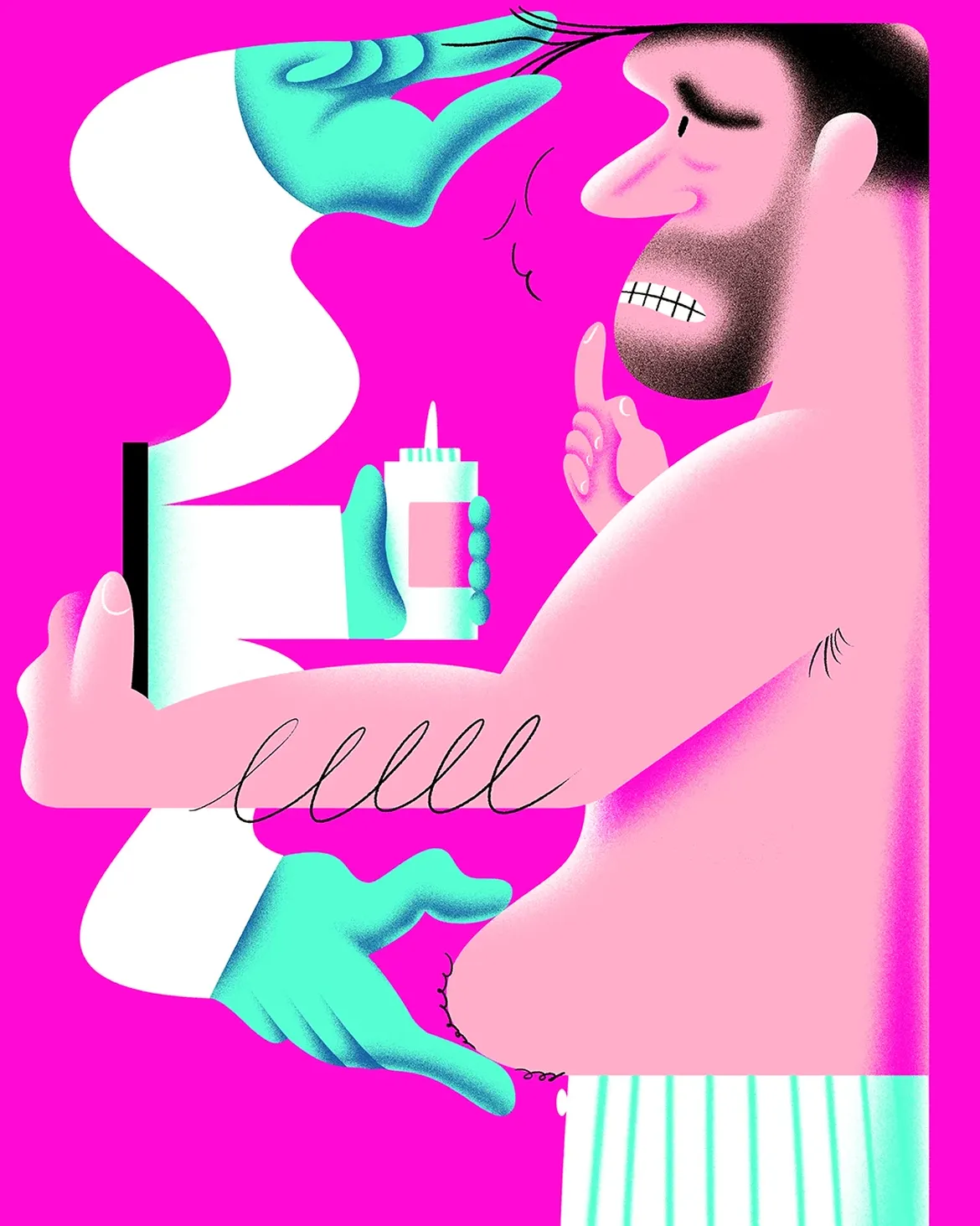
A lot of your editorial work covers heavy subjects: mental health, sexual burnout, political corruption, and club closures. Does the weight of the subject matter affect how you approach the image?
An art director once described me as being "great with stories about people hating/being uncomfortable with things"! I like the challenge of bringing a light, humorous vibe to a serious article, when possible.
Your work has a theatrical quality to it. Characters feel like they're performing something. Is that intentional?
I think my love for curves and bold shapes influences the way I draw characters: I like to bring a lot of movement to my illustrations, so I guess they can feel pretty intense sometimes! I often have to tone down my urge to add drama and chaos to my artworks.
How much of your personal worldview ends up in commissioned work, and how much of it gets edited out?
I'd definitely love to illustrate LGBTQ+ themes more often. But I don't think I've ever properly "censored" myself in a commission.
'Untitled', 2026
You've illustrated for publications with a clear political identity, like Jacobin and The Baffler. Does where a piece is published change how you approach it?
Definitely (I think I kind of answer this in question 30?)
You've also illustrated your drag persona, Br0celiande, multiple times. How does that personal work relate to the commercial work, if at all?
My personal work also reflects my love of big shapes, bright colors and curves, but allows me to try new things and reflect on themes that are close to my heart, such as drag, my love of fantasy, LGBTQ+ themes. Elements that I can't always include in my commercial work.
Do you think there's a difference between illustration that comments and illustration that decorates? Where does your work sit?
The word illustration comes from illumination, in French we would say "to put into light." I like to think that's what my work does: help understand a subject better while bringing ornamental value.
You're represented in Spain, France, and Switzerland. What does having representation actually change about the day-to-day?
Actually, I'm represented in German-speaking territory (Germany, Austria, German-speaking Switzerland). It's pretty recent, so I haven't really felt a change yet!
What do you look for when deciding whether to take on a project?
I'll definitely check the client's political background/affiliation: bigotry and intolerance are a big no. Then, if the budget and timeline are consistent with the brief, I don't second guess my ability to tackle the project, since the client trusts me with it.
Is there a type of brief or client you've learned to avoid?
When the client doesn't seem to know what they want, and approaches you with a promise of "complete freedom" over the final result, it usually means that they're going to be extra annoying and picky in the end.
What's been the most challenging commission you've taken on, and what made it difficult?
Back in 2022 I was commissioned to illustrate three Pride-themed mobile wallpapers for a famous tech company. Everything had to be pixel-perfect and I always had to make sure that the artworks didn't exclude any demographic, while keeping each of them unique. The process was challenging, and I ended up basically working non-stop for several months while my boyfriend fed and morally supported me! But the creative team was there to help at every step, and I'm very proud of the result.
Has a client ever pushed back on something in a way that genuinely changed the final piece for the better?
Many times! I've been lucky enough to work with some amazing art directors that pushed me to have more fun with commissions and embrace my crazy. They helped turn "ok" pieces into work that I'm actually proud of.
You've worked across editorial, advertising, and personal illustration. Is there one context that feels most like home?
I've been doing mostly editorial work since 2017, and I've grown to really love and feel comfortable in it. With that said, I'd really love to get out of my comfort zone more often, and tackle bigger, long-term projects in advertising, for instance.
Do you want to make a magazine someday, or a comic? Is there a larger project format you're working toward?
I would love to publish a comic someday, I'm constantly writing down ideas for it. The process seems extremely challenging, but I love telling stories through my illustrations, so I hope to figure out a way to combine my style with this medium. I also have a lot of ideas for kids' illustrated books!
What do you want this style to eventually be able to do that it can't quite do yet?
One of my dreams would be to illustrate a book cover or an album cover! I think right now, my work focuses on storytelling, and I'd like to experiment with more ornamental pieces while staying true to my aesthetic.
Who are you making work for, ultimately?
Maybe myself? I guess ultimately, I want to feel proud of every illustration I do, no matter the subject or client.
What question do you wish people asked you more often?
"How do you feel?"


Articles
Magazine
Submissions