

Painting

Isabel Lauren Loewe
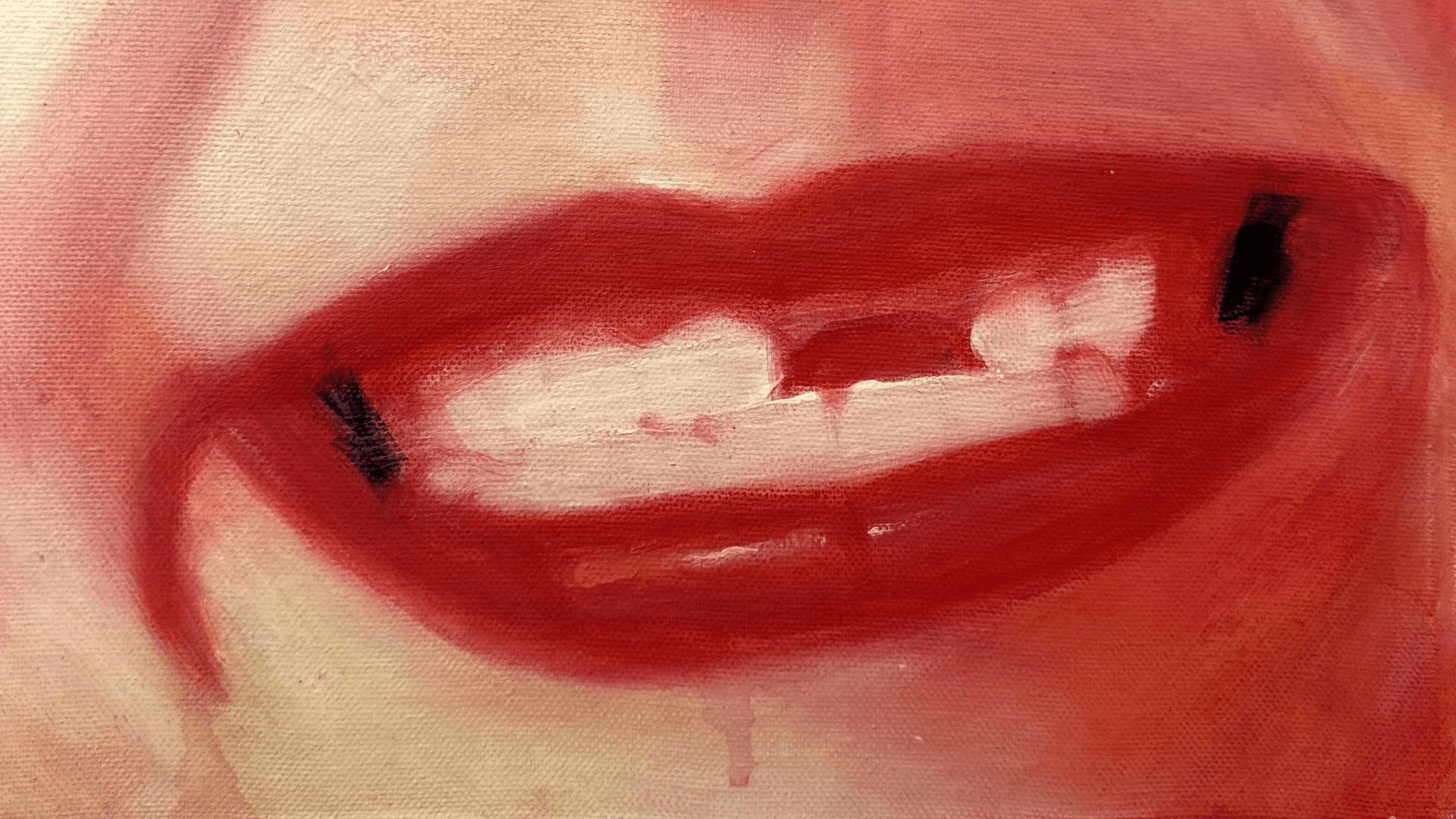
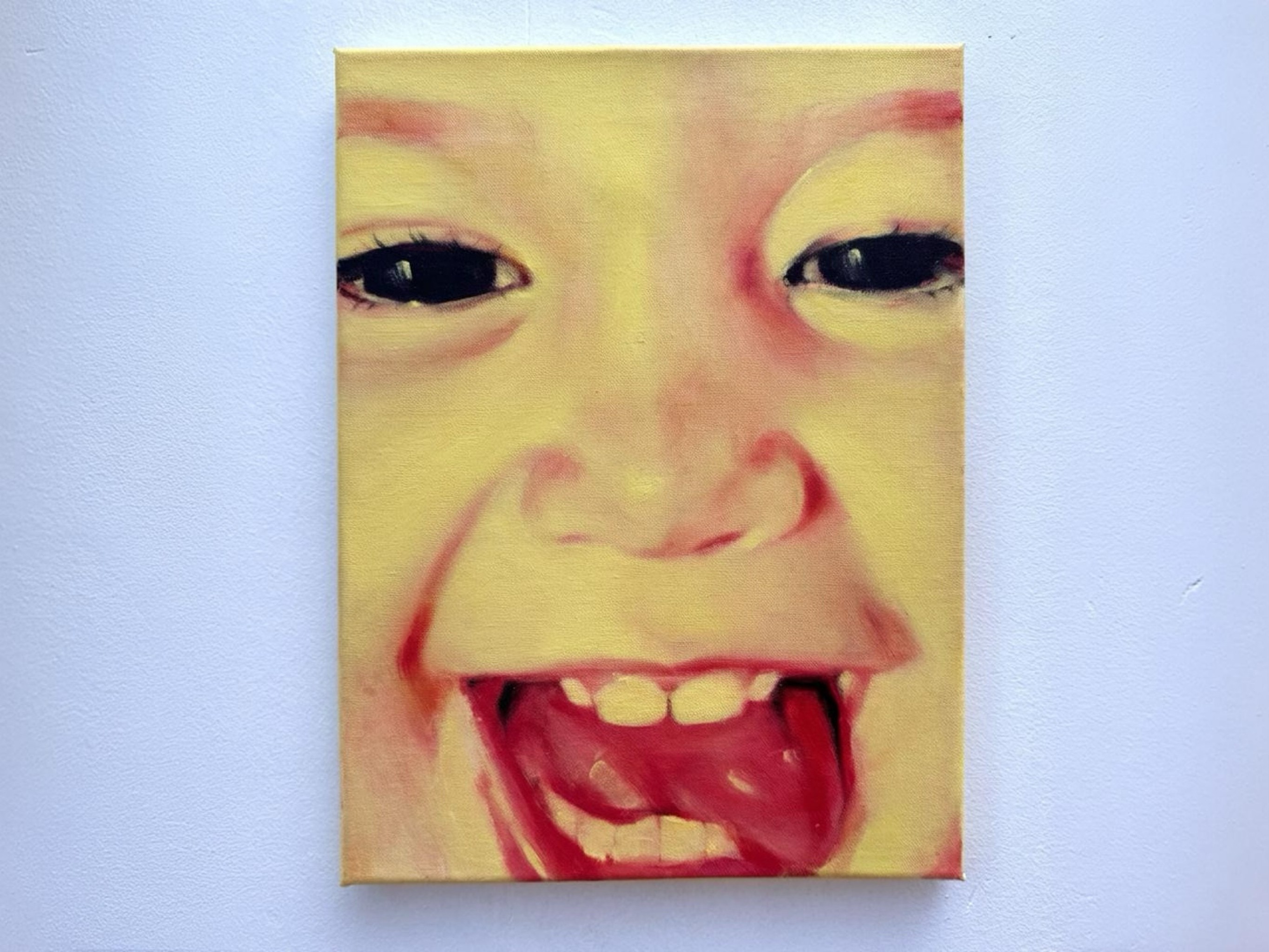
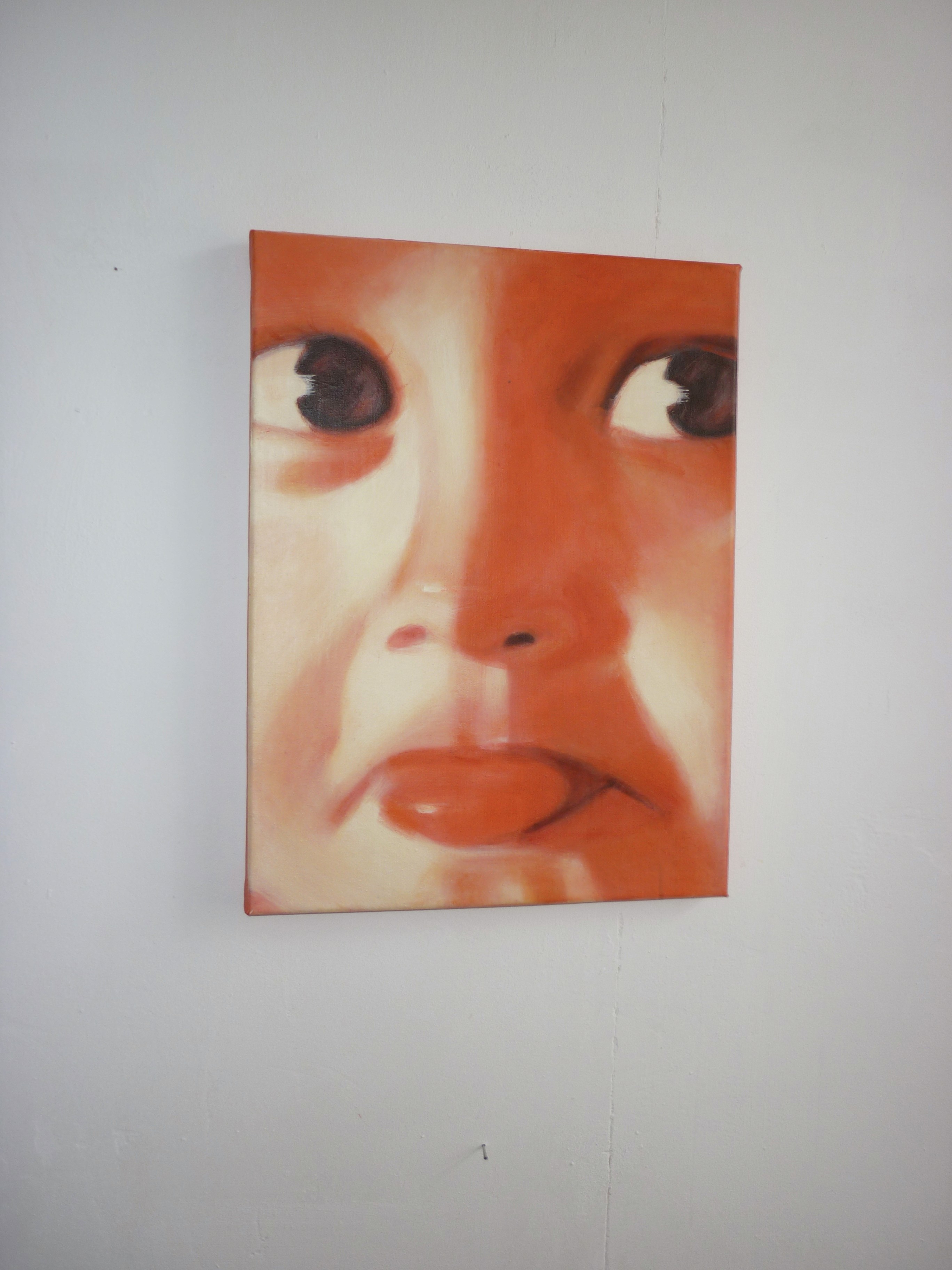
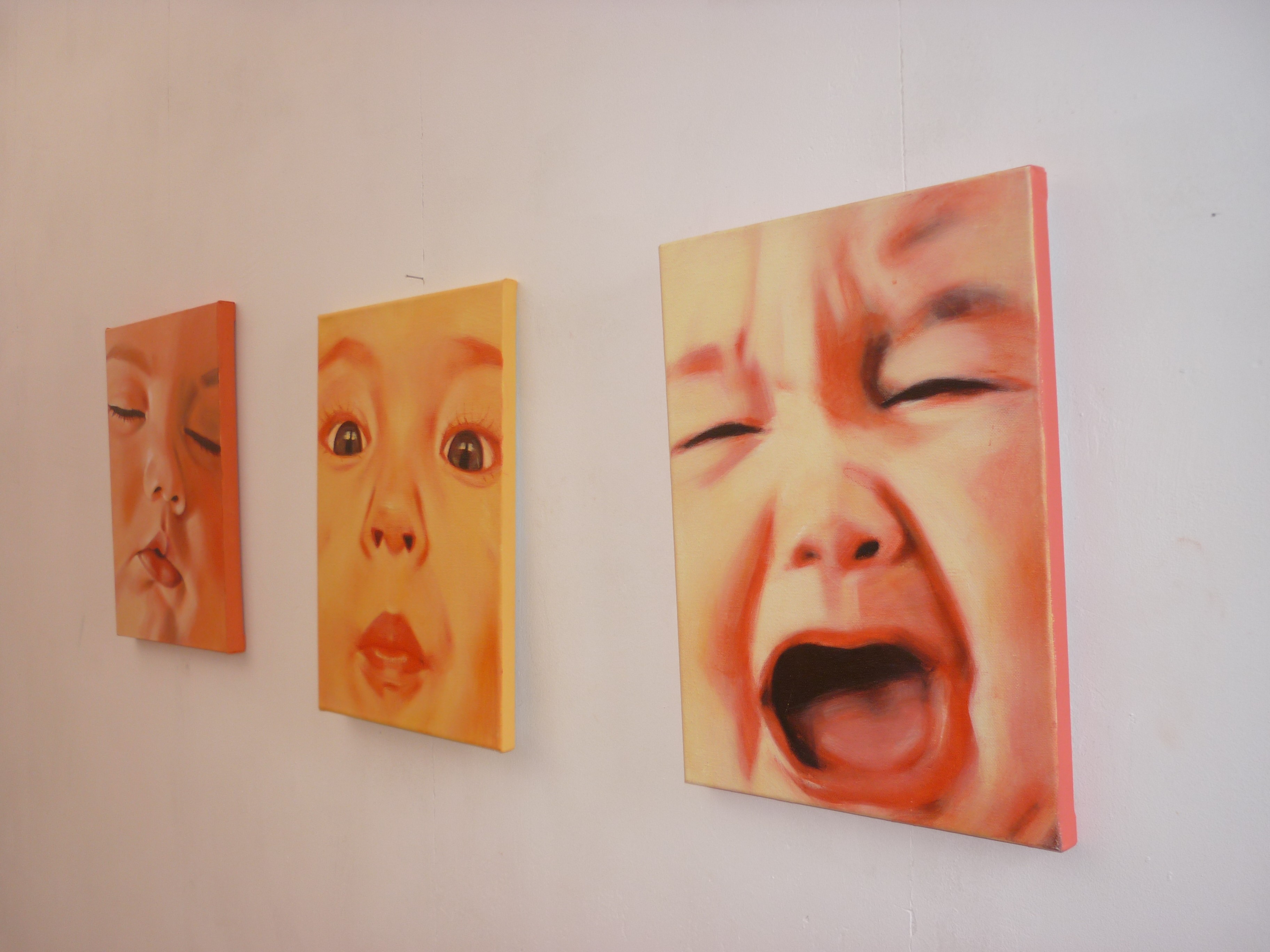
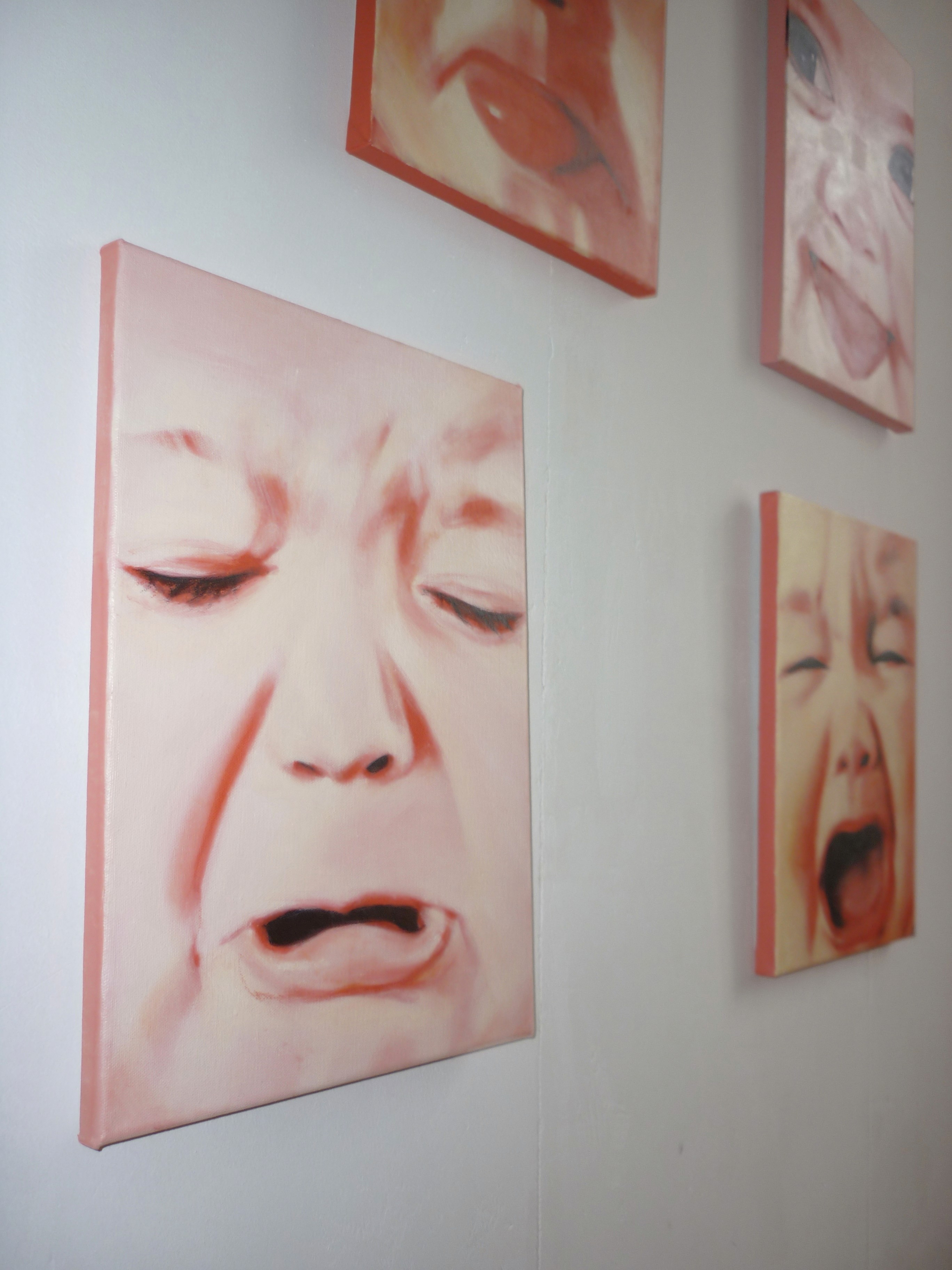
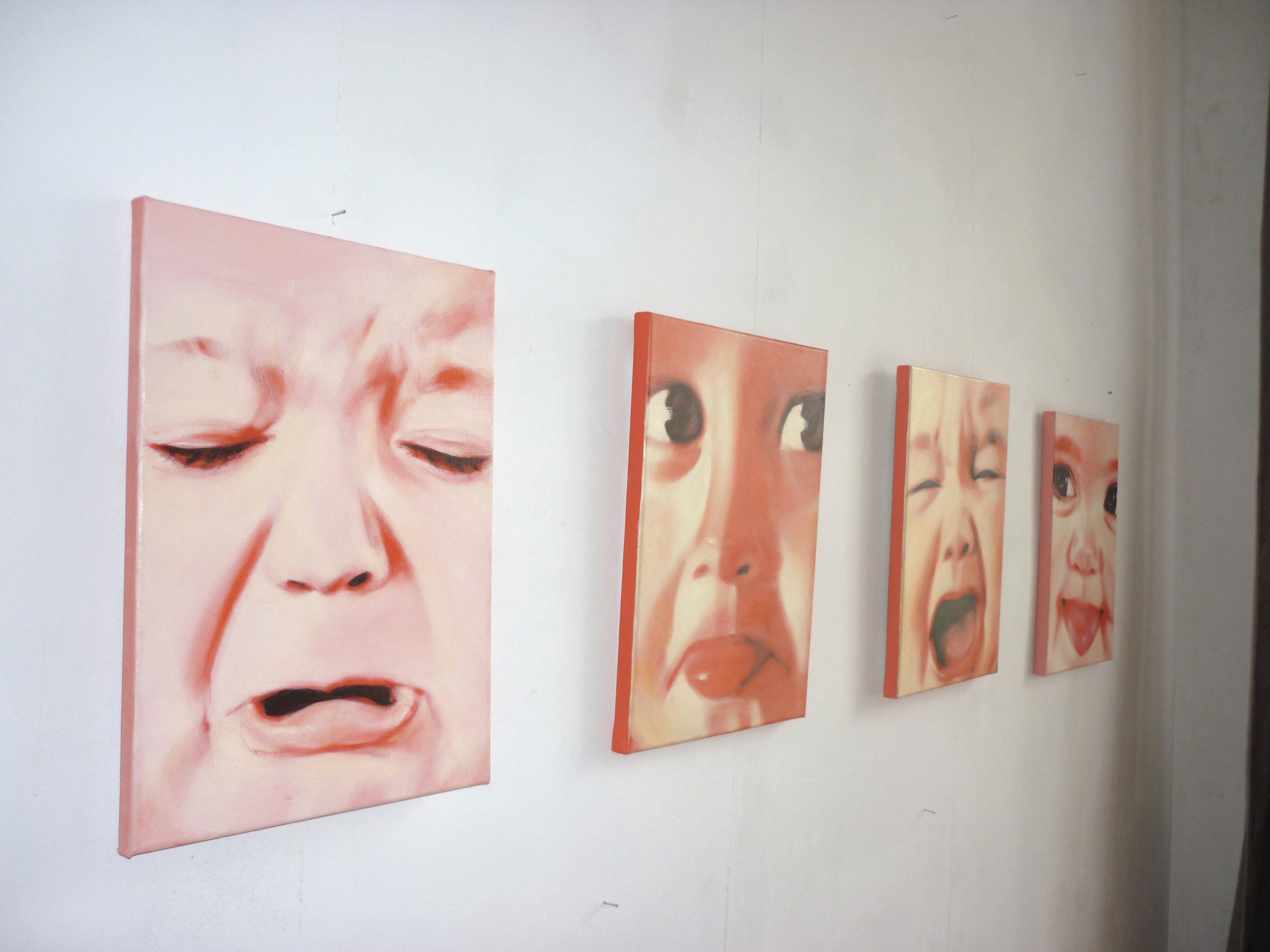
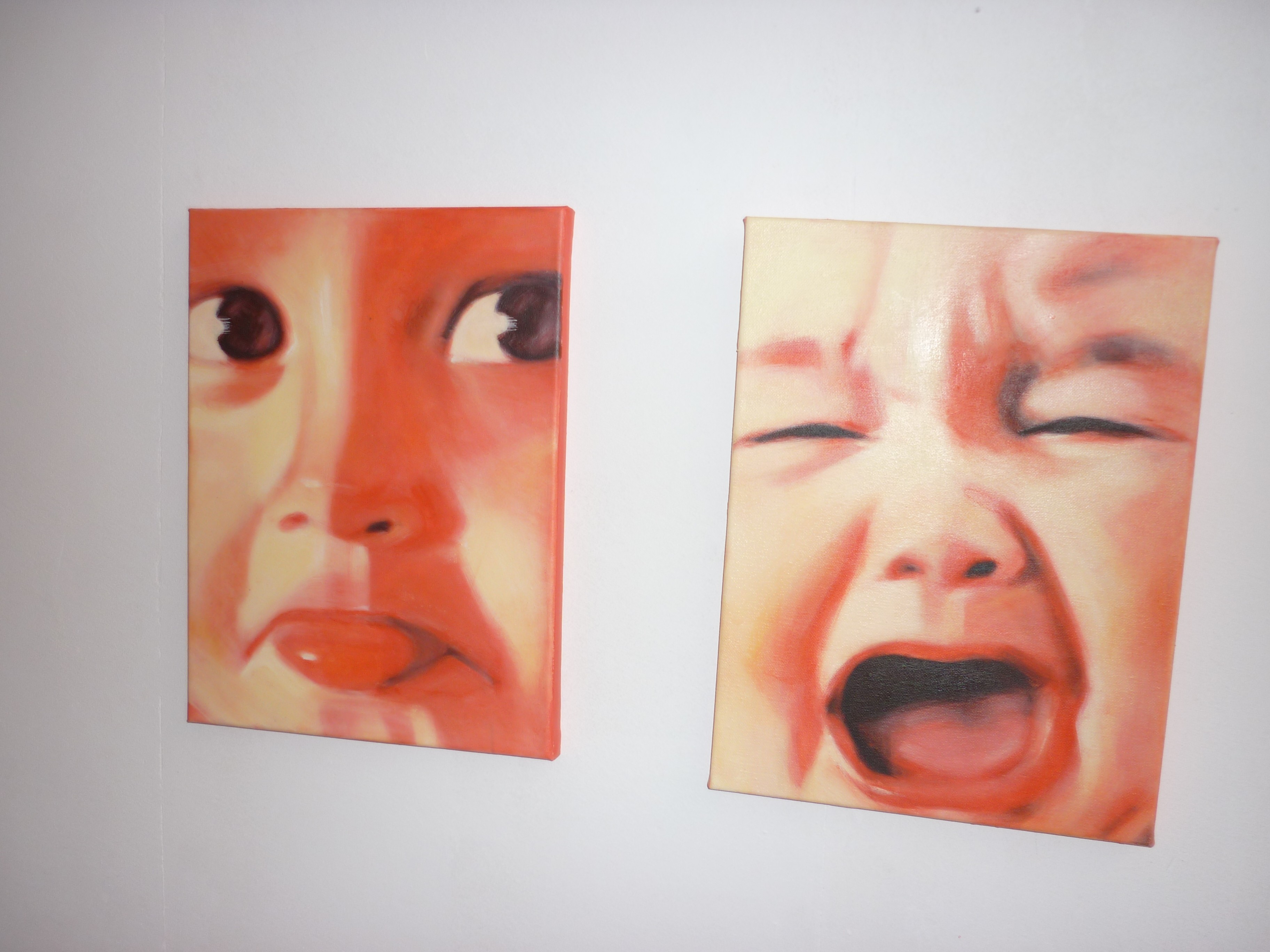
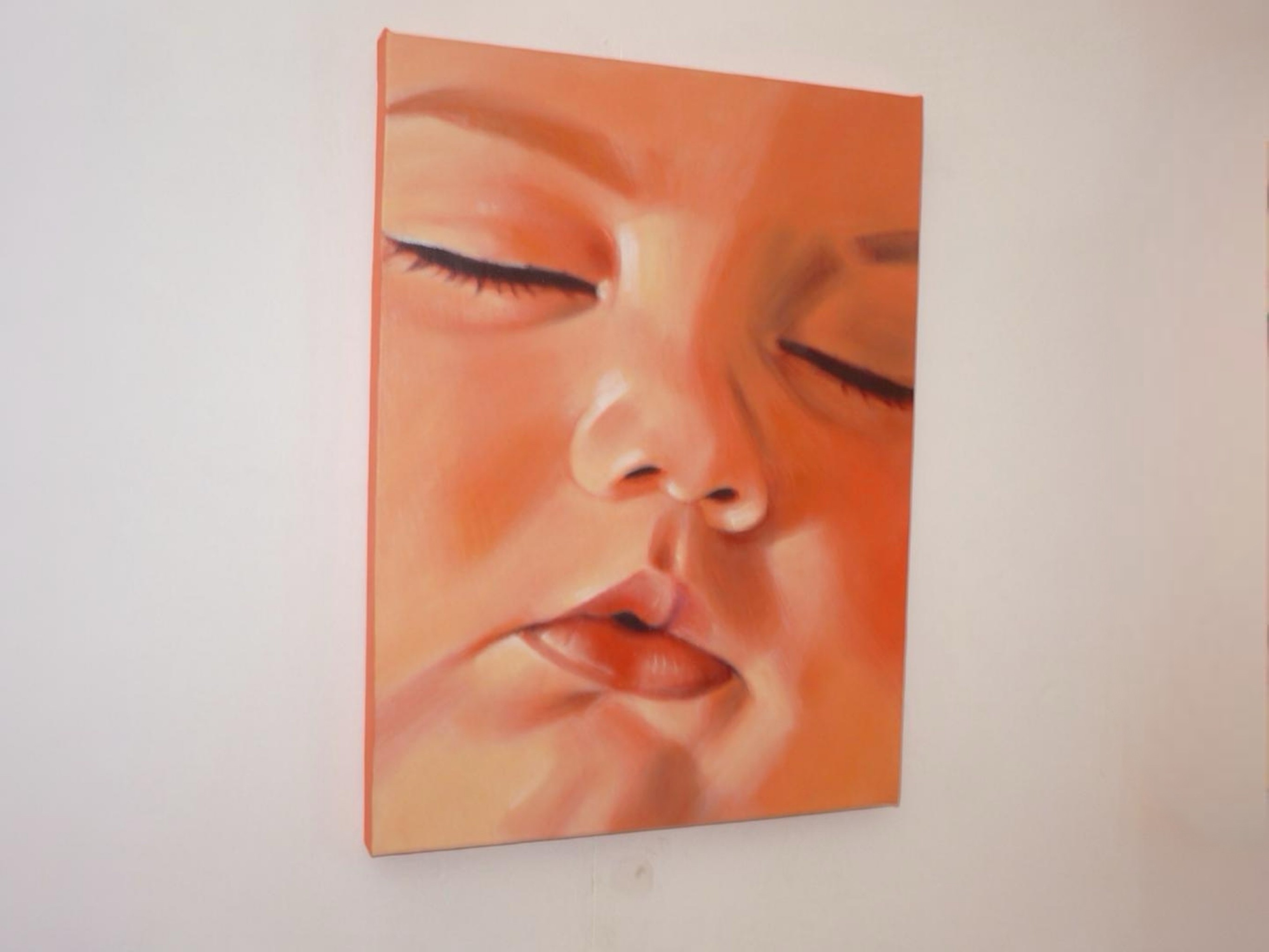
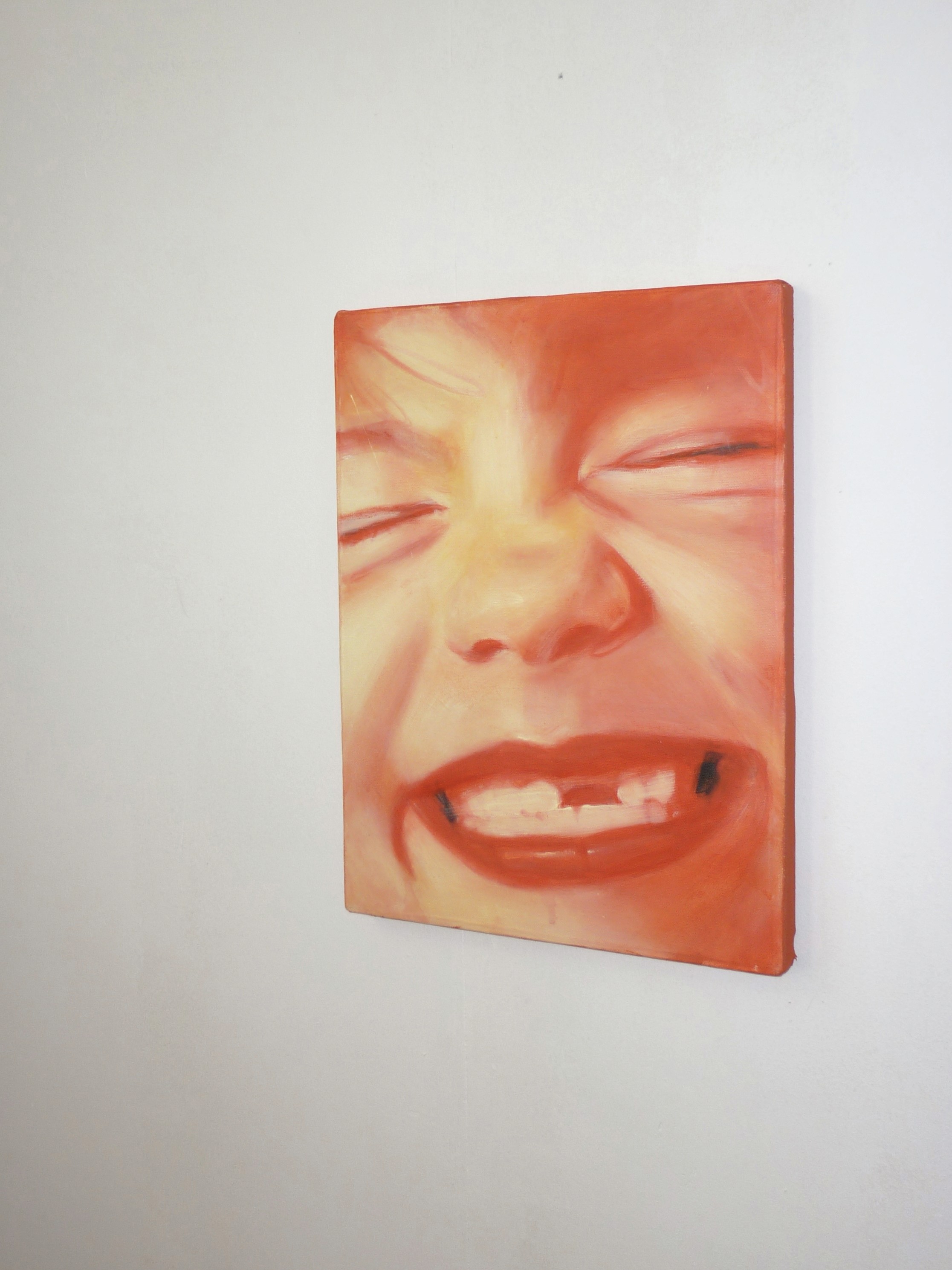
Galina paints what she can't show. She describes herself as organized and serious on the outside, but her paintings are the inside: babies in extreme close-up, faces filling the frame, expressions caught before the child has learned to manage them. She strips out everything that isn't the feeling.
She's 24, based in Russia, and has been drawing portraits her whole life. The subject matter comes from somewhere specific. She had a difficult childhood, between frequent visits to her grandmother's funeral home and the loss of a childhood friend at the age of 7. The paintings are how she finally goes through it.
What makes that legible in the work is the tension. From a distance the pieces are warm and soft, saturated with reds and yellows. Up close they accumulate detail, and something in the expression doesn't fully resolve into comfort. She didn't plan that. She describes herself as sensitive but anxious, someone who needs to stay in control, and she'll tell you that probably transfers into the work. It does. These are paintings that want to give you lightness and can't quite let go of what they know.
Your paintings strip everything back to just the face and the feeling. Who is the person making that choice?
On the outside, I’m quite a serious and organized person, but inside I’m very sensitive. Sometimes I even get a bit childish. And in a way, all my work is about me. I grew up emotionally quite early because I went through a lot of heavy experiences in childhood that a child is not really ready for. So I didn’t fully live through some of my childhood emotions. Now, when I paint, I feel like I’m going through them again.
I’ve been drawing portraits my whole life - it comes to me easily and it feels natural. I enjoy drawing people and then showing them the result - it always creates emotion. And there’s this moment: when a child draws something, they go and show it to their parents. When I finish a painting, I go and show it on social media. And in that sense, I kind of feel like a child myself.
Overall, my work is something bright that can lift people’s mood
Why remove everything from the image except the face?
I just love emotions. I don’t like flat, expressionless faces. And I don’t enjoy drawing unnecessary details like hair or extra elements. I wanted to leave only the most important thing - the emotion itself. And in children, it feels the most honest and pure.
Why babies specifically, and not older subjects?
Because children have real emotions, without masks. They haven’t learned how to hide them yet. Also, interestingly, a child’s face is actually harder to paint, there are so many tiny details and subtle changes. And I like that challenge. Every painting for me feels like a question: can I capture this emotion properly
Your paintings feel both tender and slightly unsettling. Are you aware of that tension, and is it the point?
Honestly, I didn’t think about it before, but it actually describes me very accurately. I’m a very sensitive person, but also quite anxious and I try to stay in control of things. And I think that naturally transfers into my work. So yes, maybe that tension is part of it.
How do you think about innocence when you’re painting?
I’m not sure I think specifically about “innocence”. It’s more about sincerity. A child is not performing - they are just real. And that’s what attracts me
Where does the pull toward children come from for you personally?
Yes, there is. I had quite a difficult childhood. My grandmother worked in funeral services and often took me with her, so I was exposed quite early to the idea of how life ends. Also, I lost a childhood friend, and I was at her funeral when I was around 6-7 years old. And I think all of that stayed with me in some way. I’ve always been drawn to children. I worked as a nanny, I feel comfortable with people younger than me. It’s like I’m trying to catch up on something I didn’t fully live through. And when I finish a painting, I feel real childlike joy
Why the extreme close-up? What does that proximity do to the image?
Because for me only the emotion matters. Everything else is unnecessary. The close-up removes everything that distracts from it.
Do you see these works as portraits, or something more abstract and emotional?
It’s not a portrait of a specific person. It’s more like a portrait of all of us. You can look at it and see yourself, no matter whose child it is
What is the painting doing that the reference photograph isn't?
To be honest, a photograph can capture everything. But my work is more like a tool of connection. Through it, I want to communicate other ideas like that anything is possible, that even someone from an ordinary family can achieve something. And also to remind people not to forget their inner child, to listen to it, but also to stay grounded as an adult and understand how to make those desires real.
What does your process look like from start to finish?
First I make a pencil sketch. Then I build the painting through light and shadow shapes. If it’s a commission, I show a preview and adjust composition, crop, and colors. Then I move into painting.
Do you work from photographs, memory, or imagination?
Only from photographs. For a long time I thought that if I don’t paint from imagination, I’m not a real artist. But I realized that’s not true.
How do you choose which expression to paint?
I scroll Pinterest or Reels, and if I see a moment where a child shows an interesting emotion, I take a screenshot and paint it. If it’s a commission, I also suggest which expression would look the most interesting.
How do you approach skin tones and color in your paintings?
I like warm, saturated colors - reds, yellows. It’s very important for me that the work feels bright, because childhood is a short but very vivid period
Also, until this year I used to paint only in black and white. And when you paint a child in black and white, it feels very dramatic. And I don’t want people to feel depressed or heavy when they look at my work. So I intentionally moved into color; warm, lively, saturated tones
What kind of materials are you using?
Acrylic, dry pastel, and fixatives.
How do you build up the surface?
In thin layers. Acrylic dries quickly, so I gradually build it up; darks, lights, corrections. It’s a constant process of getting closer to the final image.
How long does one painting typically take?
At least 12 hours, sometimes more. I’m quite a perfectionist, so I often keep refining it.
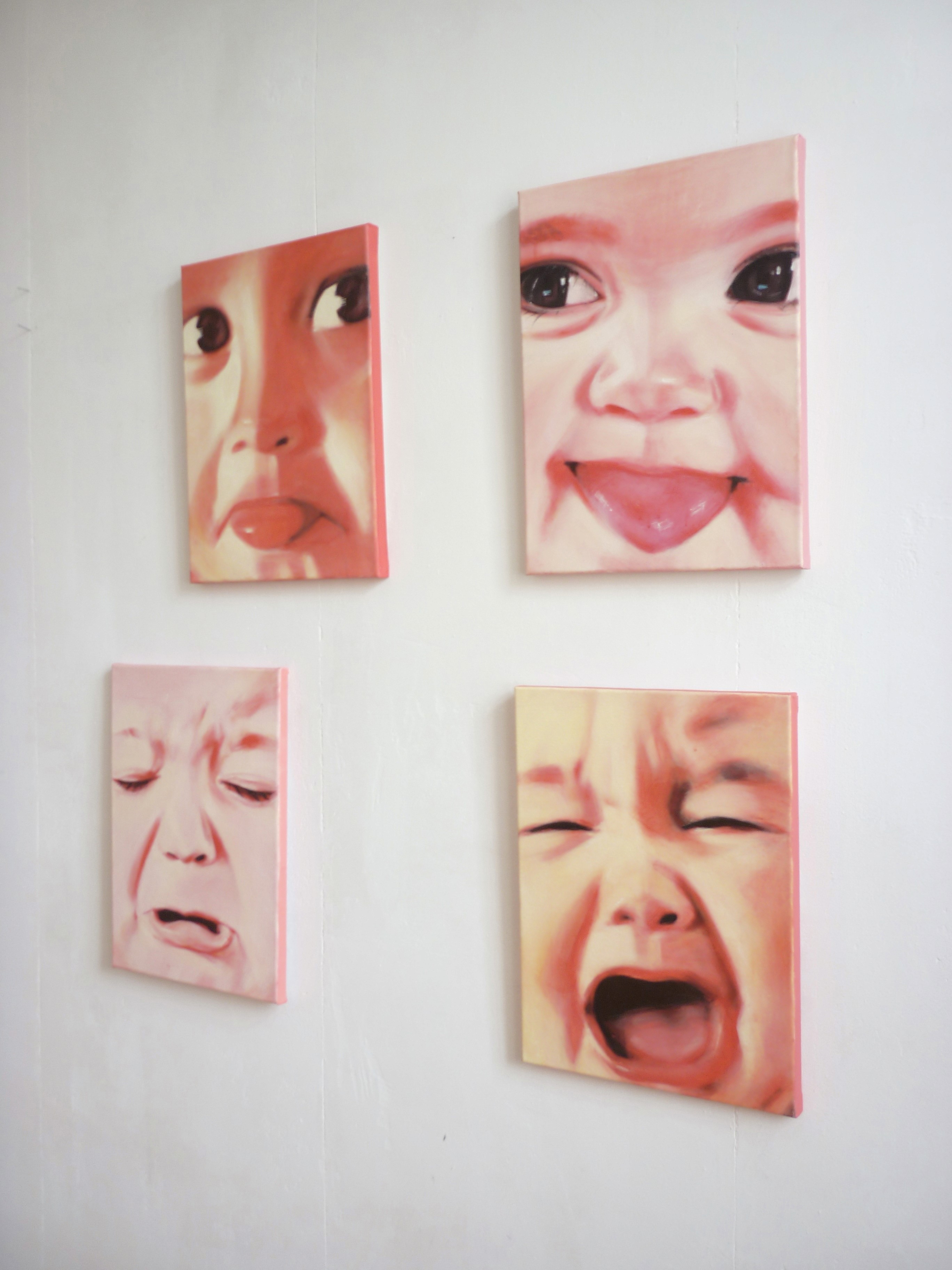
Gallery, 2026
Do you rework areas often, or try to preserve the first marks?
I constantly rework the painting. I don’t really preserve the first marks.
How do you know when a piece is finished?
When it looks close to the reference, everything feels balanced, and there are small details that are nice to look at, and I feel there’s nothing left to add.
What part of the process is the most difficult to get right?
The in-between stages. When the painting looks bad and you start doubting if it will work at all. The hardest part is just continuing and trusting the process.
The eyes in your work feel very present. What role do they play for you?
I actually often try to paint children with closed or averted eyes, because sometimes they become too alive. But overall, eyes are what make the work feel alive.
I’m quite a closed-off person myself. I used to find it hard to connect with people. So maybe I also painted faces as a way to create some kind of company for myself. And that stayed with me.
How do you balance softness with intensity in a single image?
From a distance, the works feel soft. Up close, there are many details.I don’t consciously plan it. It just happens naturally
Do you see these works as intimate or invasive?
No. I don’t see them as something personal. They’re about everyone.
What do people usually react to first when they see your paintings?
Most often people say: “they look so alive”.
What do you hope someone feels after sitting with one of your pieces?
Lightness. I want it to feel pleasant to look at, relaxing for the eyes, like you’re in good company. Something that lifts your mood. I don’t want people to overthink or search for deep hidden meanings. I want them to immediately feel the emotion, and that’s enough.
Do you feel like this style still has somewhere to go, or have you found what you were looking for?
For now, nowhere specific.I really like this technique, and my audience likes it too. It just works. I enjoy making it, people enjoy seeing it. Maybe I’ll try oil painting at some point, but overall I want to continue in this direction.

Articles
Magazine
Submissions